automotivebriefs
10:45in productionCh. 1 · Not a car. A statement./ 10:45 · ceiling 15 min
Concepts & prototypes

Cadillac Sixteen

A V16 that never turned a wheel — but rewired Cadillac’s idea of power.

The Cadillac Sixteen is a 2003 concept car. It has a proprietary 13.6 L V16 engine. It uses a four-speed automatic transmission driving the rear wheels. It references the 1930s Cadillac V-16. It weighs about 5,005 lb. It influenced later models including the Celestiq.

Chapters & takeaways6
  1. 1:01
    Not a car. A statement.

    It was a 2003 concept — never intended for sale.

  2. 2:14
    The engine was real. The output was staggering.

    A 13.6 L naturally aspirated V16 producing at least 1,000 bhp and 1,000 lb⋅ft.

  3. 3:04
    It tried to be efficient — and failed to hide the contradiction.

    Active Fuel Management could shut down twelve or eight cylinders to achieve 16.65 mpg.

  4. 4:09
    History was its chassis.

    It referenced the 1930s Cadillac V-16 — linking heritage to hubris.

  5. 5:24
    Weight confirmed it was sculpture first, machine second.

    It weighed 5,005 lb — a mass that made its power claims feel like theatre.

  6. 7:14
    No dual-clutch. No paddle shift. Just torque and inertia.

    A four-speed automatic drove the rear wheels — simple, heavy, deliberate.

Worth your time?

Yes. Drive the whole thing.

3.5/ 5
What works
  • as a cultural artefact
  • as a design thesis
  • as a marker of post-2000 American ambition
What does not
  • production viability
  • driving engagement
  • efficiency leadership
  • technical legacy beyond signalling
Drive it if
  • brand historians
  • design students
  • luxury strategists
Skip it if
  • enthusiast drivers
  • engineers
  • collectors
The written brief1 min read

What the car is and where it came from

The Cadillac Sixteen is a 2003 concept car developed and presented by Cadillac. It is a non-production halo vehicle built around a proprietary 13.6 L V16 engine.

How it works, in terms someone would actually use

It uses a four-speed automatic transmission driving the rear wheels. The V16 engine shuts down twelve or eight cylinders on light load. It achieves 16.65 mpg under normal conditions.

What it gets right

It unifies historical reference — the 1930s Cadillac V-16 — with contemporary GM architecture. It makes the V16 credible as an aluminium, 32-valve, naturally aspirated unit.

What it does not

It does not exist as a production car. It does not deliver real-world usability, efficiency, or drivability beyond its concept role.

What it changed

It influenced later Cadillac models including the Celestiq. Its ‘Art and Science’ design language carried forward.

Who it is for, and who it is not

It is for people who study automotive signalling — designers, brand strategists, historians of Detroit luxury. It is not for drivers, buyers, or engineers seeking benchmarks.

Is it worth your time

Yes — as a document of ambition, not engineering. It reveals how Cadillac defined luxury in 2003: through scale, silence, and symbolic excess.

Same garage · Concepts & prototypes4 of 24
11:02
Alfa Romeo CaraboMarcello Gandini · 1950The Alfa Romeo Carabo is a 1968 concept car designed by Marcello Gandini at Bertone. It debuted at the 1968 Paris Motor Show. It used the chassis of an Alfa Romeo 33 Stradale with a mid-mounted 2.0 L V8 engine and 6-speed Colotti manual transmission. It featured scissor doors — the first known use — and iridescent green-orange colouring inspired by Carabidae beetles. Built in ten weeks using fiberglass, it was never intended for production but was fully functional. It helped establish the wedge shape trend in 1970s supercars and concept cars. Gandini’s design philosophy prioritised vehicle architecture and mechanics over styling.
8:49
Buick Y-JobHarley Earl · 1950The Buick Y-Job is the first concept car — a 1938 Buick convertible built to test design ideas, not sell units. Designed by Harley Earl, it used a Buick Super chassis and featured power-operated hidden headlamps, electric windows, and styling cues that defined Buick for decades. It became Earl’s daily driver after public debut. It changed how mass manufacturers develop cars: by treating design as a public-facing experiment.
9:24
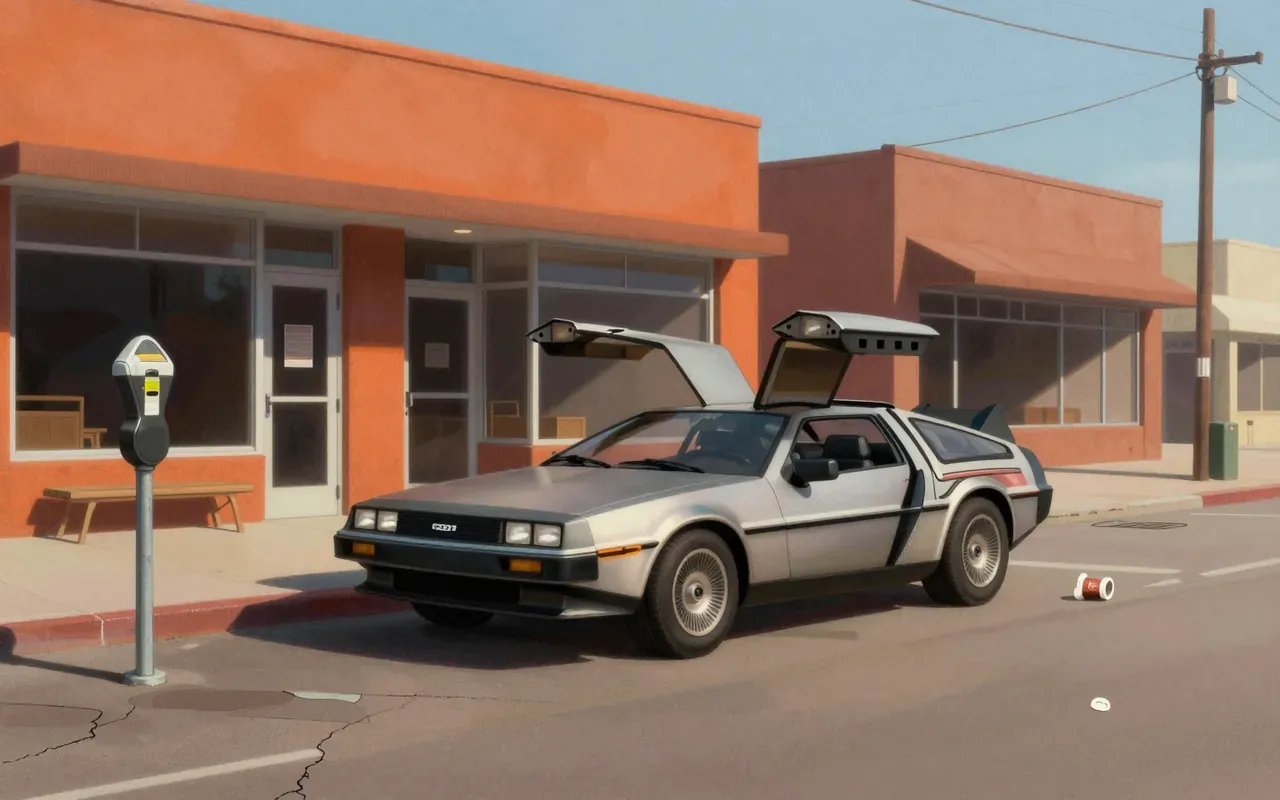
DMC DeLoreanGiorgetto Giugiaro · 1981The DMC DeLorean is a rear-engine, two-seat sports car designed by Giorgetto Giugiaro and produced by the DeLorean Motor Company from 1981 to 1983. It features gull-wing doors, unpainted brushed stainless-steel body panels, and a 2.85 L PRV V6 engine shared with Peugeot, Renault, and Volvo. Approximately 9,000 units were built before the company’s bankruptcy. Though criticized for modest performance and build quality, it gained iconic status through the Back to the Future films.
8:25
Ferrari ModuloPaolo Martin · 1970The Ferrari Modulo is a static concept car built by Pininfarina on a de-powered Ferrari 512 S chassis. It debuted black at Geneva 1970. Its wedge shape, sliding canopy and exposed V12 defined a new visual language — one that influenced 1970s car design more than any production model.
Up next in Automotive

Chevrolet Bel Air

Harley Earl team · 1955 · 8:52

A trim-level Trojan horse: it started as a roofline, became a badge, and outlived its purpose by thirty years.

8:52