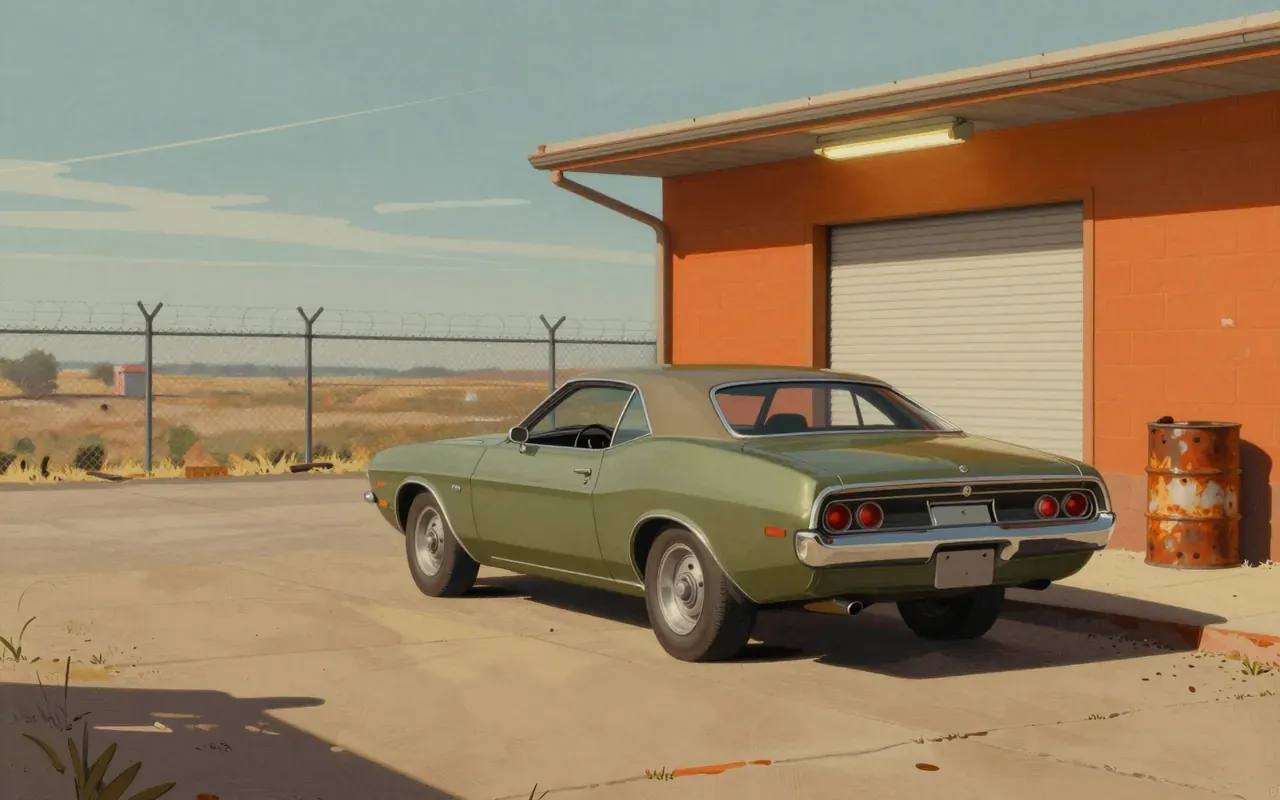
What the car is and where it came from
The 1970 Dodge Challenger is the first-generation E-platform pony car, introduced in autumn 1969 for the 1970 model year. It is distinct from later generations — a 1978–1983 Mitsubishi-based compact and a 2008–2023 full-size muscle car.
How it works, in terms someone would actually use
It is a front-engine, rear-wheel-drive pony car. It shares its E-platform architecture and body styles — hardtop and convertible — with the Plymouth Barracuda.
What it gets right
It establishes visual distinction through longer proportions and a more aggressive front-end treatment while leveraging proven mechanicals. It delivers on the promise of a larger, more luxurious pony car without abandoning shared production logic.
What it does not
It does not introduce new powertrain layouts, suspension systems, or structural innovations. It does not break from the E-platform’s constraints or redefine packaging for its class.
What it changed
It expanded the pony car segment with a longer wheelbase and more interior space than the Barracuda, reinforcing Chrysler’s strategy of badge-engineered differentiation within shared platforms.
Who it is for, and who it is not
It is for readers interested in platform-sharing strategy, mid-century American automotive marketing, and the evolution of the pony car. It is not for those seeking innovation in chassis design, powertrain architecture, or driver engagement metrics.
Is it worth your time
Yes, if you want to understand how Chrysler positioned itself against Ford and Chevrolet in the early 1970s. No, if you expect technical novelty or engineering divergence from its platform sibling.