automotivebriefs
9:21in productionCh. 1 · Purpose-built/ 9:21 · ceiling 15 min
Rally

Lancia Delta HF

The most successful rally car in WRC history wasn’t born from blank-sheet ambition — it was a rules-compliant evolution that rewrote the record books.

The Lancia Delta HF is a Group A rally car built by Lancia for Martini Lancia to compete in the World Rally Championship from 1987 to 1993. Based on the Lancia Delta road car and replacing the Delta S4, it featured a front-mounted two-litre turbocharged engine and four-wheel-drive. It evolved through four versions and achieved extraordinary success: 46 WRC victories and six consecutive manufacturers’ titles (1987–1992), the most in WRC history.

Chapters & takeaways4
  1. 0:52
    Purpose-built

    It was built for Martini Lancia to win the World Rally Championship — not as a road car, but as a Group A homologation weapon.

  2. 2:10
    Layout and drive

    Front-mounted two-litre turbo engine and four-wheel-drive gave it mechanical simplicity and all-surface grip.

  3. 3:44
    Dominance

    Six straight manufacturers’ titles and 46 rally wins — more than any other car in WRC history.

  4. 5:22
    Evolution, not revolution

    It evolved through four versions — including the Integrale 16v’s 1989 Sanremo debut — each refining what worked.

Worth your time?

Yes. Drive the whole thing.

4.5/ 5
What works
  • It works as a Group A rally car built for Martini Lancia to compete in the World Rally Championship.
What does not
  • It does not appear in the material as a road car design exercise. The source says only that the rally car was based on the Lancia Delta road car — no details of that road car are given.
Drive it if
  • It is for rally engineers, drivers and fans who value proven, evolution-led competition hardware.
Skip it if
  • It is not for collectors seeking original road-car context — none is provided.
The written brief1 min read

What the car is and where it came from

The Lancia Delta HF is a Group A rally car introduced for the 1987 World Rally Championship season. It replaced the Delta S4 and was built by Lancia for Martini Lancia.

How it works, in terms someone would actually use

It is a Group A rally car built for Martini Lancia to compete in the World Rally Championship. It has a front-mounted two-litre turbocharged engine and four-wheel-drive.

What it gets right

It gets right the balance of Group A compliance, four-wheel-drive traction, and turbocharged responsiveness needed for gravel, snow and tarmac stages.

What it does not

It does not appear in the material as a road car design exercise. The source says only that the rally car was based on the Lancia Delta road car — no details of that road car are given.

What it changed

It changed rally car dominance: it replaced the Delta S4 and became the most successful car in WRC history.

Who it is for, and who it is not

It is for rally engineers, drivers and fans who value proven, evolution-led competition hardware. It is not for collectors seeking original road-car context — none is provided.

Is it worth your time

Yes. It won 46 World Championship rallies and six consecutive manufacturers’ titles — a record — between 1987 and 1992.
Same garage · Rally4 of 16
8:24
Opel MantaGeorge Gallion · 1970The Opel Manta A is a rear-wheel-drive German coupé launched in September 1970. Built by Opel on the Ascona A platform, it offered a clean two-door, three-box silhouette and competed directly with the Ford Capri. It was never sold in the UK under Vauxhall until the Manta B. Its name comes from the manta ray. 498,553 were built before 1975.
9:37
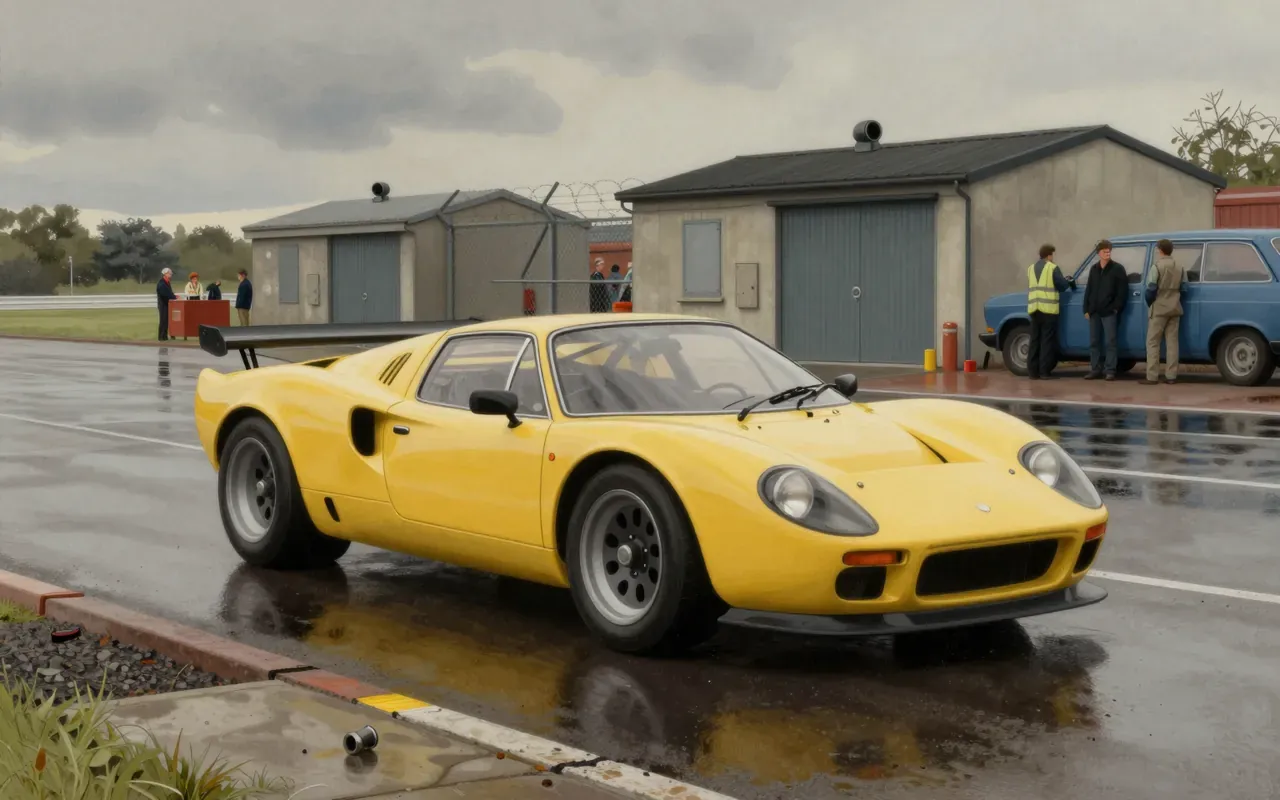
Ford RS200Ghia · 1984The Ford RS200 is a purpose-built homologation special: mid-engined, all-wheel drive, plastic-fiberglass body by Ghia, built by Reliant in Shenstone to meet FIA Group B’s 200-unit rule. It exists only to enable a rally car—not as a design statement, luxury product, or road-going evolution.
9:14
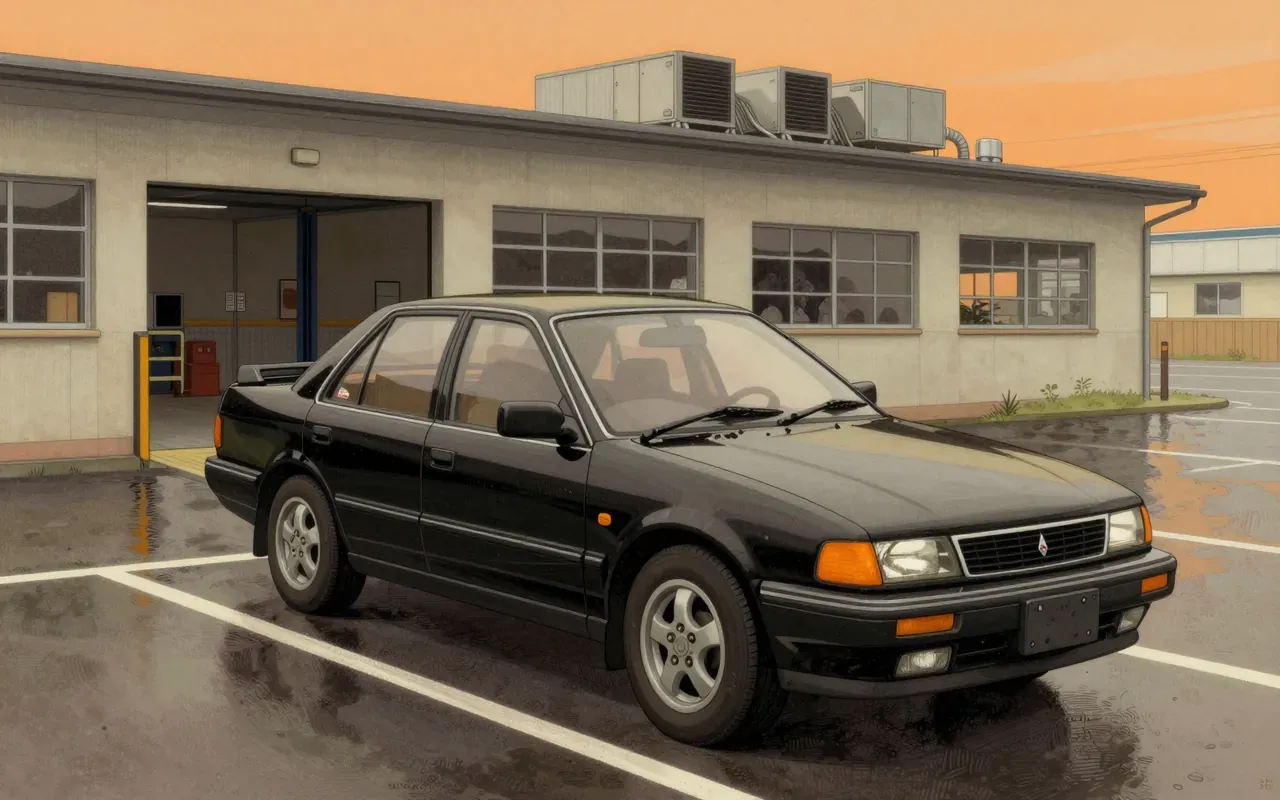
Mitsubishi Galant VR-4Mitsubishi · 1987The Galant VR-4 is Mitsubishi’s first high-performance all-wheel-drive sedan, developed for Group A rallying and launched in 1987. It introduced the Dynamic Four AWC system — a full-time four-wheel drive setup with viscous coupling, plus four-wheel steering and four-wheel ABS. It was sold globally to meet homologation requirements, including 2,000 units in the US in 1991 and 1,000 in 1992. Later generations added liftback (Eterna ZR-4) and station wagon (Legnum) variants. The eighth generation was initially JDM-only but gained overseas cult status via grey imports. In 2000, Ralliart officially imported 200 units to the UK. Production ended in 2002 due to revised Japanese emissions standards.
7:56
Mitsubishi Lancer EvolutionMitsubishi · 1999The Mitsubishi Lancer Evolution is a rally-bred sports sedan built on the Lancer platform. Ten generations were produced from 1992 to 2016. All used a two-litre intercooled turbo inline-four engine and all-wheel drive. It launched in Japan only, then reached the UK and Europe around 1997 via Ralliart dealers—starting with the Evolution IV.
Up next in Automotive

Lancia Megagamma

Giorgetto Giugiaro · 1978 · 10:03

The Megagamma didn’t predict the minivan — it invented its grammar.

10:03