Mitsubishi’s first AWD performance sedan wasn’t a stopgap — it was the blueprint.
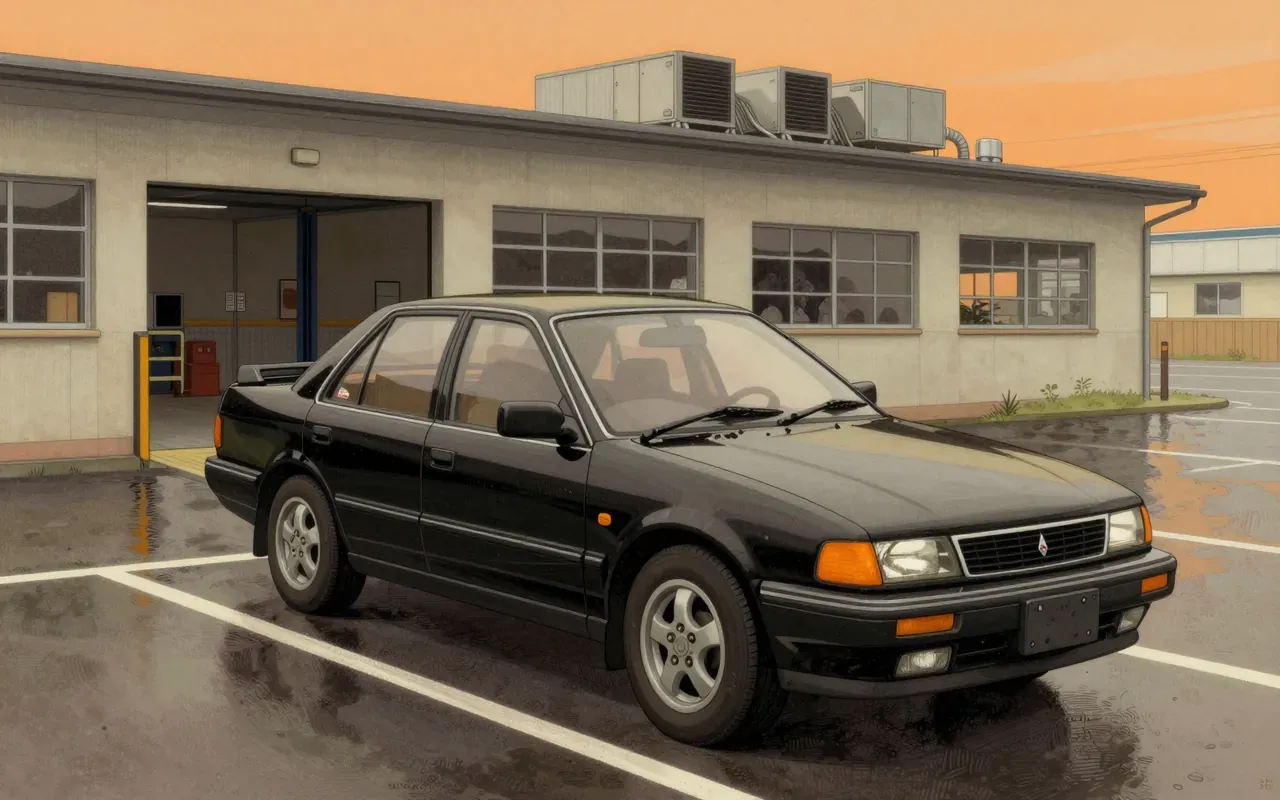
The Galant VR-4 is Mitsubishi’s first high-performance all-wheel-drive sedan, developed for Group A rallying and launched in 1987. It introduced the Dynamic Four AWC system — a full-time four-wheel drive setup with viscous coupling, plus four-wheel steering and four-wheel ABS. It was sold globally to meet homologation requirements, including 2,000 units in the US in 1991 and 1,000 in 1992. Later generations added liftback (Eterna ZR-4) and station wagon (Legnum) variants. The eighth generation was initially JDM-only but gained overseas cult status via grey imports. In 2000, Ralliart officially imported 200 units to the UK. Production ended in 2002 due to revised Japanese emissions standards.
It began as a rally homologation car, then became Mitsubishi’s tech flagship.
2:39
The First Full Package
It bundled four-wheel steering, full-time AWD, and four-wheel ABS — all integrated in 1987.
3:43
Sold By Rule, Loved By Import
Global sales were driven by regulation — not marketing — and grey imports kept it alive overseas.
5:00
Same Bones, Three Bodies
Mechanically identical liftback and wagon variants proved the platform’s flexibility.
5:55
Last of the Line
Only 200 made it officially to the UK — two years before emissions rules killed production.
Worth your time?
Yes. Drive the whole thing.
4/ 5
What works
integrates four-wheel steering, four-wheel ABS, and full-time AWD in one coherent system
delivers predictable, progressive handling at the limit
prioritises stability over agility
What does not
offer driver-selectable torque split
decouple front or rear axles
use electronic yaw control
Drive it if
engineers
rally historians
drivers who value mechanical cohesion over raw speed
Skip it if
those seeking lightweight responsiveness
those seeking driver-adjustable dynamics
The written brief1 min read
What the car is and where it came from
The Galant VR-4 is Mitsubishi’s first high-performance, all-wheel-drive Galant, launched in 1987 as a Group A WRC homologation special. It was sold across three generations until 2002.
How it works, in terms someone would actually use
It sends power to all four wheels through a centre differential with a viscous coupling. It steers all four wheels. It brakes all four wheels independently. It suspends all four wheels independently.
What it gets right
It integrates four-wheel steering, four-wheel ABS, and full-time AWD in one coherent system. It delivers predictable, progressive handling at the limit. It prioritises stability over agility.
What it does not
It does not offer driver-selectable torque split. It does not decouple front or rear axles. It does not use electronic yaw control — that arrived later.
What it changed
It proved full-time four-wheel drive could be packaged in a family sedan without sacrificing daily usability. It forced rivals to treat AWD as a performance enabler, not just a traction add-on.
Who it is for, and who it is not
It is for engineers, rally historians, and drivers who value mechanical cohesion over raw speed. It is not for those seeking lightweight responsiveness or driver-adjustable dynamics.
Is it worth your time
Yes — if you want to understand how Mitsubishi’s rally-bred AWD architecture shaped its entire performance philosophy before the Lancer Evolution took over.