What the car is and where it came from
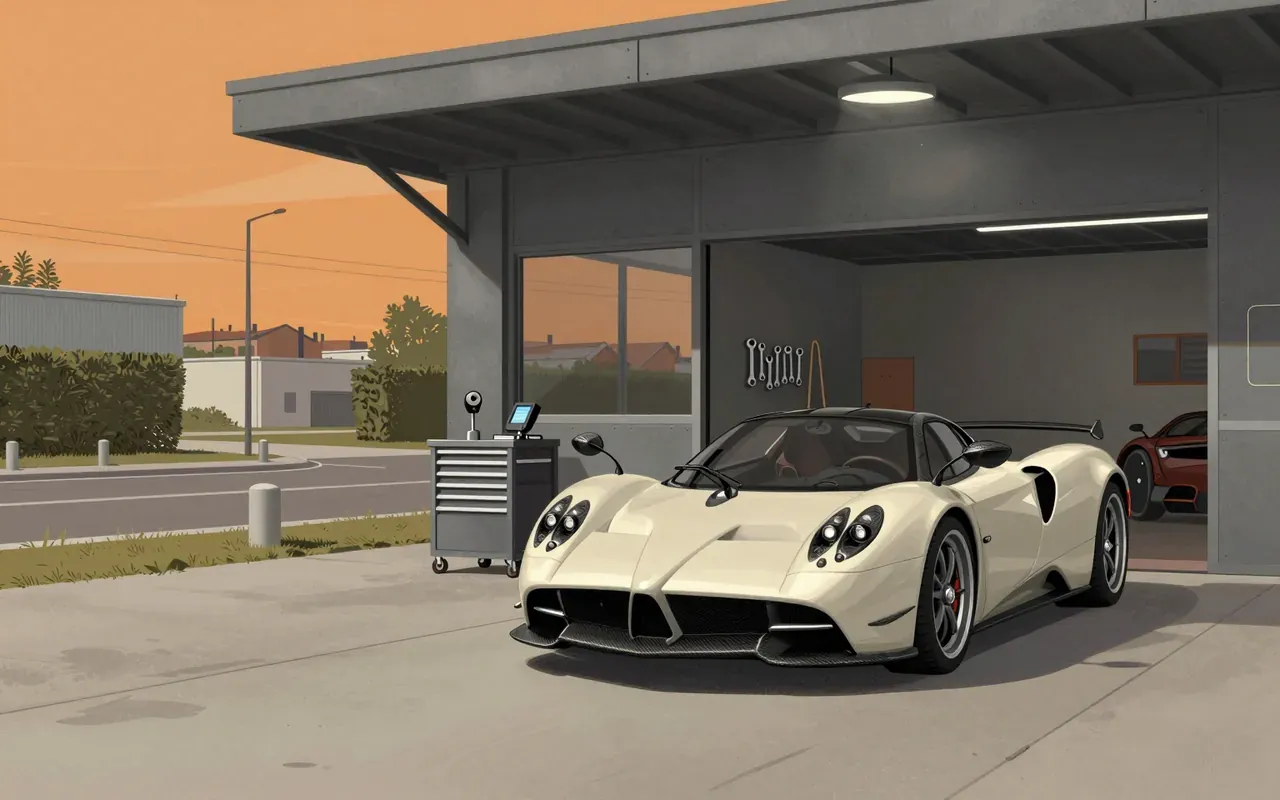
The Pagani Huayra is a mid-engine sports car produced by Italian sports car manufacturer Pagani. It was officially debuted online on 25 January 2011. Its world debut followed in February 2011 at Pirelli’s headquarters in Milan. It succeeded the Zonda.
How it works, in terms someone would actually use
It is a mid-engine sports car. The driver sits behind a 6.0 L twin-turbocharged V12 engine supplied by Mercedes-AMG. Its layout places mass centrally for agility. It accelerates from 0 to 97 km/h in 2.8 seconds. Its top speed is about 383 km/h.
What it gets right
It names itself after Wayra Tata, the Quechua wind god — a deliberate, culturally precise choice. It limits production to 100 units, enforcing scarcity through contractual agreement with Mercedes-AMG. It earned ‘The Hypercar of the Year 2012’ from Top Gear.
What it does not
It does not disclose its chassis construction method. It does not explain how its active aerodynamics operate. It does not state its kerb weight, power output, or torque figure.
What it changed
It replaced the Zonda as Pagani’s flagship model. It established a new naming convention rooted in pre-Columbian mythology rather than Italian design history.
Who it is for, and who it is not
It is for buyers who value mythic resonance alongside mechanical exclusivity. It is not for those seeking transparency in performance calibration, drivetrain architecture, or structural materials.
Is it worth your time
Yes — if you need proof that a hypercar can be both mechanically specific and mythologically anchored. No — if you require documentation of its engineering rationale, or evidence of how its aerodynamics function in practice.