Saved
Sports cars · Supercars

Toyota 2000GT

Japan’s first world-class GT—and the car that forced Europe to stop laughing.

Worth your time?4.5/5Yes.Drive the whole thing.What works, what does not, who it is for ↓
9:47in productionCh. 1 · Built by Yamaha/ 9:47 · ceiling 15 min
4 chapters · 9:47Ceiling 15:00

The brief is written and checked. The video joins this page when it is cut.4 chapters · 1 min read · 9:47 planned

Read the brief

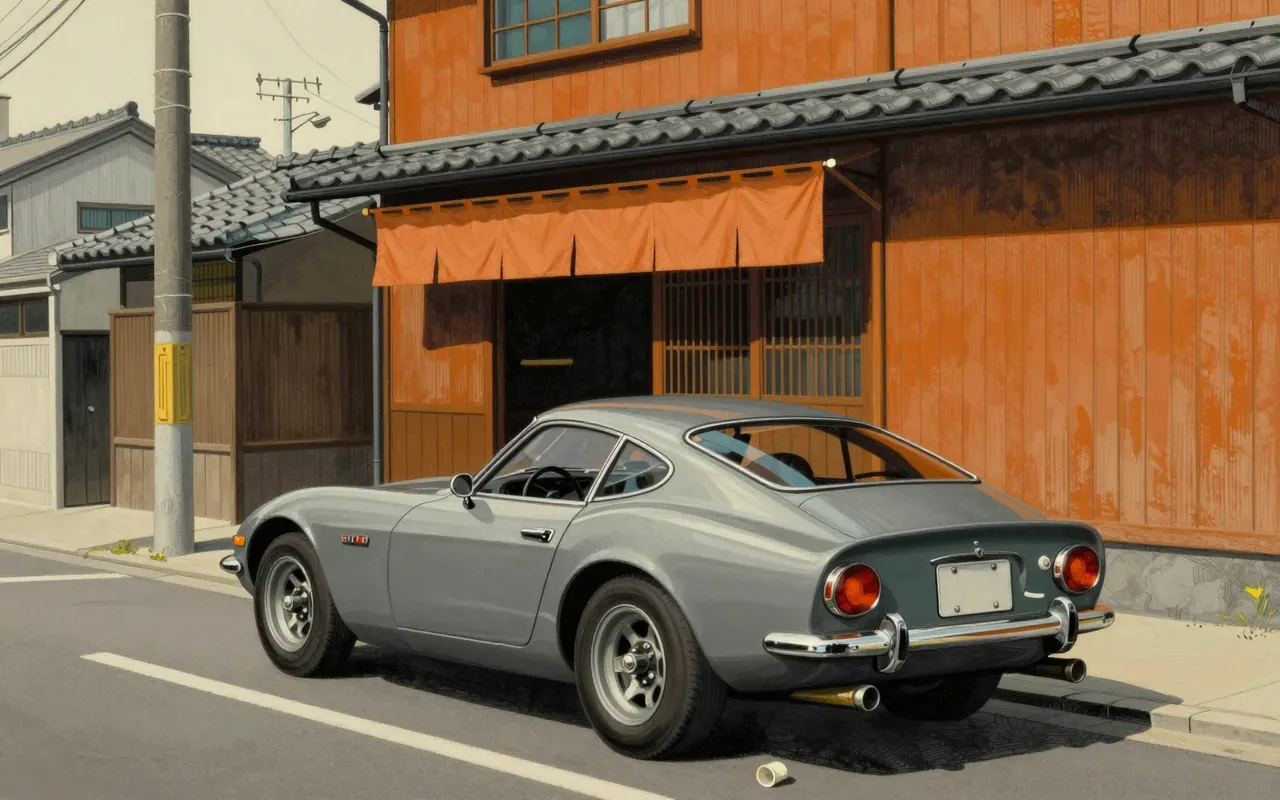
The Toyota 2000GT is a landmark Japanese sports car: a limited-production, front mid-engine, rear-wheel-drive fastback coupé developed by Toyota with Yamaha, launched in 1965 and built from 1967 to 1970. It featured a 2.0 L straight-6 engine, re-engineered by Yamaha for performance, and was hailed internationally as a world-class GT—shifting global perception of Japanese automotive capability. Its legacy includes racing success, cultural prominence (notably in You Only Live Twice), and status as the first seriously collectible Japanese car.

Chapters & takeaways4
  1. 0:57
    Built by Yamaha

    A front mid-engine, rear-wheel-drive fastback built by Yamaha—not Toyota—between 1967 and 1970.

  2. 2:45
    Halo for Japan

    A halo car for Toyota Stores in Japan—and proof Japanese engineers could match Europe’s best.

  3. 4:09
    Respect on Arrival

    It rewrote global perception—and earned praise from Road & Track as more exciting than the Porsche 911.

  4. 5:59
    First Collectible

    The first seriously collectible Japanese car—selling for $1.2 million at auction in 2013.

1 more chapterFewer chapters
Worth your time?

Yes. Drive the whole thing.

4.5/ 5
What works
  • synthesis of proportion, purpose, and presence
  • focused driving engagement
  • visual coherence
What does not
  • offer modern ergonomics
  • prioritise daily usability
  • provide cabin space
Drive it if
  • collectors
  • historians
  • enthusiasts who value symbolic turning points
Skip it if
  • drivers seeking utility
  • drivers seeking comfort
  • drivers seeking contemporary performance benchmarks
Who should drive it, and who should skipHide who it is for
The written brief1 min read

What the car is and where it came from

A limited-production, two-door, two-seat sports car/grand tourer. Designed by Toyota in collaboration with Yamaha. First shown at the Tokyo Motor Show in 1965. Built by Yamaha between 1967 and 1970.

How it works, in terms someone would actually use

It is a front mid-engine, rear-wheel-drive fastback coupé. Two seats. Built by Yamaha under contract. Driven like a compact GT: taut, precise, and responsive.

What it gets right

It gets right the synthesis of proportion, purpose, and presence: a two-seat fastback with front mid-engine layout that delivers focused driving engagement and visual coherence.

What it does not

It does not offer modern ergonomics, cabin space, or driver aids. It does not prioritise daily usability or accessibility.

What it changed

It changed how the world saw Japan’s automotive industry: from maker of imitative, stodgily practical vehicles to producer of a sleek, high-performance sports car that rivalled Europe’s best.

Who it is for, and who it is not

It is for collectors, historians, and enthusiasts who value symbolic turning points in automotive history. It is not for drivers seeking utility, comfort, or contemporary performance benchmarks.

Is it worth your time

Yes—if you care about the moment Japanese engineering entered the global performance conversation on equal terms.
Same garage · Sports cars4 of 157
1:20
Ferrari 365 GTB/4 DaytonaLeonardo Fioravanti · 1968The Ferrari 365 GTB/4, commonly called Daytona, is a two-seat grand tourer introduced at the 1968 Paris Motor Show. Its front-mounted V12 drove the rear wheels.
10:21
Mazda RX-7Akio Uchiyama · 1985The Mazda RX-7 is a Japanese sports car made by Mazda from 1978 to 2002. It uses a front mid-engine, rear-wheel-drive layout and a compact, lightweight Wankel rotary engine. The first generation is a two-seater coupé with a rear hatchback. Later generations added 2+2 and convertible options, but the core two-seater coupé remained. More than 800,000 were built, including 471,018 first-generation units.
9:36
Alfa Romeo SpiderPininfarina · 1955The Alfa Romeo Spider (1955) was the first vehicle Pininfarina produced in large numbers. Designed and assembled by Pininfarina in Grugliasco, it was a front-engined, rear-drive roadster that launched in 1958 with 1,025 units and scaled to over 4,000 in 1959. It remained in production across four series until April 1993. Its success cemented Pininfarina’s role as Alfa Romeo’s long-term Spider partner—and proved coachbuilding could be industrial.
9:52
De Tomaso VallelungaFissore · 1964The De Tomaso Vallelunga is a foundational mid-engine sports car. Its aluminium Fissore body, Ford Kent engine and Volkswagen transaxle formed a lightweight, race-derived package—built in just fifteen examples before production shifted to Ghia. It is historically significant but physically sparse: no performance data, no driver testimonials, no surviving service history. Its value lies entirely in its architecture and provenance—not its execution.
Up next in Automotive

Toyota Celica

Toyota Design · 1970 · 9:50

A sedan’s bones dressed as a star—celestial in name, pragmatic in execution.

9:50