automotivebriefs
9:52in productionCh. 1 · The origin point/ 9:52 · ceiling 15 min
Sports cars

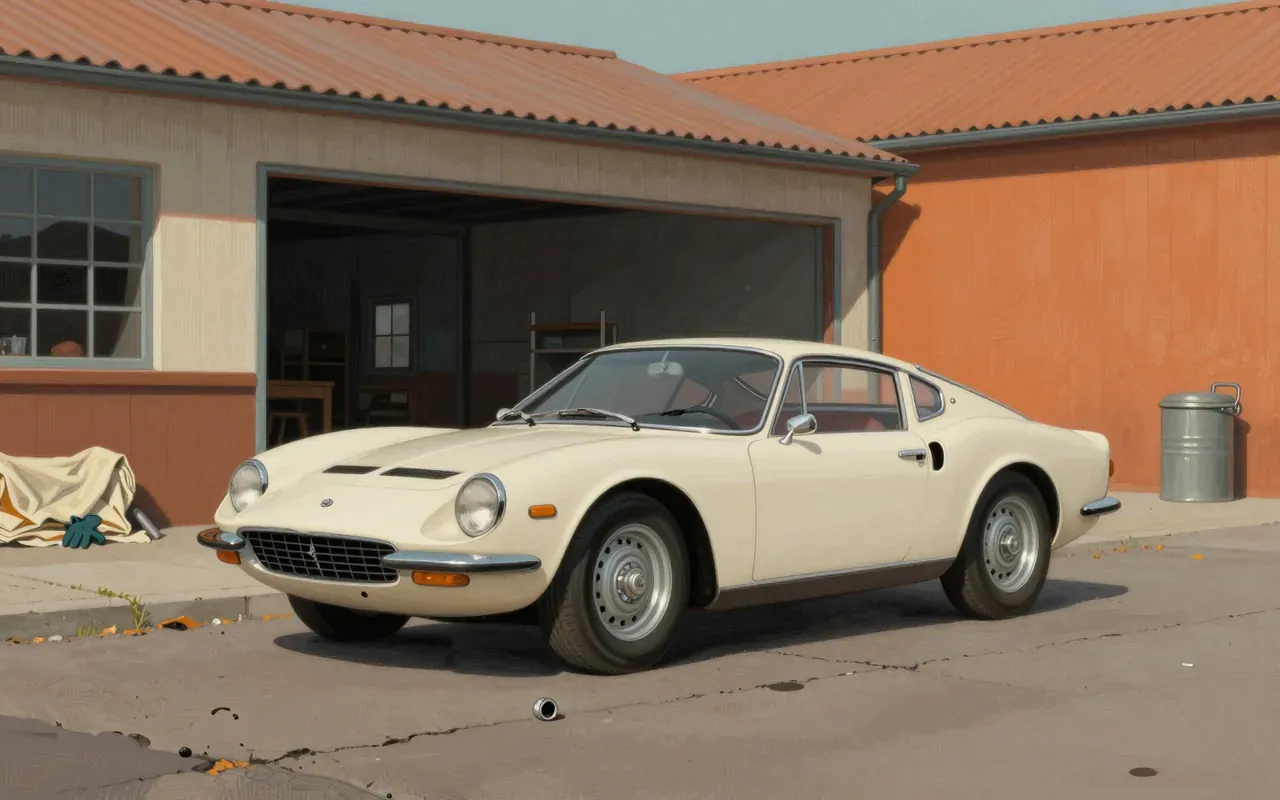
De Tomaso Vallelunga

A mid-engine experiment so raw it had to be scrapped when no one wanted it.

The De Tomaso Vallelunga is a foundational mid-engine sports car. Its aluminium Fissore body, Ford Kent engine and Volkswagen transaxle formed a lightweight, race-derived package—built in just fifteen examples before production shifted to Ghia. It is historically significant but physically sparse: no performance data, no driver testimonials, no surviving service history. Its value lies entirely in its architecture and provenance—not its execution.

Chapters & takeaways4
  1. 1:20
    The origin point

    It is De Tomaso’s first road car—and the first to place the engine behind the driver.

  2. 3:09
    The naming and the sketch

    Its name and shape came from a racetrack and a 25-year-old designer.

  3. 4:26
    The abandoned prototype

    It began as a sellable Spider concept—then became a scarce aluminium coupé nobody collected.

  4. 6:02
    The parts-bin logic

    Its Ford engine and VW gearbox proved mid-engine road cars could borrow from mass production.

Worth your time?

Yes. Drive the whole thing.

3.5/ 5
What works
  • weight distribution
  • compact packaging
  • mid-engine layout
  • backbone chassis load path
What does not
  • offer a convertible body
  • carry its own production lineage
  • provide documented driving character
Drive it if
  • people who study how chassis architecture evolves
Skip it if
  • collectors seeking volume, provenance or usability
  • drivers expecting comfort, service support or consistent build quality
The written brief2 min read

What the car is and where it came from

The De Tomaso Vallelunga is a mid-engine sports car—the first road-going automobile made by De Tomaso. It debuted as a concept named after the Autodromo di Vallelunga racing circuit, shown at the Turin Auto Show in 1963. After no buyer emerged, Carrozzeria Fissore built fifteen aluminium-bodied coupés to Alejandro de Tomaso’s rolling chassis in 1964.

How it works, in terms someone would actually use

The Vallelunga places the driver behind a Renault rack-and-pinion steering column, with feet on pedals connected to a Volkswagen Beetle transaxle. The engine is accessed by tilting back the entire rear body section. Air flows from the front-mounted radiator beneath the car, routed through the backbone chassis to the mid-mounted Ford Kent engine.

What it gets right

It gets the weight distribution and compact packaging right: mid-engine layout, sub-730 kg kerb weight, double wishbone front suspension and multi-link rear suspension all serve agility and responsiveness. The backbone chassis carries drivetrain loads directly, reinforcing the car’s purpose-built intent.

What it does not

It does not offer a convertible body: the Fissore version is a fixed-roof coupé, despite earlier prospectus claims of a Spider with weather equipment. It does not carry its own production lineage: only fifteen Fissore cars were built, and the Ghia-run production used fiberglass bodies and moved away from aluminum construction.

What it changed

It established De Tomaso’s mid-engine architecture as viable for road use—later scaled up in the Mangusta—and proved that a rolling chassis built around a mass-market engine and transaxle could underpin an original Italian sports car.

Who it is for, and who it is not

It is for people who study how chassis architecture evolves—not for collectors seeking volume, provenance or usability. It is not for drivers expecting comfort, service support or consistent build quality: many Fissore cars were scrapped unclaimed; later Ghia versions diverged materially.

Is it worth your time

Yes—if you care about how a raw, lightweight mid-engine layout was first realised in road form by De Tomaso. It is not worth your time if you seek refinement, proven durability or documented driving character beyond its mechanical configuration.
Same garage · Sports cars4 of 139
8:12
Alpine A110 (2017)Antony Villain · 2017The Alpine A110 (2017) is a rear mid-engine, rear-wheel-drive sports car built on an all-aluminium chassis and powered by a Nissan-derived 1.8-litre turbocharged inline-four engine. It debuted at the 2017 Geneva Motor Show. Production ended in June 2026.
8:32
Alpine A310Michel Beligond · 1971The Alpine A310 is a French sports car, launched in 1971 as Jean Rédélé’s final Alpine model. It debuted at the 1971 Geneva Motor Show. It used a tubular steel backbone chassis and a one-piece fiberglass body. Its engine was mounted longitudinally in the rear and drove the rear wheels via a five-speed manual gearbox. The driving position was low and sporty, with footwells angled toward the car’s centre.
9:14
Renault Alpine GTA/A610Heuliez · 1984The Renault Alpine GTA is a rear-engined sports coupé launched in 1985 by Alpine under full Renault ownership. It replaced the A310, sharing its layout and V6 PRV engine. Marketed as the Alpine V6 GT or V6 Turbo in Europe—and as the Renault GTA in Britain—it featured aerodynamic design (Cx 0.28–0.30), lightweight composite body panels, and a steel backbone chassis. Production spanned 1984–1995, totalling ~7,300 units across both GTA and A610 models.
9:40
BMW 8 Series (E31)Klaus Kapitza · 1989The BMW 8 Series (E31) is a two-door grand tourer built by BMW from 1990 to 1999. It uses a front-engine, rear-wheel-drive layout. It is powered by either a V8 or V12 engine. Development began in July 1981 and concluded in 1986. It debuted at the Frankfurt Motor Show in early September 1989. BMW used CAD tools to design its all-new body. Its drag coefficient is Cd=0.29. It replaced the E24 6 Series but was not a direct successor. Total production was 30,609 units.
Up next in Automotive

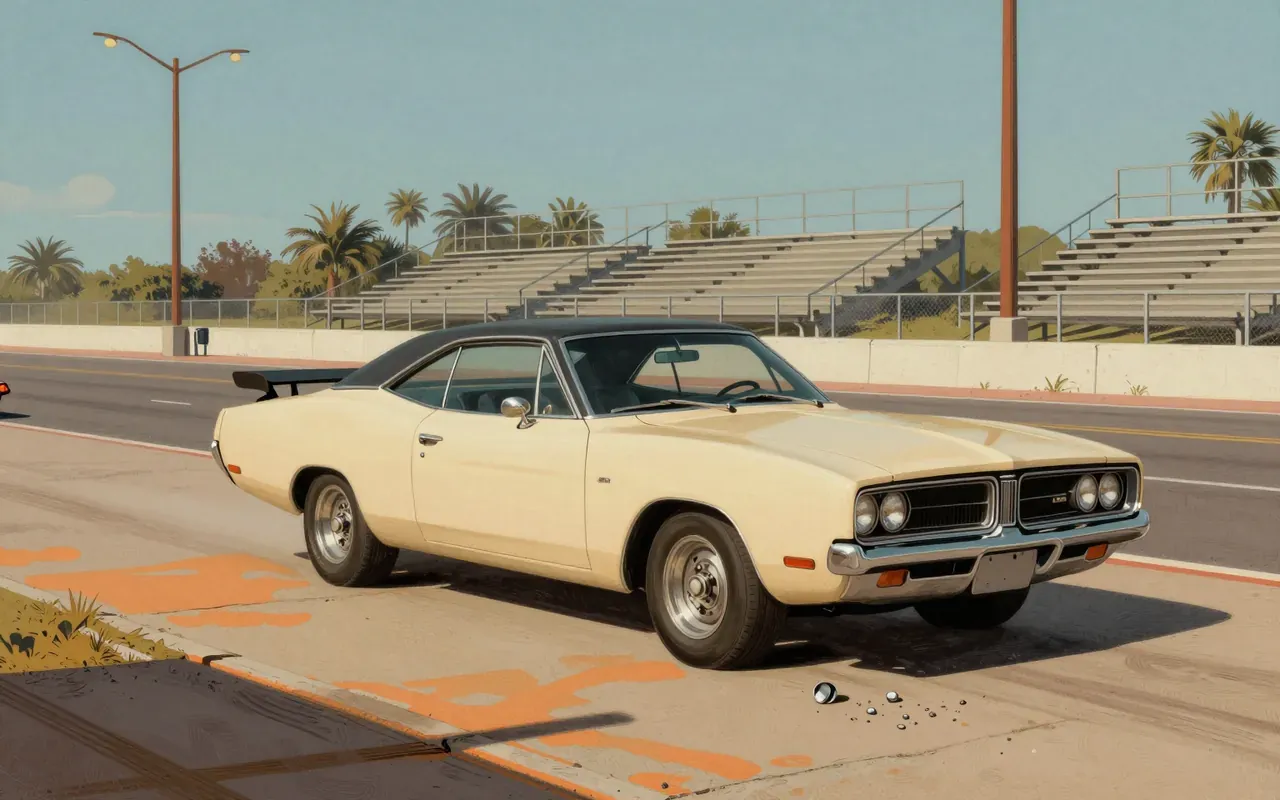
Dodge Charger Daytona

Chrysler Engineering · 1969 · 10:29

Aerodynamics broke the muscle car’s rules — and the Daytona was the first to weaponise it.

10:29