What the car is and where it came from
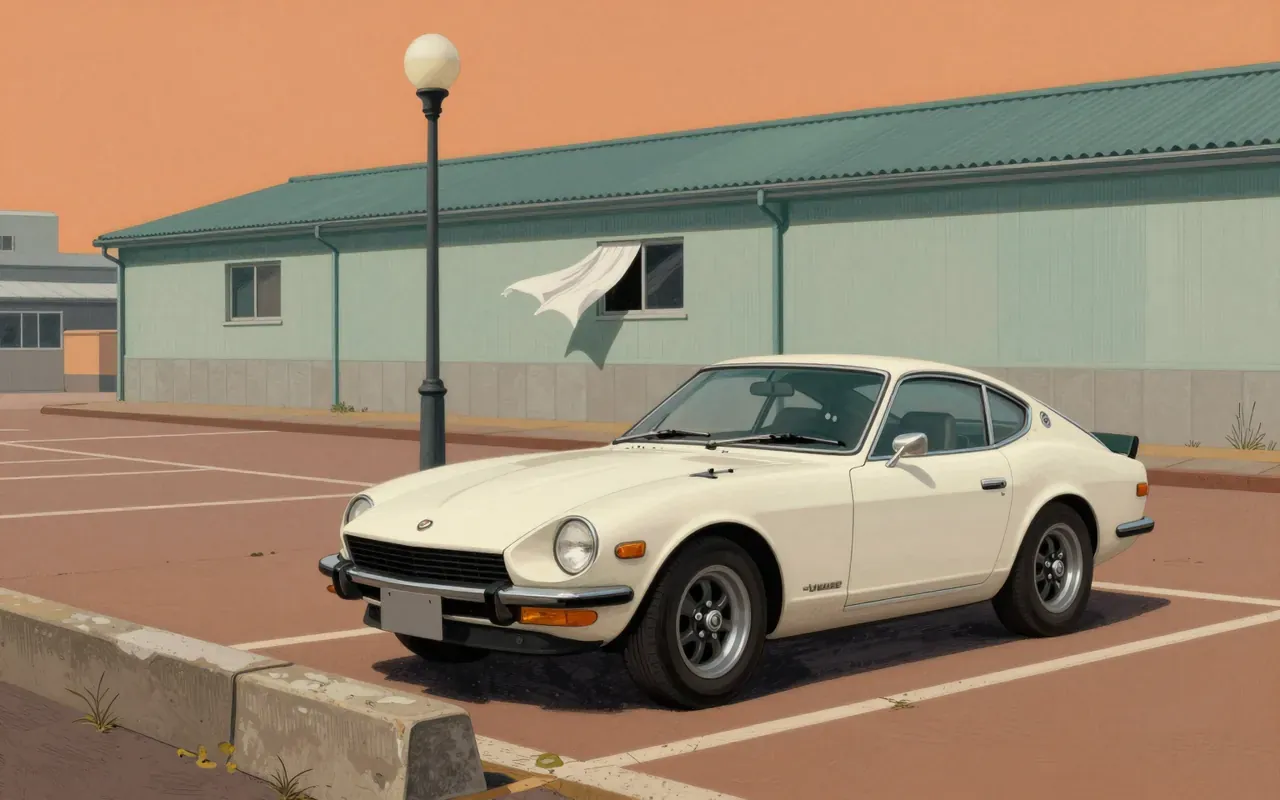
The Nissan Fairlady Z (S30) is the first model in Nissan’s Z series. Conceived by Yutaka Katayama and designed under Yoshihiko Matsuo’s leadership. Introduced in late 1969 as a 1970 model. Sold in Japan as the Fairlady Z and exported as the Datsun 240Z, 260Z, and 280Z.
How it works, in terms someone would actually use
Front-engine, rear-wheel drive layout. Four-wheel independent suspension. Overhead camshaft straight-six engine. Driver feels direct mechanical feedback through the wheel — no power assistance, no electronic intervention.
What it gets right
It gets right the relationship between driver and machine: low seating position, clear sightlines over the long bonnet, responsive steering, and a chassis tuned for real-world roads — not just track laps.
What it does not
It does not offer modern crash protection, driver aids, or cabin refinement. It lacks structural rigidity by current standards. Its interior is spartan, its visibility compromised by thick pillars and a high beltline.
What it changed
It shifted global perception of Japanese automakers from economy-car specialists to credible sports-car makers. It proved that precision engineering, independent suspension, and a six-cylinder engine could coexist at an accessible price.
Who it is for, and who it is not
It is for drivers who value mechanical honesty, visual coherence, and the physical logic of front-engine, rear-wheel drive. It is not for those who require comfort, isolation, or digital convenience.
Is it worth your time
Yes. It redefined what a mass-market sports car could be. Its engineering choices remain legible today in how it places weight, transmits road feel, and balances agility with stability.