automotivebriefs
10:43in productionCh. 1 · Twenty-six variations/ 10:43 · ceiling 15 min
Saloons & estates · Sports cars

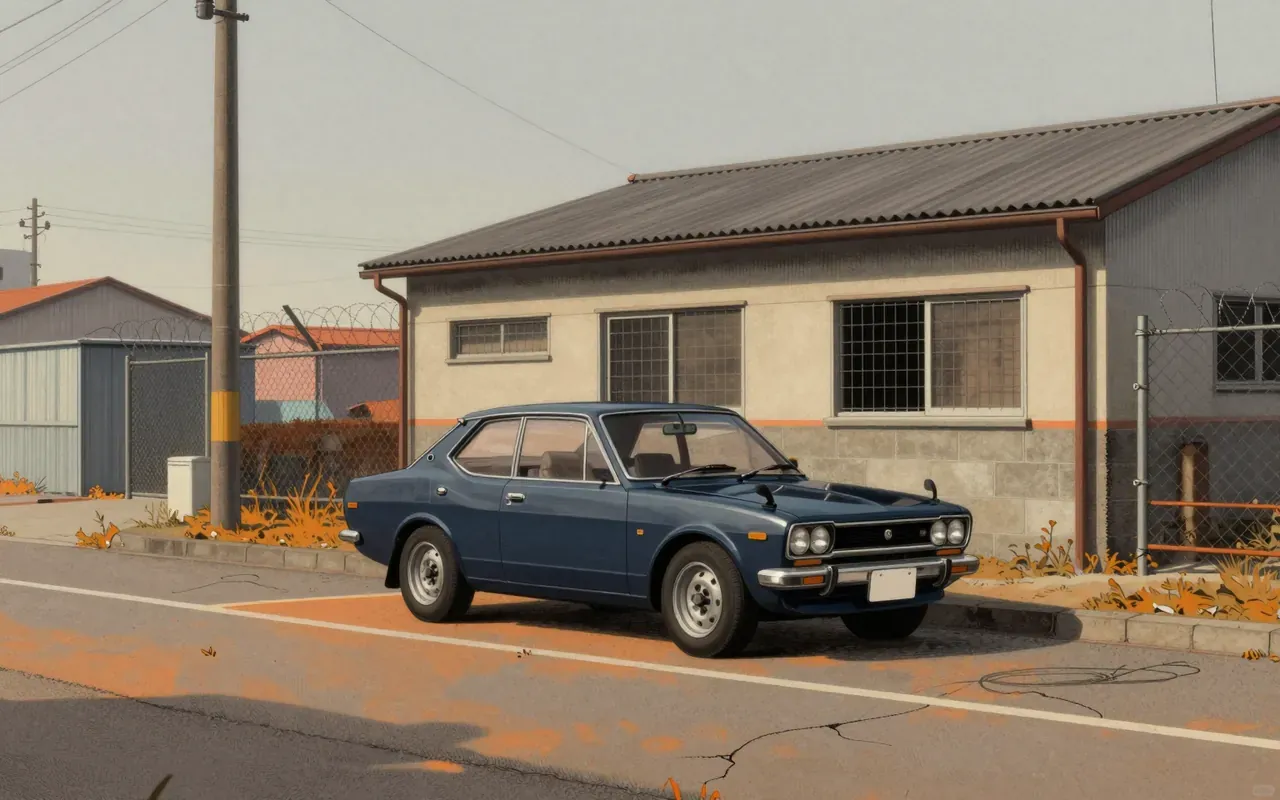
Nissan Skyline R30

The sixth-generation Skyline of 1981, offered in 26 variations from wagon to coupé and best known for the FJ20 twin-cam RS and its Iron Mask face.

The R30 Skyline launched in August 1981 on the Laurel platform as a coupé, sedan, Liftback and wagon. Its most famous version was the DR30 RS, powered by the FJ20 four-valve twin-cam four, turbocharged from 1983 and given the Tekkamen front end that year. The RS is credited with rejuvenating the Skyline brand and paved the way for the return of the GT-R badge.

Chapters & takeaways4
  1. 0:59
    Twenty-six variations

    The R30 launched in August 1981 on the Laurel platform as a hardtop coupé, sedan, five-door Liftback and wagon, in 26 variations in all.

  2. 2:05
    The FJ20 engine

    The 16-valve DOHC FJ20 debuted in late 1981 and was the first Japanese four-cylinder with more than two valves per cylinder.

  3. 3:18
    Turbo and Iron Mask

    The 2000RS-Turbo of February 1983 had the most powerful Japanese production engine of its era, and the August 1983 RS-X added the Tekkamen front end.

  4. 4:33
    On the track

    The DR30 raced in Australian Group A touring cars, and a silhouette-formula racer sharing design elements with the road RS won seven times in 1982 and 1983.

Worth your time?

Yes. Drive the whole thing.

4/ 5
What works
  • The FJ20 was the first Japanese four-cylinder with more than two valves per cylinder
  • The 2000RS-Turbo had the most powerful Japanese production engine of its era
  • The RS has been credited with rejuvenating the Skyline brand
What does not
  • The wagon had no turbo or six-cylinder versions and looked more like a Sunny
  • The Paul Newman Version was a top GT-ES turbo with embroidery and decals
  • The RS-X gave up the stripped-out cabin for electric windows, air conditioning and weight
Drive it if
  • Readers who want to know why the DR30 RS is a cult Nissan
  • Anyone tracing how the Skyline brand was rejuvenated before the R32 GT-R returned
Skip it if
  • Readers who want the GT-R, which did not exist in this generation
  • Anyone looking for a full account of the sedan and wagon range
The written brief2 min read

What the car is and where it came from

The R30 is the sixth-generation Skyline, launched in August 1981 and built on the Laurel platform (C31). Unlike earlier generations, the four- and six-cylinder versions now shared a front end of the same length. It came as a two-door hardtop coupé, a four-door sedan, a five-door Liftback, which only the R30 offered, and a four-door wagon, in 26 variations in all.

How it works, in terms someone would actually use

The coupé was pillarless with roll-down rear quarter windows, while the sedans had framed windows. Most versions had the four round tail lights that had become a Skyline trademark; the wagon had its own lights and looked more like a Nissan Sunny. Engines ranged from the 103 kW SOHC turbo six, the L20ET, down to the Z18S four and the LD28 diesel six. The 16-valve DOHC FJ20 arrived in late 1981. Some top models had suspension dampers adjustable while driving, another first for a mass-produced Japanese car. The August 1983 facelift made four-wheel disc brakes standard, replaced the Z18S with the CA18E and added door-mounted mirrors.

What it gets right

The DR30 chassis code covers every FJ20 model. The 2000RS of October 1981 was the stripped-down one, with a quoted curb weight of 1,130 kg and the naturally aspirated FJ20E making 110 kW. The 2000RS-Turbo of February 1983 raised that to 140 kW, the most powerful Japanese production engine of its era. In 1984 an intercooler lifted the Turbo C to 205 PS.

What it does not

The wagon stayed modest, with no turbo or six-cylinder versions. The Paul Newman Version of 1983 was a top-spec GT-ES turbo with signature embroidery and decals. The August 1983 RS-X added electric windows, air conditioning and power steering and a curb weight of about 1,235 kg, ending the spartan RS interior, although it could still be ordered.

What it changed

That 1983 RS got the Tekkamen front end, “Iron Mask” to fans, with slimmer headlights and a hood sloping to two narrow slits. The FJ20-powered R30 is a cult car at home and abroad, with one-make drag racing events in Japan, and is credited with rejuvenating the Skyline brand. It paved the way for the GT-R badge, missing since the C110 ended in 1973. The DR30 raced in Australian Group A touring cars in 1986 and 1987, and Nissan won the 1986 Australian Manufacturers’ Championship. The Skyline RS Silhouette Formula, with a Nova space frame and a turbo LZ20BT four of about 570 PS, won twice in 1982 and five times in 1983.

Who it is for, and who it is not

It is for readers who want to understand the R30 Skyline, centred on the FJ20 RS. It is not for those looking for a GT-R or a detailed account of the sedans.

Is it worth your time

Yes, if you want to know why a 1981 Skyline built on a Laurel platform became a cult car.
Same garage · Saloons & estates4 of 80
10:08
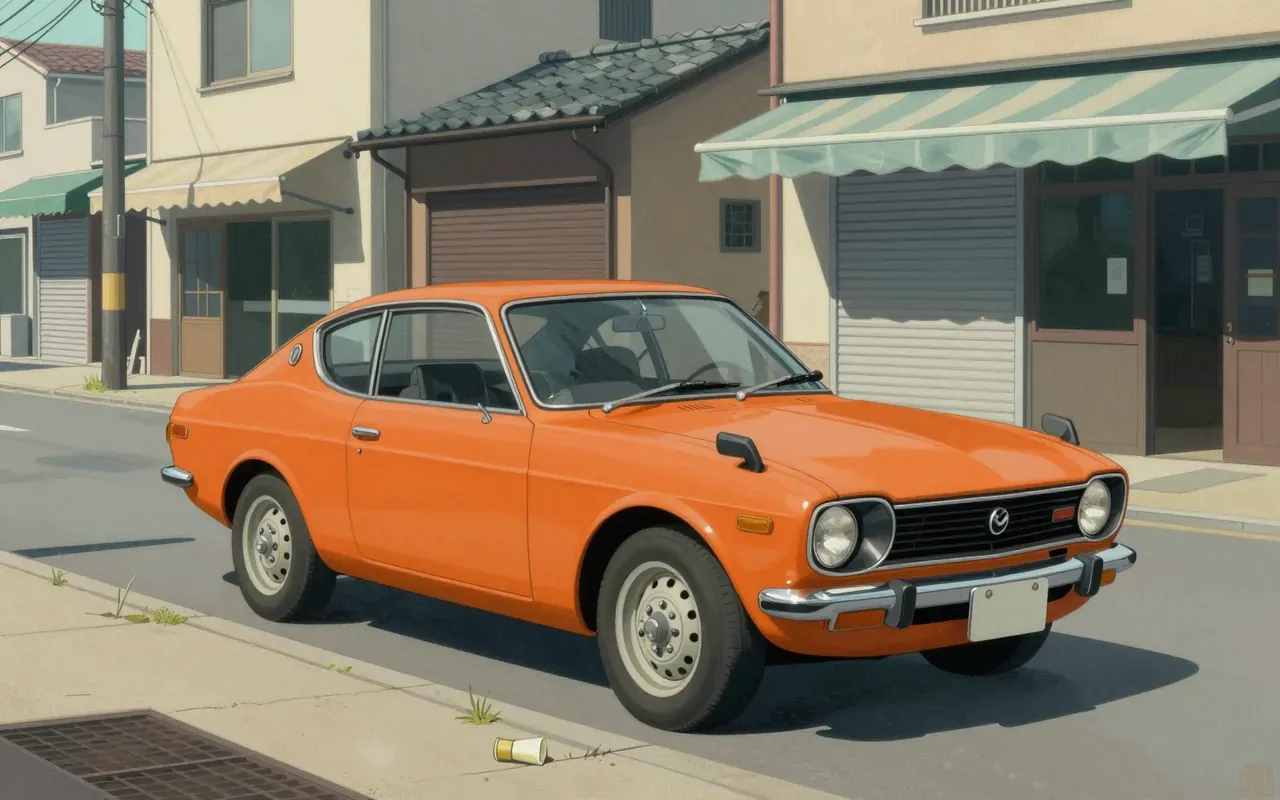
Mazda RX-3Mazda · 1971The RX-3 is what the world outside Japan called the Mazda Savanna, the rotary version of the Grand Familia. It came as a coupé, sedan and station wagon, started on the 10A rotary and moved to the larger 12A. It was the most popular of the rotary cars Mazda built before the RX-7, and it raced successfully in Japan, Australia, New Zealand and North America.
10:57
Alfa Romeo 156Walter de Silva · 1997The Alfa Romeo 156 is a compact executive car introduced at the 1997 Frankfurt Motor Show to replace the 155. Designed by Walter de Silva, it won the 1998 European Car of the Year award. It was produced from 1996 to 2007 in saloon, Sportwagon, and Crosswagon bodystyles. Assembly occurred in Pomigliano d'Arco, Italy and Rayong, Thailand. 673,435 units were built.
9:36
Volkswagen PhaetonHartmut Warkuß · 2002The Volkswagen Phaeton was a full-size saloon and Volkswagen’s ‘premium class’ vehicle. Introduced at the 2002 Geneva Motor Show, it was conceived by Ferdinand Piëch to surpass Mercedes-Benz and BMW in comfort and engineering excellence—not performance. It used a bespoke all-steel D1 platform shared with Bentleys, diverging from Audi’s aluminium A8. It featured radar adaptive cruise control, the first V10 TDI in a production sedan, and hand assembly at Dresden’s Transparent Factory. Sales in North America ended in 2006; global sales ended in 2016 after 84,253 units. Production ceased in March 2016.
10:06
Citroën XMBertone · 1989The Citroën XM is a pivotal failure: technically audacious, commercially inert, and stylistically isolated. It advanced hydropneumatic suspension into the electronic age — but lost the emotional and mechanical connection that made Citroën’s earlier flagships endure.
Up next in Automotive

Pagani Zonda C12

Horacio Pagani · 1999 · 9:20

The first Pagani, a mainly carbon-fibre mid-engine car with a 6.0 L Mercedes V12 that debuted at Geneva in 1999, and of which only five were built with that engine.

9:20