automotivebriefs
9:57in productionCh. 1 · Drawn on a supercomputer/ 9:57 · ceiling 15 min
Sports cars

Nissan 300ZX Z32

The second-generation 300ZX took the Z-car upmarket with a wider, rounder body, a twin-turbo V6 and a price that kept climbing.

The Z32 is the second-generation Nissan 300ZX, sold in Japan as the Fairlady Z from 1989 to 2000 and in the US from 1990 to 1996. Isao Sono and Toshio Yamashita designed it, with a 3.0 L V6 offered naturally aspirated or with twin turbochargers, and Nissan drove it up-market, faster, more advanced and dearer than the Z31 it replaced. Car and Driver named it to its Ten Best list seven years running.

Chapters & takeaways4
  1. 0:58
    Drawn on a supercomputer

    Isao Sono and Toshio Yamashita's design was approved in October 1986, and Nissan used a Cray-2 supercomputer and a form of CAD to design it.

  2. 2:56
    One V6, two states of tune

    The 3.0 L VG30DE made 222 bhp; the twin-turbo VG30DETT made 300 bhp, and it was the first car sold after the 280 PS power ceiling.

  3. 4:42
    The price climbed, the sales fell

    A car priced near $30,000 in 1989 cost about $50,000 by its last US year, and US sales ended after 1996.

  4. 6:08
    Winning on track and in print

    Car and Driver's Ten Best for seven years, Motor Trend's 1990 Import Car of the Year, and a 1994 win at the 24 Hours of Daytona.

Worth your time?

Yes. Drive the whole thing.

4/ 5
What works
  • the twin-turbo V6 with its adjustable two-mode suspension
  • a wide, rounded body with fewer hard edges
What does not
  • stay affordable as the price rose each model year
  • keep its US sales as the market moved toward SUVs
Drive it if
  • people who want to see how far a Japanese sports car was pushed up-market around 1990
  • people drawn to twin-turbo power with four-wheel steering
Skip it if
  • people who want an affordable, simple Z-car
  • people who expect a car that stayed on sale in the US past 1996
The written brief2 min read

What the car is and where it came from

The Z32 is the second generation of the Nissan 300ZX, the sports car sold in Japan as the Fairlady Z. It followed the Z31, which had been a sales success and the highest-volume Z-car Nissan built. To stay competitive, Nissan drove the new car up-market: faster, with more advanced technology, and at a higher price. Isao Sono and Toshio Yamashita designed it, and Nissan management approved the final form on October 1, 1986. It ran from 1989 to 2000 in Japan and from 1990 to 1996 in the US.

How it works, in terms someone would actually use

The body is wider and rounder than the Z31’s, with fewer hard edges, and a drag coefficient of 0.31 against the Z31’s 0.30. Nissan used a Cray-2 supercomputer and a form of CAD to design it, which made it one of the first production cars to do so. It came as a 2+2 or a two-seater, with T-tops as standard, and the two-seater “Slicktop” had a solid roof. A two-seat convertible built by ASC arrived in 1992.

The 3.0 L VG30DE V6 had a DOHC head and variable valve timing and made 222 bhp. The twin-turbo VG30DETT, with two Garrett turbochargers and dual intercoolers, made 300 bhp. Every Z32 used a multilink rear suspension, and turbo cars added a two-mode adjustable suspension and Super HICAS four-wheel steering.

What it gets right

Car and Driver put the Z32 on its Ten Best list for each of the seven model years it was sold in the US, and Motor Trend named it 1990 Import Car of the Year. It also won comparison tests against rivals including the Toyota Supra, Mazda RX-7 and Porsche 968. On track, a twin-turbo 300ZX won the 1994 24 Hours of Daytona and took the GTS-1 class at that year’s 24 Hours of Le Mans.

What it does not

It got dearer every year. A 1989 car cost around $30,000 and the last model year cost about $50,000, and with SUVs rising in popularity and the yen strengthening, US sales ended after 1996 with over 80,000 sold. The sales figures show the slide: 17,652 in 1991, 6,708 in 1992 and 2,929 in 1996.

What it changed

The Z32 was the first car sold after Japan’s manufacturers agreed to a 280 PS power ceiling, which stood until 2004. American Z-car sales passed one million during the 1990 model year, which made it the best-selling sports car at that point. Its headlights were later used under licence on the Lamborghini Diablo.

Who it is for, and who it is not

It suits people who want a turbocharged Japanese coupé from the early 1990s, with the technology that came with it. It does not suit anyone who wants the cheaper, higher-volume Z31 formula, or who wants to buy one new in the US after 1996.

Is it worth your time

Yes. It marks the point where the Z-car stopped chasing volume and went for speed, technology and price, and the sales that followed show what that cost.
Same garage · Sports cars4 of 157
10:43
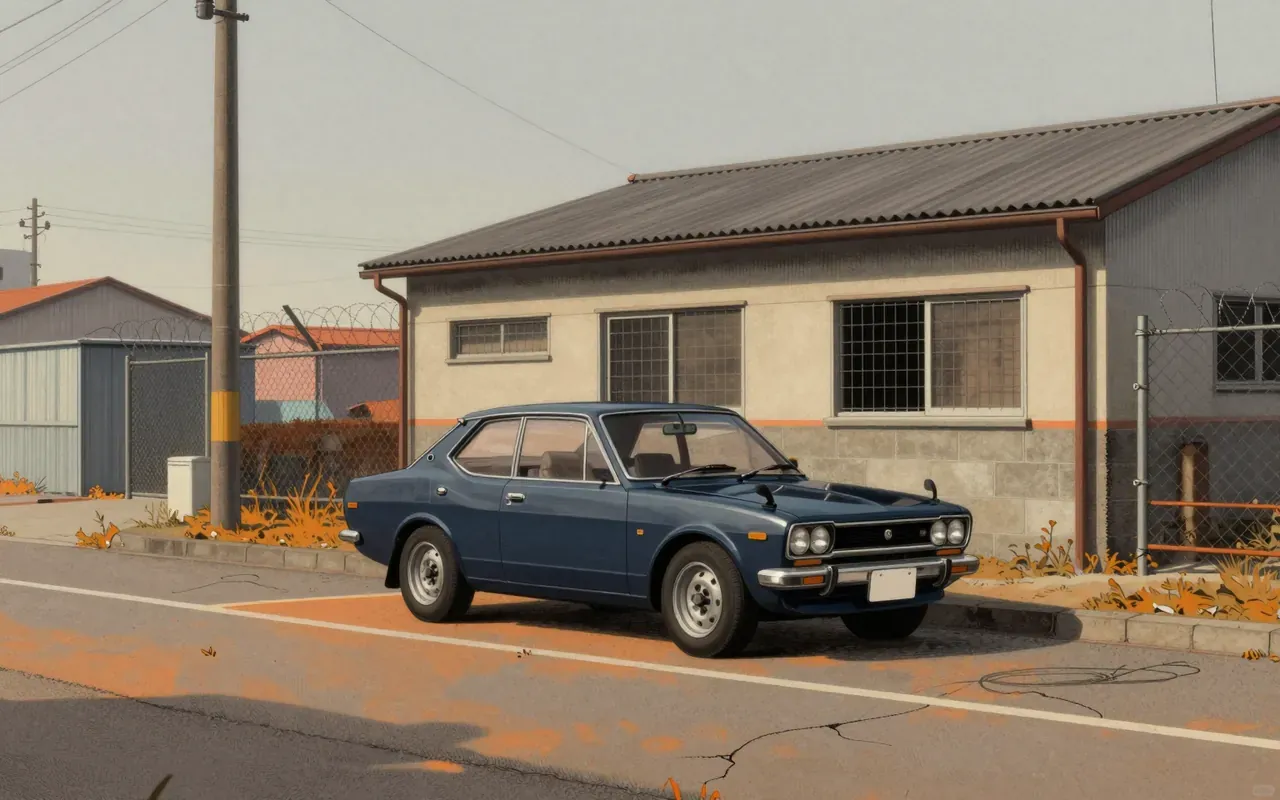
Nissan Skyline R30Nissan · 1981The R30 Skyline launched in August 1981 on the Laurel platform as a coupé, sedan, Liftback and wagon. Its most famous version was the DR30 RS, powered by the FJ20 four-valve twin-cam four, turbocharged from 1983 and given the Tekkamen front end that year. The RS is credited with rejuvenating the Skyline brand and paved the way for the return of the GT-R badge.
10:11
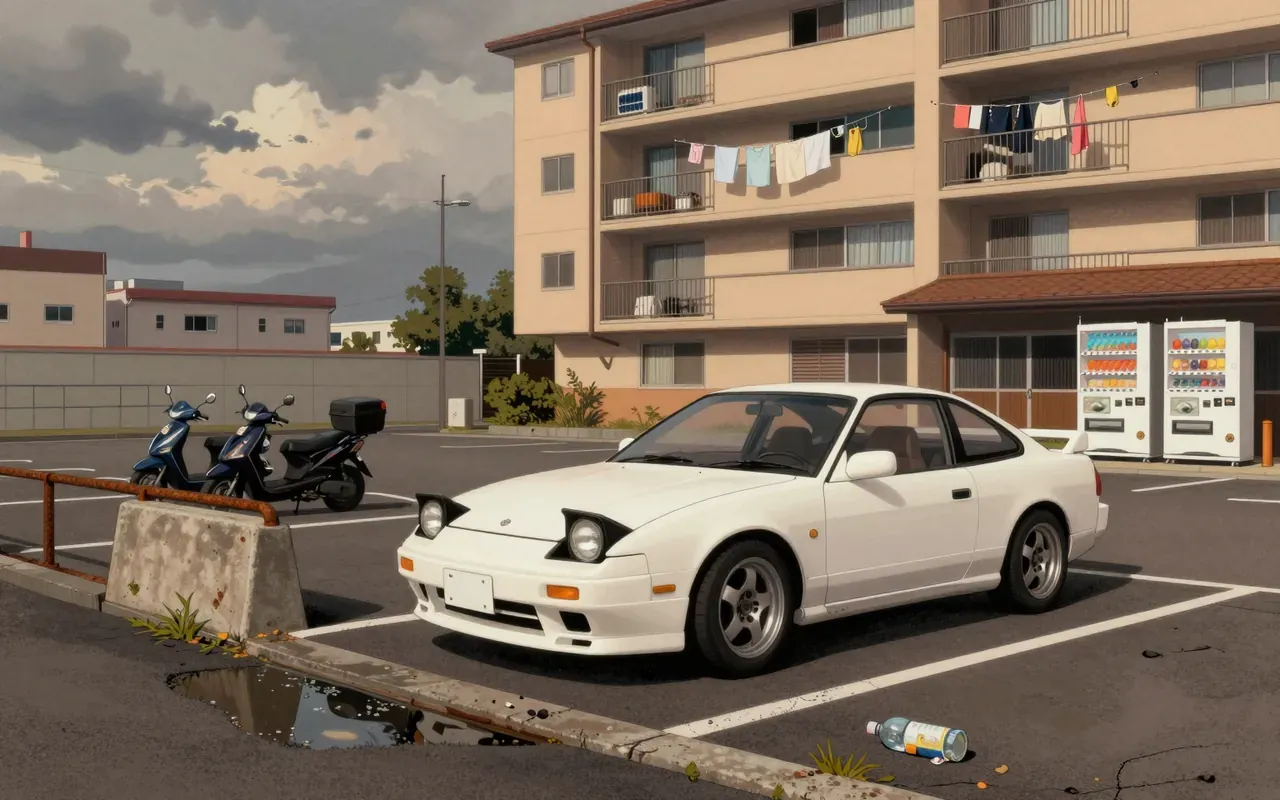
Nissan 180SXNissan · 1989The Nissan 180SX is a Japanese-market fastback built from 1988 to 1998 on the S13 platform. It featured pop-up headlights and a liftgate. It launched in March 1989 and was sold exclusively through Nissan Prince Stores alongside the Skyline and Silvia. It used the CA18DET turbo engine initially, then upgraded to the SR20DET in 1991 and added the SR20DE in 1996.
9:59
Nissan Silvia S13Nissan Design · 1988The S13 Silvia went on sale in Japan in May 1988 and won the Car of the Year Japan award in its first year. It paired a multi-link rear suspension with the HICAS four-wheel steering system, moved from the CA18 turbo four to the SR20 in 1991, and was built as a coupé until 1993. Its hatchback sister, the 180SX, carried the platform abroad as the 200SX and 240SX.
9:16
Maserati BoraGiorgetto Giugiaro · 1971The Maserati Bora is a pivotal machine: the first mid-engined street car and first with four-wheel independent suspension from Maserati. Designed by Giorgetto Giugiaro at Italdesign in the late 1960s, it launched in 1971 under Citroën ownership and ended production in 1978 after De Tomaso’s acquisition. Its 0.30 drag coefficient and ‘gentle bends’ reflect a transitional moment in automotive design—between organic curves and hard-edged modernism. Named after the Bora wind of Trieste, it redefined what a Maserati grand tourer could be: technically current, aerodynamically advanced, and architecturally coherent.
Up next in Automotive

Nissan Silvia S13

Nissan Design · 1988 · 9:59

The compact Nissan coupé of 1988 that brought multi-link rear suspension and four-wheel steering to the Silvia and later became a popular drift and time-attack car.

9:59