Saved
Sports cars

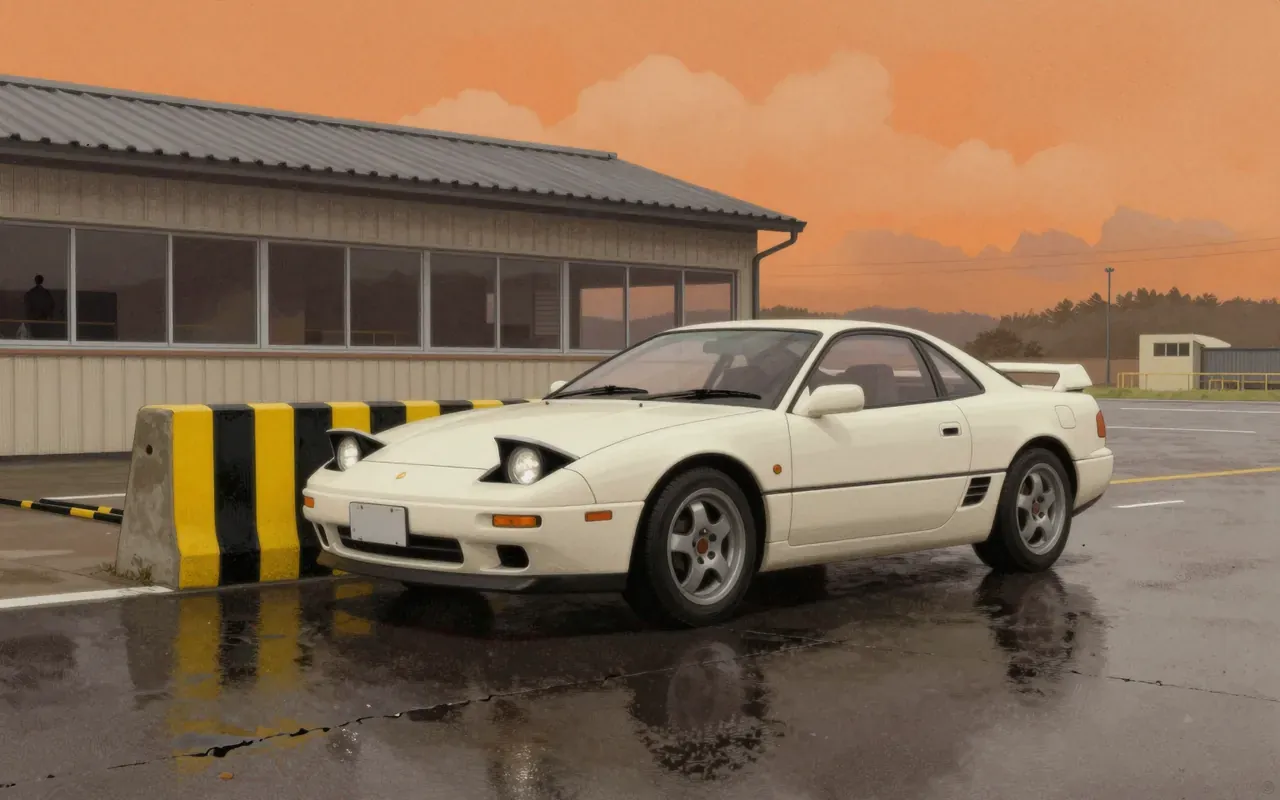
Mitsubishi 3000GT

A front-engine, all-wheel-drive GT that chose traction and tech over tradition—and never apologised.

Worth your time?3.5/5Yes.Drive the whole thing.What works, what does not, who it is for ↓
9:24in productionCh. 1 · Layout by design/ 9:24 · ceiling 15 min
4 chapters · 9:24Ceiling 15:00

The brief is written and checked. The video joins this page when it is cut.4 chapters · 1 min read · 9:24 planned

Read the brief

The Mitsubishi 3000GT is a front-engine, all-wheel/front-wheel drive grand touring/sports car built in Nagoya, Japan, from 1990 to 2000. It uses a transverse-mounted 3-litre, 24-valve V6 and shares mechanical underpinnings with the Sigma/Diamante. It was manufactured in a three-door hatchback coupé body style. Approximately 86,151 units were produced.

Chapters & takeaways4
  1. 0:58
    Layout by design

    Front-engine, all-wheel/front-wheel drive defines its traction-first philosophy.

  2. 2:32
    Hatchback, not hardtop

    Three-door hatchback packaging enables practicality without sacrificing coupé form.

  3. 4:10
    Engine: transverse, not tuned

    Transverse 3.0L V6 shares architecture with the Sigma/Diamante—not a bespoke sports engine.

  4. 6:14
    Production scale: mainstream, not rare

    86,151 units confirm it was a volume GT—not a low-run halo.

1 more chapterFewer chapters
Worth your time?

Yes. Drive the whole thing.

3.5/ 5
What works
  • integrates all-wheel drive with front-engine, transverse-V6 layout
  • delivers consistent traction and stability at speed
  • packages advanced electronics into a production GT coupe
What does not
  • rear-wheel drive
  • longitudinal engine
  • two-seater layout
Drive it if
  • buyers who value all-wheel traction
  • buyers who value cabin refinement
  • buyers who value 1990s digital instrumentation
Skip it if
  • those seeking rear-wheel-drive purity
  • those seeking lightweight agility
  • those seeking driver-focused feedback
Who should drive it, and who should skipHide who it is for
The written brief1 min read

What the car is and where it came from

The Mitsubishi 3000GT is a front-engine, all-wheel/front-wheel drive grand touring/sports car. It was built in Nagoya, Japan, from 1990 to 2000. It used a transverse-mounted 3-litre, 24-valve V6. It was sold as the GTO in Japan and 3000GT elsewhere.

How it works, in terms someone would actually use

It sends power to all four wheels or just the front, depending on trim. The transverse V6 sits ahead of the front axle. The three-door hatchback body gives rear visibility and cargo access.

What it gets right

It integrates all-wheel drive with a front-engine, transverse-V6 layout. It delivers consistent traction and stability at speed. It packages advanced electronics into a production GT coupe.

What it does not

It does not offer rear-wheel drive. It does not use a longitudinal engine. It does not have a two-seater layout.

What it changed

It showed Mitsubishi could build a high-spec, all-wheel-drive GT car with active aerodynamics and adjustable suspension—without adopting a rear-wheel-drive layout.

Who it is for, and who it is not

It is for buyers who value all-wheel traction, cabin refinement, and 1990s digital instrumentation in a hatchback GT. It is not for those seeking rear-wheel-drive purity, lightweight agility, or driver-focused feedback.

Is it worth your time

Yes—if you want a 1990s Japanese grand tourer that prioritises all-wheel traction and cabin tech over driver engagement.
Same garage · Sports cars4 of 157
8:50
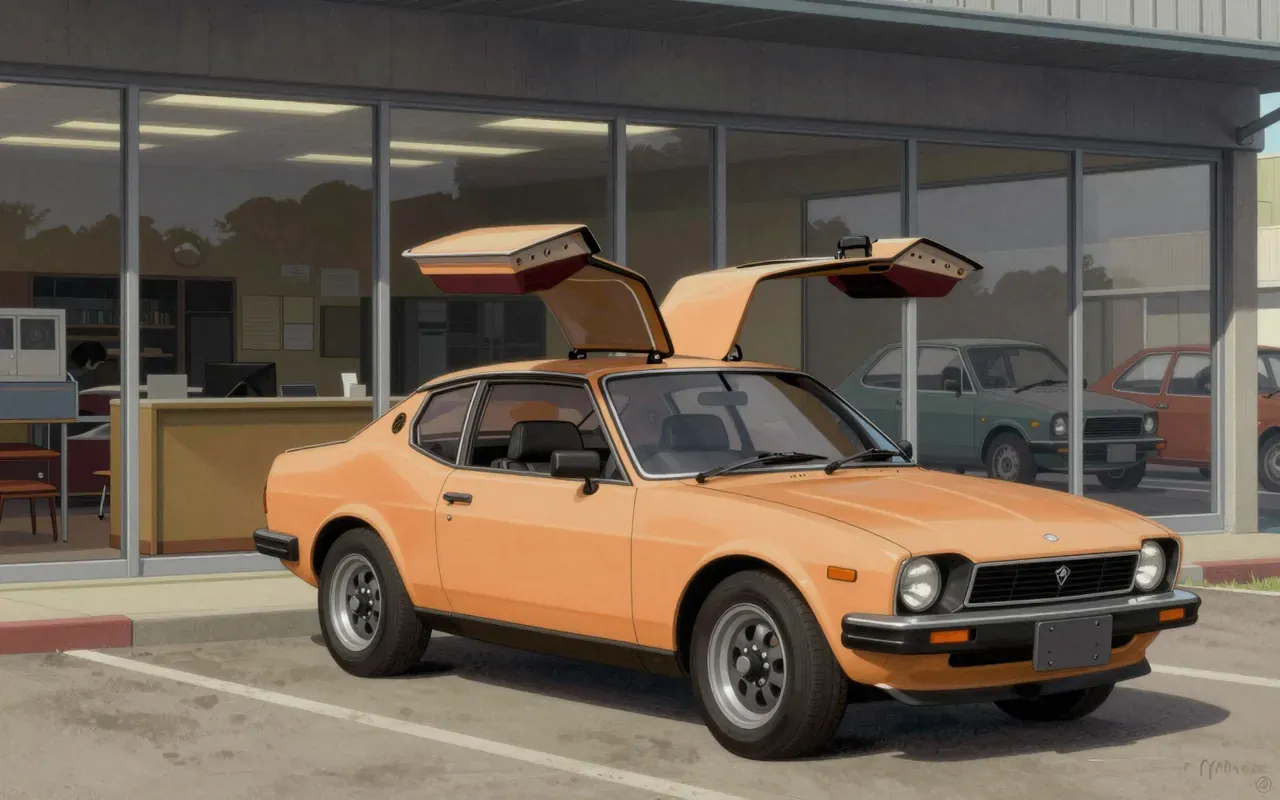
Autozam AZ-1Toshiko Hirai · 1992The Autozam AZ-1 is a tightly packaged, rear mid-engine kei sports car built by Mazda between October 1992 and October 1994. It uses a Suzuki-sourced 657 cc turbocharged engine and features gullwing doors. Its design prioritises driver engagement and compact agility over practicality or comfort.
10:21
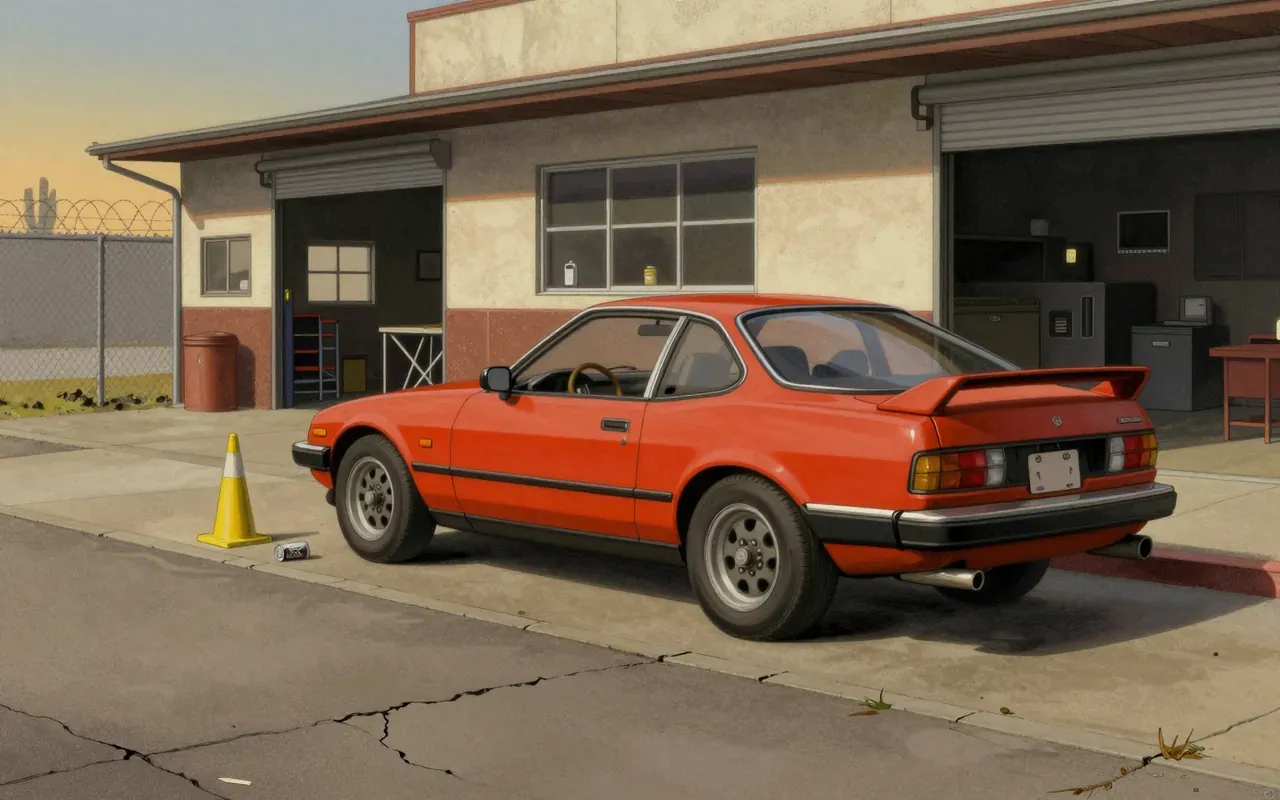
Mazda RX-7Akio Uchiyama · 1985The Mazda RX-7 is a Japanese sports car made by Mazda from 1978 to 2002. It uses a front mid-engine, rear-wheel-drive layout and a compact, lightweight Wankel rotary engine. The first generation is a two-seater coupé with a rear hatchback. Later generations added 2+2 and convertible options, but the core two-seater coupé remained. More than 800,000 were built, including 471,018 first-generation units.
9:57
Nissan 300ZX Z32Toshio Yamashita · 1989The Z32 is the second-generation Nissan 300ZX, sold in Japan as the Fairlady Z from 1989 to 2000 and in the US from 1990 to 1996. Isao Sono and Toshio Yamashita designed it, with a 3.0 L V6 offered naturally aspirated or with twin turbochargers, and Nissan drove it up-market, faster, more advanced and dearer than the Z31 it replaced. Car and Driver named it to its Ten Best list seven years running.
10:36
Honda S800Honda · 1966The Honda S800 is a 1965 sports car built to prove Honda could engineer a high-revving, lightweight, chain-driven automobile capable of 100 mph. It replaced the S600 as Honda’s image car. It was available as a roadster or coupe. Early units used chain drive and independent rear suspension. Just 994 chain-drive examples were built. Its 791 cc straight-4 produced 70 hp at 8,000 rpm and revved to 10,000 rpm.
Up next in Automotive

Nissan Fairlady Z (S30)

Yoshihiko Matsuo · 1969 · 11:08

A front-engine, rear-wheel drive coupé that made six-cylinder sophistication and independent suspension standard equipment — not premium extras.

11:08