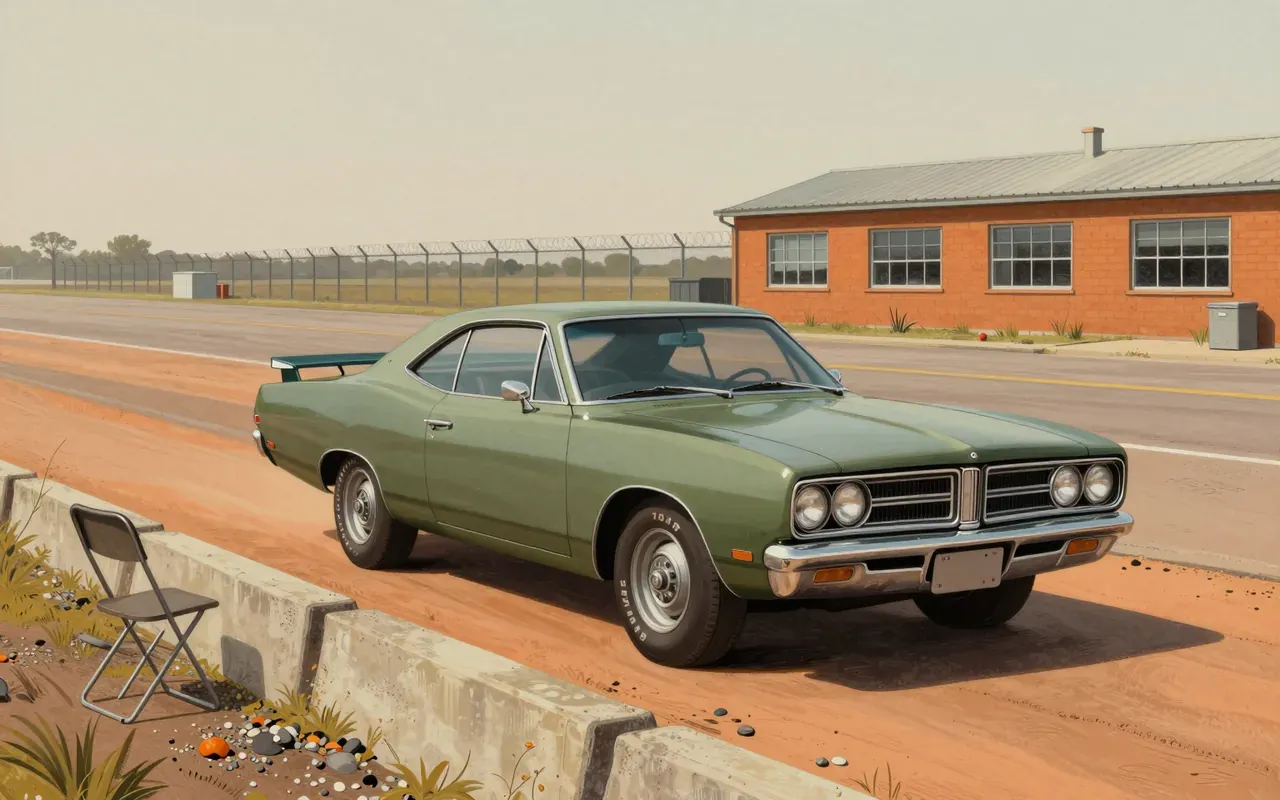
What the car is and where it came from
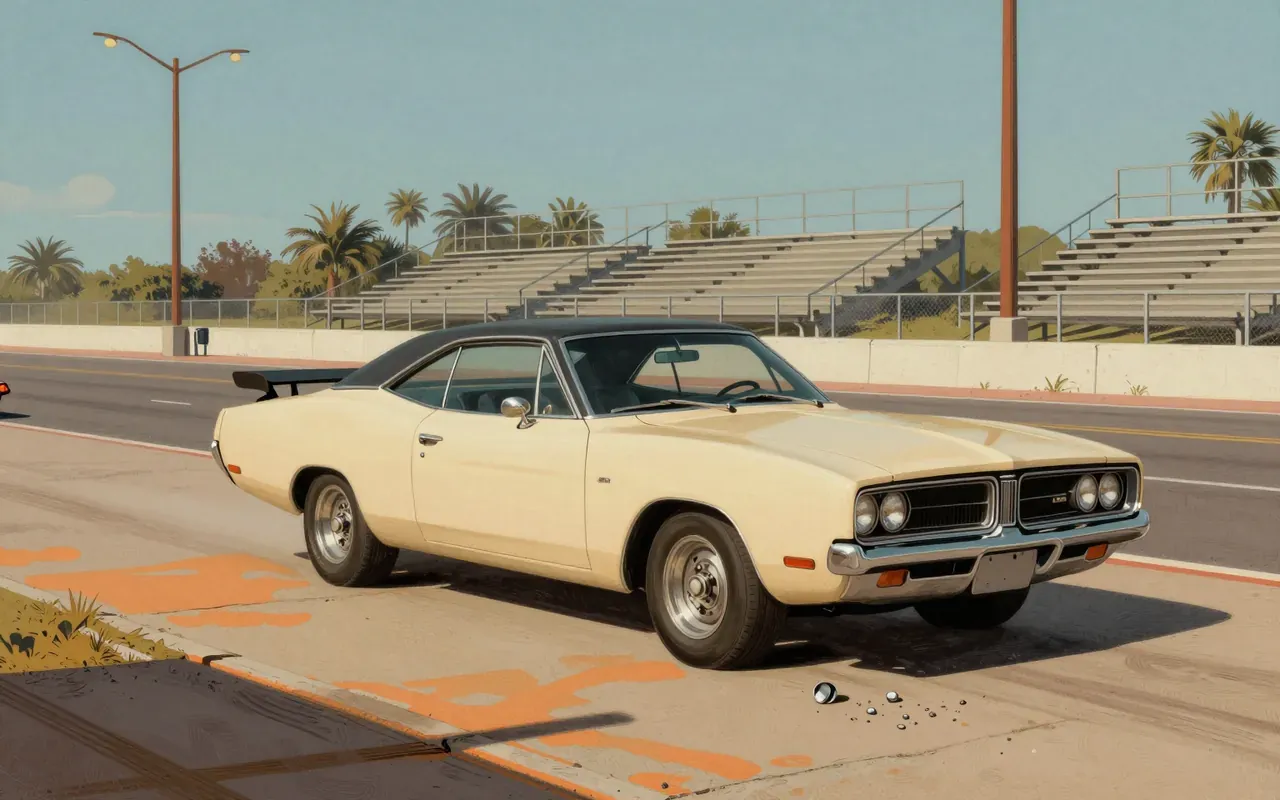
A 1970-only, NASCAR-homologated variant of the Plymouth Road Runner, engineered by Chrysler Engineering as Plymouth’s direct reply to the 1969 Dodge Charger Daytona—and to lure Richard Petty back from Ford.
How it works, in terms someone would actually use
The Superbird is a Plymouth Road Runner stretched nineteen inches by a fibreglass nosecone and pop-up headlights, with a high rear wing on tall struts to lift it into cleaner airflow. Its aerodynamic body was built for NASCAR speed, not street agility.
What it gets right
It gets downforce right: the wing’s height and the nosecone’s shape were tuned from Charger Daytona data to stabilise high-speed drafting. It gets identity right: the ‘beep, beep’ horn and cartoon-derived graphics made its purpose unmistakable.
What it does not
It does not handle like a Road Runner. It does not blend into traffic. It does not offer practicality—the nosecone and wing compromise visibility, access, and parking. It does not exist beyond 1970.
What it changed
It forced Ford to counter with the Torino Talladega and Mercury Cyclone, confirming that NASCAR homologation could drive radical street-legal aerodynamic design across Detroit.
Who it is for, and who it is not
It is for racers, collectors, and students of automotive regulation-driven design. It is not for commuters, restorers without Mopar-specific parts knowledge, or anyone who dislikes conspicuous, uncompromising machinery.
Is it worth your time
Yes—if you care about how a factory race car reshaped American motorsport aesthetics and engineering logic in one season. No—if you expect daily usability, subtlety, or mechanical simplicity.