What the car is and where it came from
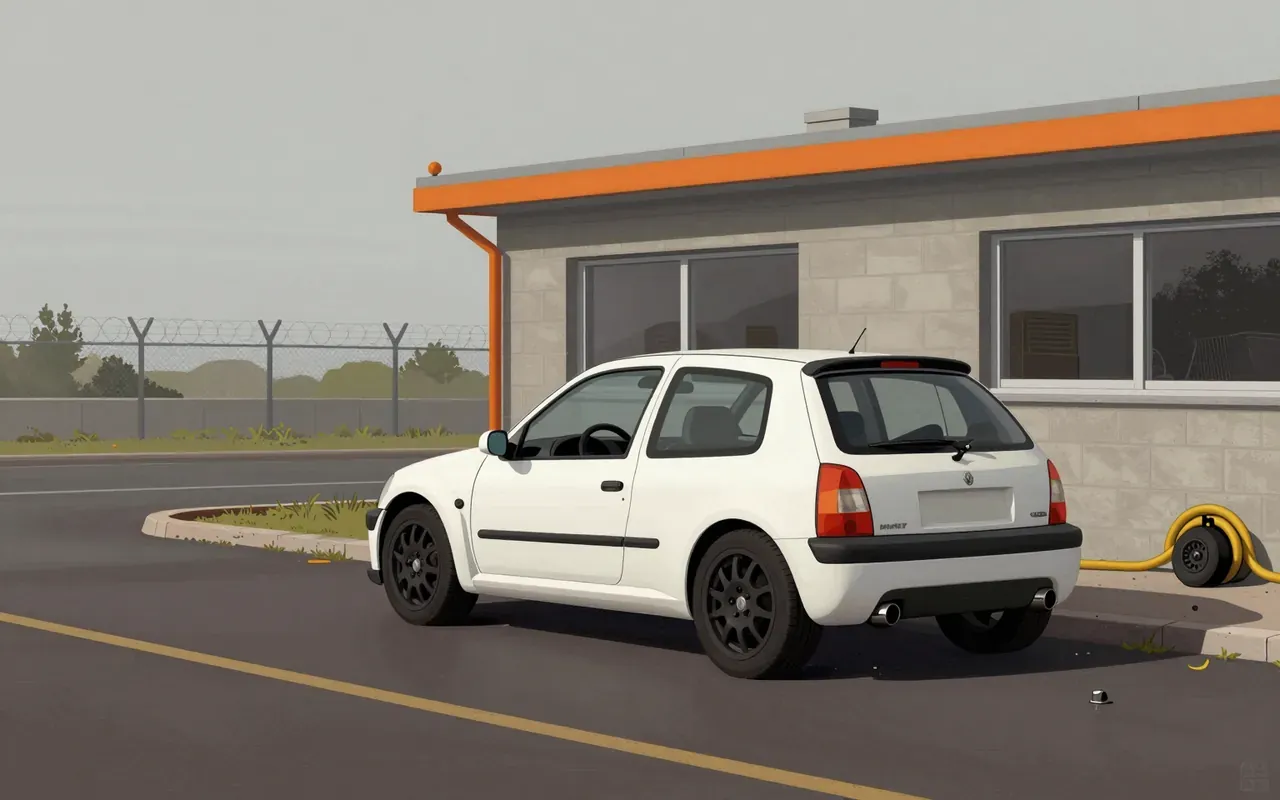
A rear mid-engine, rear-wheel-drive hot hatch launched in 2001. Based on the Clio Mk II in name only. Developed by TWR. Built in two phases: Phase 1 in Uddevalla, Sweden; Phase 2 in Dieppe, France.
How it works, in terms someone would actually use
It places the driver behind a wide, mid-mounted V6, with rear-wheel drive and no front-drive hardware to compromise weight or width. The cabin is narrow. Entry requires stepping over a high sill into a low seat. Vision forward is tight. Vision rearward is near-zero.
What it gets right
It gets the layout right: mid-engine balance, rear-drive directness, and a wide track that echoes the Renault 5 Turbo’s aggression. It gets rarity right: low-volume, hand-built, split between Sweden and France.
What it does not
It does not offer everyday usability. It does not share parts with the Clio Mk II beyond nominal lineage. It does not prioritise comfort, visibility, or accessibility.
What it changed
It proved a production hot hatch could be mid-engined, wide-bodied, and race-derived without sharing parts with its donor car. It redefined what ‘based on the Clio’ meant: not a variant, but a statement of intent.
Who it is for, and who it is not
It is for collectors who value mechanical audacity over convenience. It is not for daily drivers, families, or anyone who needs to see out of the car.
Is it worth your time
Yes—if you want to understand how far a hot hatch can stretch before it stops being one. No—if you need practicality, visibility, or ease of use.