automotivebriefs
9:05in productionCh. 1 · What it is/ 9:05 · ceiling 15 min
Road · Sports cars

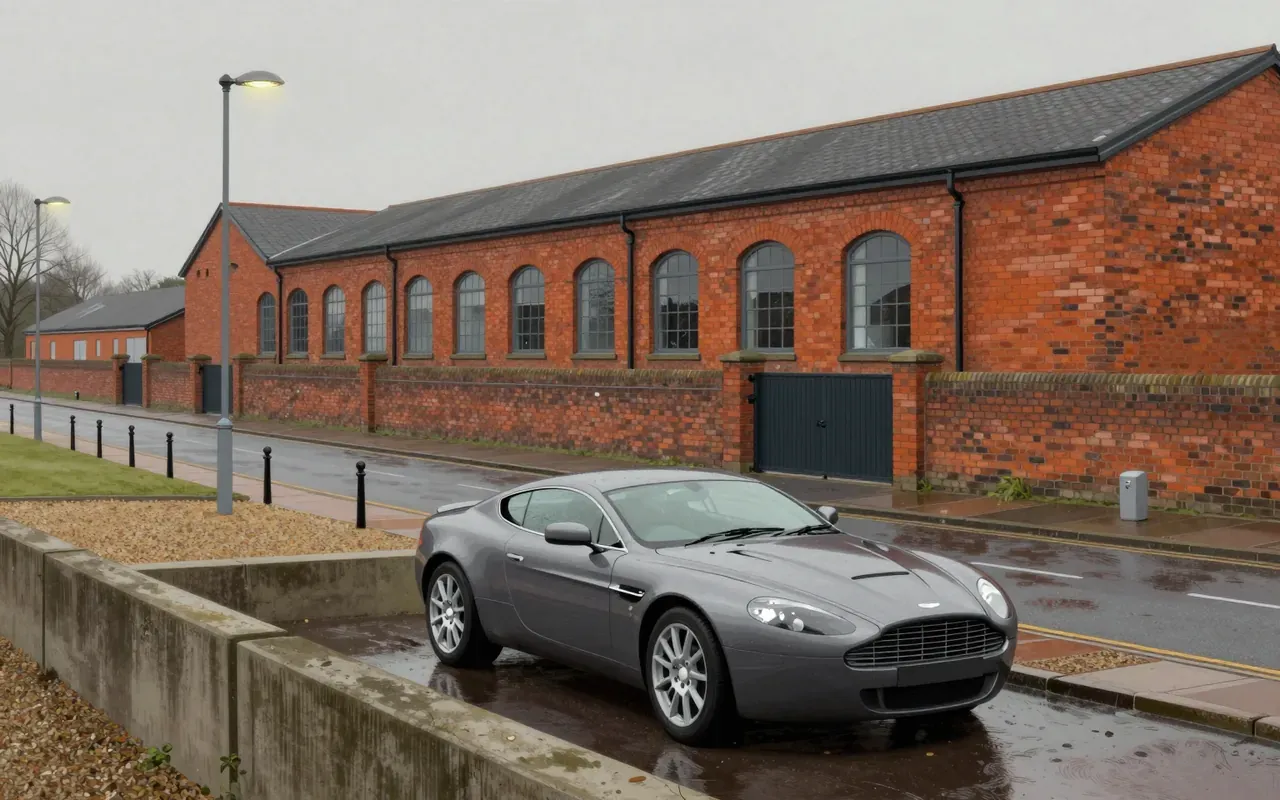
Aston Martin DB9

A grand tourer built to carry Aston Martin into the 21st century—not by reinventing the wheel, but by repositioning the engine and the material.

The DB9 is a two-door grand tourer designed by Ian Callum and Henrik Fisker. It was built in Gaydon, Warwickshire. Production ran from 2004 (coupé) to 2016, with the Volante convertible added in 2005. It uses aluminium and composites on a vertical/horizontal platform, with a front mid-engine, rear-wheel drive layout. It features a 5.9 L V12 engine. Henrik Fisker led its production design, drawing on Aston Martin’s heritage while enabling scalable manufacturing.

Chapters & takeaways4
  1. 1:07
    What it is

    The DB9 is a two-door grand tourer designed by Ian Callum and Henrik Fisker, succeeding the DB7.

  2. 2:35
    How it’s built

    It uses aluminium and composites on a vertical/horizontal platform, with a front mid-engine, rear-wheel drive layout.

  3. 4:04
    How long it lasted

    It launched as a coupé in 2004, added the Volante convertible in 2005, and ended production in 2016.

  4. 5:20
    Who shaped it

    Henrik Fisker led its production design, drawing on Aston Martin’s heritage while enabling scalable manufacturing.

Worth your time?

Yes. Drive the whole thing.

3.5/ 5
What works
  • proportions of a two-door grand tourer
  • integration of aluminium and composites
  • continuity with Aston Martin’s history
What does not
  • prioritise driver engagement over comfort
  • use electric powertrains
  • offer all-wheel drive or automated transmissions
Drive it if
  • buyers who value presence, lineage, and long-distance composure
  • those seeking continuity with Aston Martin’s history
Skip it if
  • those seeking minimal weight
  • track-focused dynamics
  • electrified propulsion
The written brief1 min read

What the car is and where it came from

The Aston Martin DB9 is a two-door grand tourer designed by Ian Callum and Henrik Fisker. It was built in Gaydon, Warwickshire. Production ran from 2004 (coupé) to 2016, with the Volante convertible added in 2005.

How it works, in terms someone would actually use

The DB9 places the 5.9 L V12 engine just behind the front axle, driving the rear wheels. Its front mid-engine, rear-wheel drive layout aims for balanced weight distribution. The body uses aluminium and composite materials on a vertical/horizontal platform.

What it gets right

It gets right the proportions of a two-door grand tourer: long bonnet, short overhangs, wide rear haunches. It integrates aluminium and composites into a production-ready structure. It delivers continuity with Aston Martin’s history while enabling volume production from 2004 to 2016.

What it does not

It does not prioritise driver engagement over comfort. It does not use electric powertrains. It does not offer all-wheel drive or automated transmissions in the material provided.

What it changed

It replaced the DB7 and established the visual and structural language for Aston Martin’s next generation of road cars—including the DBS, V8 Vantage, and DB11—by anchoring design in aluminium construction and front mid-engine packaging.

Who it is for, and who it is not

It is for buyers who value presence, lineage, and long-distance composure over agility or digital immersion. It is not for those seeking minimal weight, track-focused dynamics, or electrified propulsion.

Is it worth your time

Yes—if you want a two-door grand tourer that bridges Aston Martin’s past and its post-2004 production identity. It is not a technical deep dive or a driver’s car by modern standards, but it is a materially coherent statement of intent.
Same garage · Road4 of 82
8:59
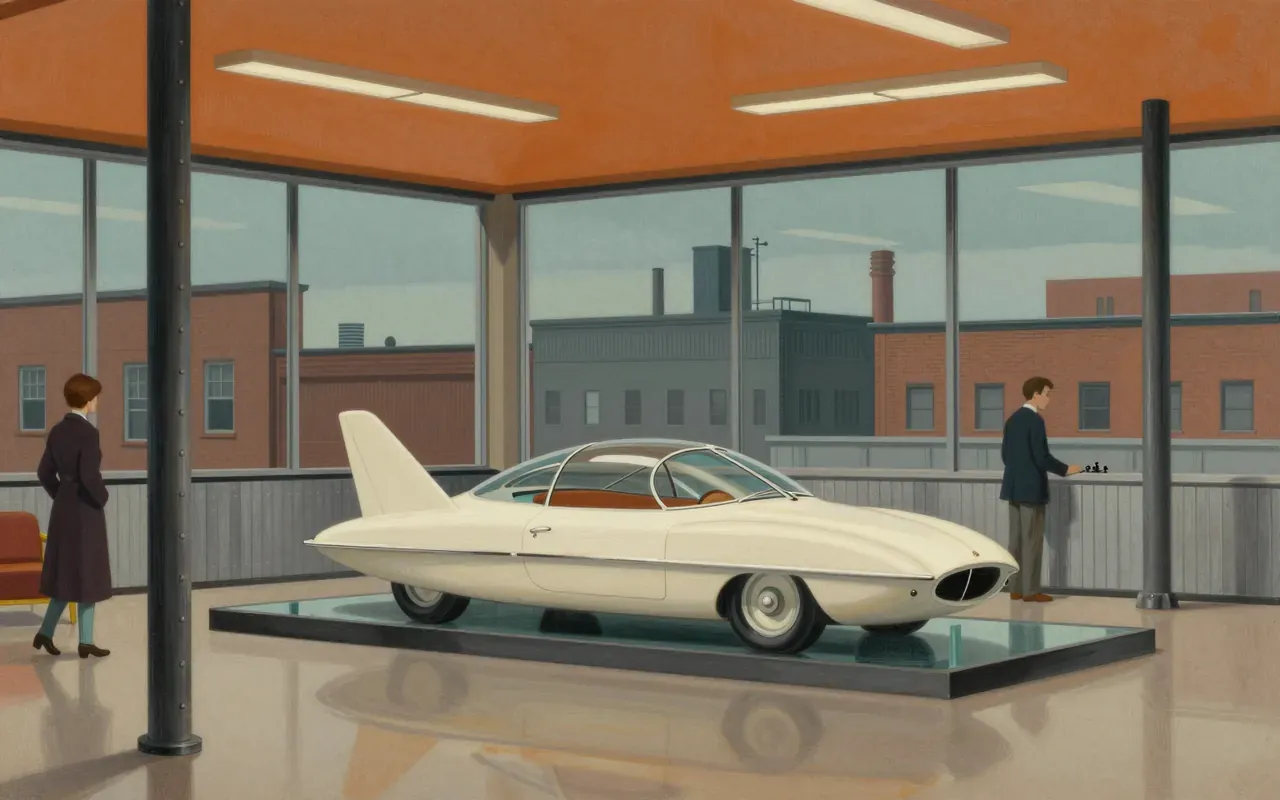
General Motors FirebirdHarley Earl · 1953The Firebird I is a 1953 GM concept car designed by Harley Earl. It was the first gas turbine-powered car tested in the United States. It features a single-seat cockpit under a bubble canopy, a bullet-shaped fiberglass fuselage, short wings, and a vertical tail fin. It was built for the 1953 Motorama show. GM never intended it for production.
9:57
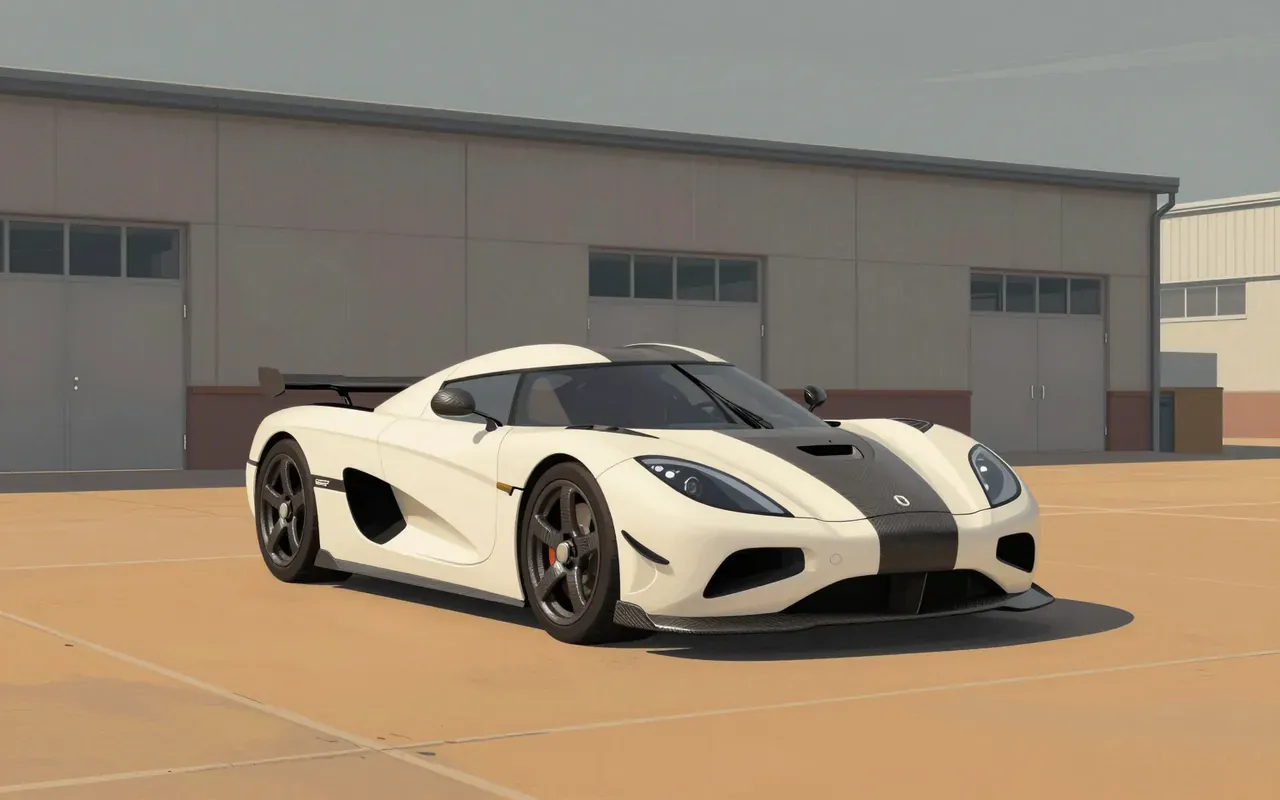
Koenigsegg CC8SChristian von Koenigsegg · 2002The CC8S is the first production car from Koenigsegg Automotive. It is a mid-engine, rear-wheel-drive targa top sports car built from 2002 to 2004 in six units. It introduced the dihedral synchro-helix doors and front-trunk roof stowage. It won the Guinness World Record for Most Powerful Production Engine and design awards from Red Dot and Utmärkt Svensk Form. It was developed from the CC prototype after eight years of research and development beginning in 1994. Chassis, suspension, brakes and other components were designed in-house. The pre-production car debuted at the 2000 Paris Auto Show. Its unique features include the front-trunk roof storage (unlike the Ferrari F50), the dihedral synchro-helix doors, and a central free-flowing exhaust based on the 'Rocket Cat Principle'. Christian von Koenigsegg and David Crafoord co-created the design concept.
10:57
Alfa Romeo 156Walter de Silva · 1997The Alfa Romeo 156 is a compact executive car introduced at the 1997 Frankfurt Motor Show to replace the 155. Designed by Walter de Silva, it won the 1998 European Car of the Year award. It was produced from 1996 to 2007 in saloon, Sportwagon, and Crosswagon bodystyles. Assembly occurred in Pomigliano d'Arco, Italy and Rayong, Thailand. 673,435 units were built.
9:33
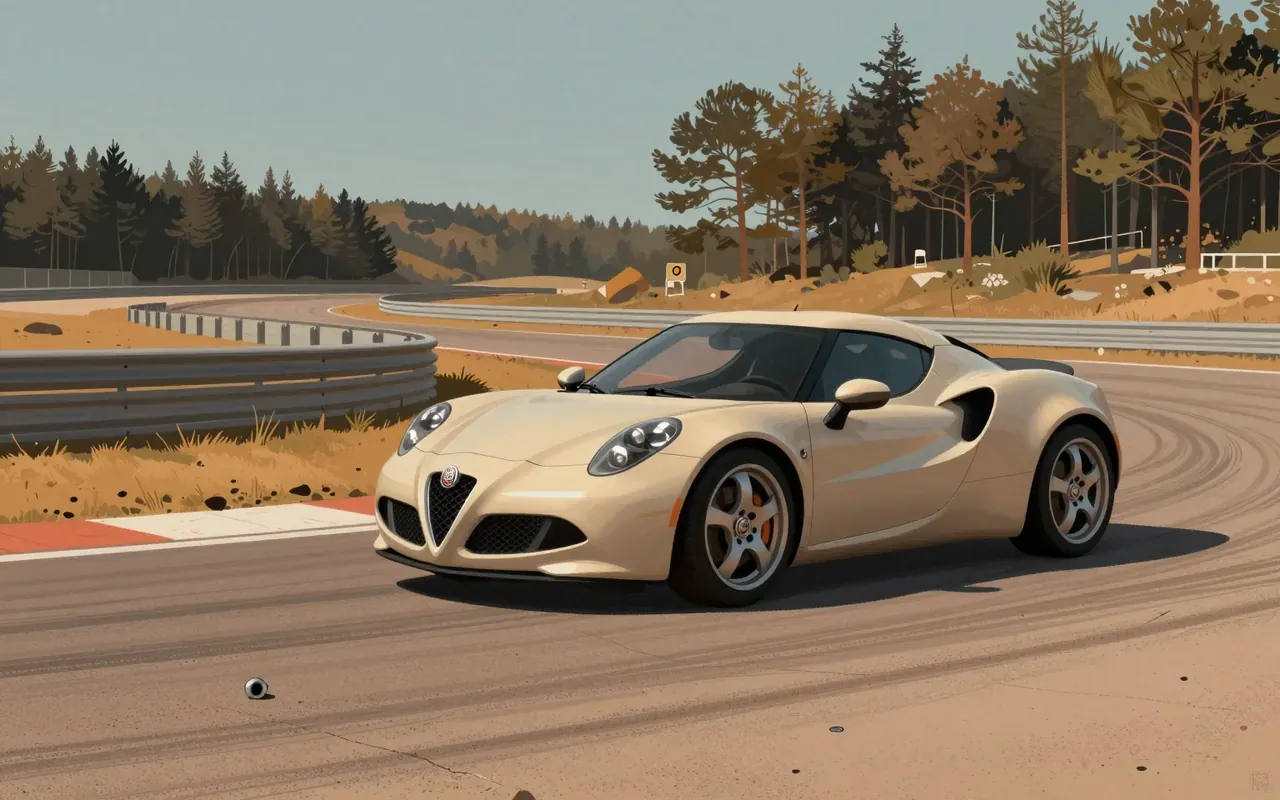
Alfa Romeo 4CMarco Tencone · 2013The Alfa Romeo 4C is a focused, uncompromising expression of mid-engined sports car logic—light, stiff, direct. It sacrifices isolation and utility to sharpen the connection between driver and road. Its design solves for feedback, not comfort.
Up next in Automotive

Aston Martin DBS

William Towns · 1967 · 10:38

The DBS isn’t a leap forward—it’s a clean break in silhouette, drawn under pressure and signed off by a departing owner.

10:38