automotivebriefs
9:26in productionCh. 1 · Not Designed—Licensed/ 9:26 · ceiling 15 min
Saloons & estates

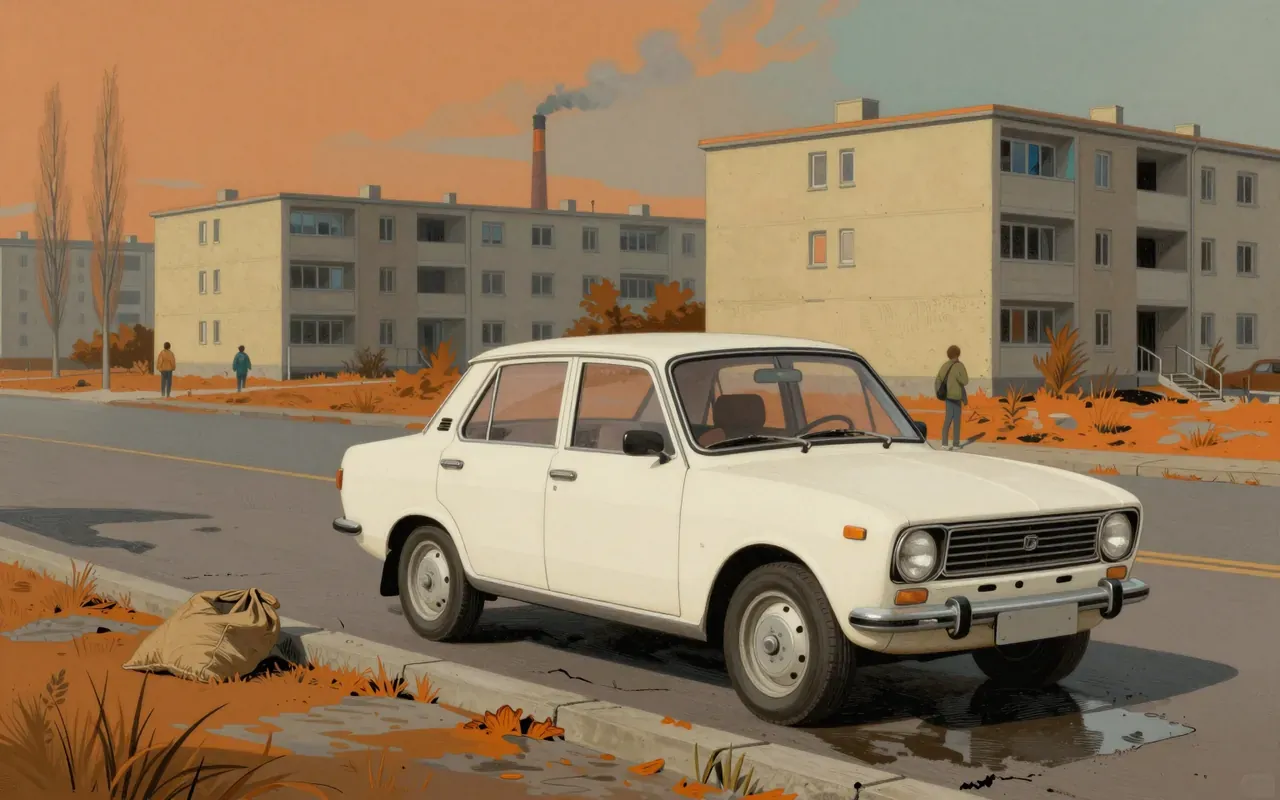
Dacia 1300

A state-built copy that outlived its donor—and its own purpose—by decades.

The Dacia 1300 is a Romanian-built, Renault 12–based medium-sized family car launched in 1969 under a state-directed initiative to reduce import dependence; it was required to be inexpensive, family-sized, and equipped with ≤1.3 L engine; Renault 12 was chosen over rivals for technical and political reasons; body styles included sedan, estate, and pickup truck; the name '1300' denotes engine displacement.

Chapters & takeaways4
  1. 1:03
    Not Designed—Licensed

    It is a licensed Renault 12, chosen over Alfa Romeo, Fiat, Austin, DKW, and Peugeot.

  2. 2:29
    A Car by Decree

    It was mandated to be cheap, family-sized, and powered by no more than a 1.3-litre engine.

  3. 4:02
    Thirty-Five Years of One Idea

    Production began on 23 August 1969; the final sedan rolled off the line on 21 July 2004.

  4. 5:48
    A Political Engine

    Its French origin served Romania’s Cold War diplomacy—not just engineering needs.

Worth your time?

Yes. Drive the whole thing.

3.5/ 5
What works
  • balances simplicity, durability, and affordability under constrained conditions
  • delivers space and utility without over-engineering
What does not
  • offer performance
  • deliver refinement
  • introduce innovation
Drive it if
  • citizens needing dependable, inexpensive transport in a planned economy
Skip it if
  • drivers seeking feedback, precision, or expressive design
The written brief1 min read

What the car is and where it came from

The Dacia 1300 is a Romanian-built, Renault 12–based medium-sized family car. It launched on 23 August 1969 under a state-directed initiative to reduce import dependence.

How it works, in terms someone would actually use

It is a front-engine, front-wheel-drive saloon, estate, or pickup truck. The driver sits behind a simple, upright steering wheel. The controls are basic and unassisted. The cabin is functional, not refined.

What it gets right

It gets right the balance of simplicity, durability, and affordability under constrained conditions. It delivers space and utility without over-engineering.

What it does not

It does not offer performance, refinement, or innovation. It does not deviate from its brief: low cost, family size, ≤1.3 L engine.

What it changed

It changed Romania’s automotive landscape: it replaced imported cars with a locally built alternative, anchoring domestic car ownership for decades.

Who it is for, and who it is not

It is for citizens needing dependable, inexpensive transport in a planned economy. It is not for drivers seeking feedback, precision, or expressive design.

Is it worth your time

Yes—if you want to understand how state-directed industrial policy shaped mass mobility in Eastern Europe. No—if you seek engineering novelty, driving engagement, or design distinction.
Same garage · Saloons & estates4 of 60
9:19
Lucid AirDerek Jenkins · 2021The Lucid Air is a battery electric four-door luxury sedan, Lucid Motors' first production car, announced in December 2016 and launched in 2021. It highlights its record-setting EPA range (up to 520 miles for the Dream Edition), aerodynamic efficiency (Cd=0.21 pre-production, Cd=0.20 production), performance capabilities (e.g., 0–60 mph in 2.5 seconds, 235 mph top speed), and technical features including its 924-volt architecture, bidirectional charging, and DreamDrive ADAS with 32 sensors. The Air Pure, Touring, Grand Touring, and Dream Edition trims are detailed, along with battery capacities (88–112 kWh), power outputs (430–1,111 hp), and production milestones including commencement in late 2021 and deliveries beginning October 30, 2021. Design leadership is attributed to Derek Jenkins, and the vehicle is positioned against the Tesla Model S and German luxury models.
9:14
Mitsubishi Galant VR-4Mitsubishi · 1987The Galant VR-4 is Mitsubishi’s first high-performance all-wheel-drive sedan, developed for Group A rallying and launched in 1987. It introduced the Dynamic Four AWC system — a full-time four-wheel drive setup with viscous coupling, plus four-wheel steering and four-wheel ABS. It was sold globally to meet homologation requirements, including 2,000 units in the US in 1991 and 1,000 in 1992. Later generations added liftback (Eterna ZR-4) and station wagon (Legnum) variants. The eighth generation was initially JDM-only but gained overseas cult status via grey imports. In 2000, Ralliart officially imported 200 units to the UK. Production ended in 2002 due to revised Japanese emissions standards.
7:56
Mitsubishi Lancer EvolutionMitsubishi · 1999The Mitsubishi Lancer Evolution is a rally-bred sports sedan built on the Lancer platform. Ten generations were produced from 1992 to 2016. All used a two-litre intercooled turbo inline-four engine and all-wheel drive. It launched in Japan only, then reached the UK and Europe around 1997 via Ralliart dealers—starting with the Evolution IV.
10:45
Proton SagaMitsubishi · 1985The Proton Saga is a foundational Malaysian car—not a technical benchmark, but a political and industrial one.
Up next in Automotive

Dodge Charger Daytona

Chrysler Engineering · 1969 · 10:29

Aerodynamics broke the muscle car’s rules — and the Daytona was the first to weaponise it.

10:29