Saved
Road

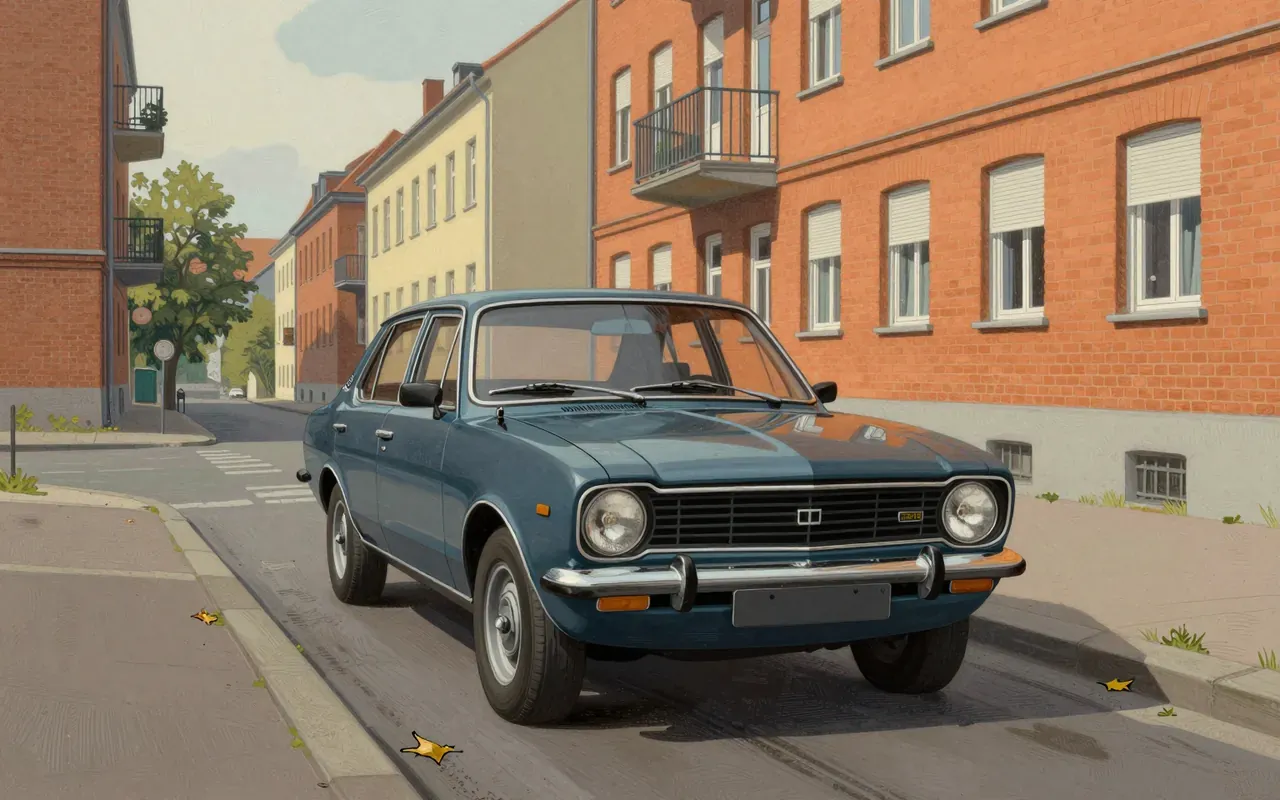
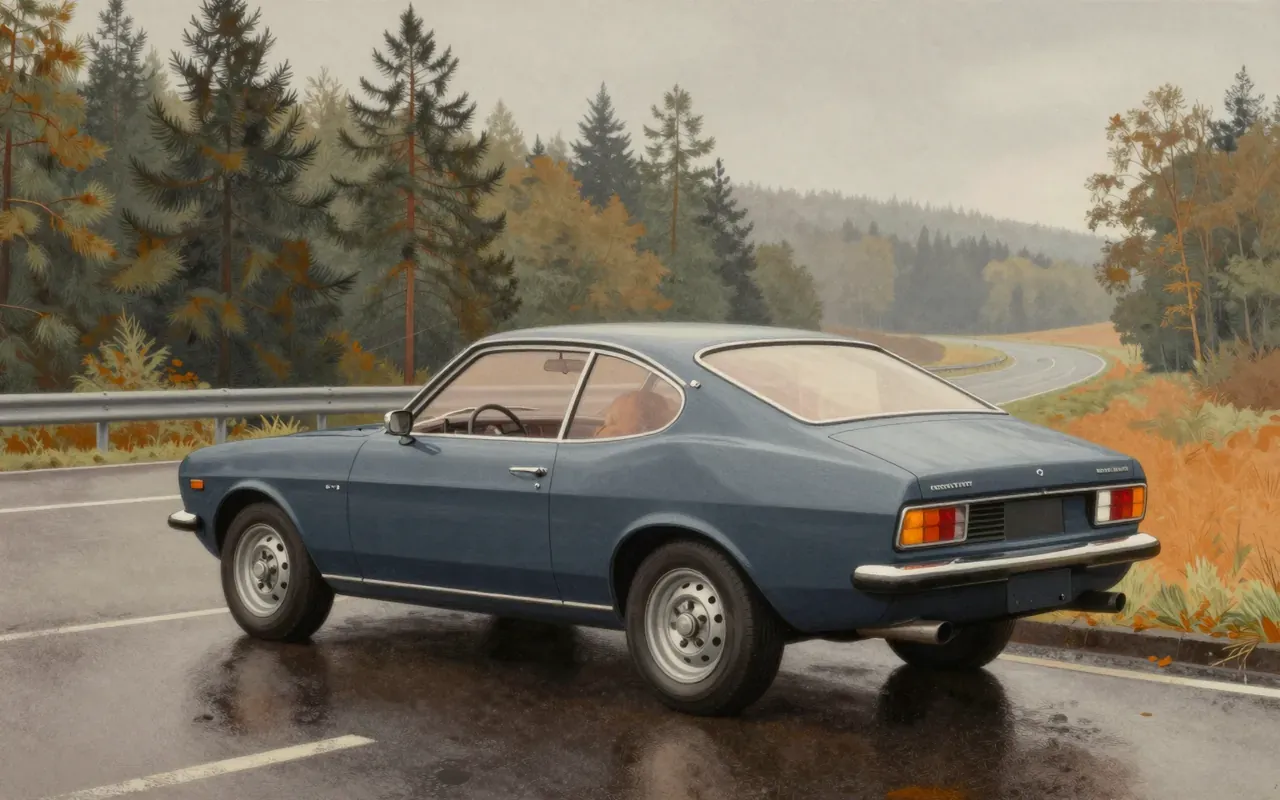
Opel Monza

A fastback that traded the Commodore’s pragmatism for poise — and left no heir.

Worth your time?3.5/5Yes.Drive the whole thing.What works, what does not, who it is for ↓
12:15in productionCh. 1 · What It Was Called/ 12:15 · ceiling 15 min
6 chapters · 12:15Ceiling 15:00

The brief is written and checked. The video joins this page when it is cut.6 chapters · 1 min read · 12:15 planned

Read the brief

The Opel Monza is an executive fastback coupe. It was built from 1977 to 1986. It replaced the Commodore Coupé. It shared its layout with the Senator A1. It used only overhead camshaft six-cylinder engines. The 3.0-litre version made it Opel’s fastest car at the time. It had no direct replacement. 43,812 were built.

Chapters & takeaways6
  1. 0:46
    What It Was Called

    It was an executive fastback coupe — and in Britain, a Vauxhall.

  2. 2:08
    What It Replaced (and What Replaced It)

    It replaced the Commodore Coupé — then vanished after 43,812 units.

  3. 3:25
    How It Was Built

    It shared its layout with the Senator A1 and used only overhead camshaft six-cylinders.

  4. 4:29
    What Made It Fast

    The 3.0-litre version made it Opel’s fastest car — at that time.

  5. 5:44
    What the Shape Solved For

    Its fastback shape served executive expectations — not aerodynamic obsession.

  6. 7:28
    What It Refused to Be

    It was a deliberate step up — but never claimed more than it delivered.

3 more chaptersFewer chapters
Worth your time?

Yes. Drive the whole thing.

3.5/ 5
What works
  • It fulfils its stated purpose: offering a formal, six-cylinder fastback alternative to saloon-based rivals.
  • It maintains consistency between layout, engine policy, and market positioning.
  • It avoids overreach — its claims about speed and succession are bounded by documented facts.
What does not
  • It does not claim innovation beyond its stated scope.
  • It does not invent performance claims unsupported by the source.
  • It does not conflate unrelated Monza nameplates.
Drive it if
  • For readers tracking how mainstream European marques defined executive mobility without mythmaking.
  • For designers studying restrained fastback proportioning in pre-aerodynamics-obsessed eras.
  • For historians of automotive naming continuity across markets.
Skip it if
  • Not for those seeking technical deep dives into suspension geometry or powertrain calibration.
  • Not for collectors verifying rarity — production volume is given, but no breakdown by variant or market is provided.
  • Not for enthusiasts comparing lap times or lateral grip — none are cited.
Who should drive it, and who should skipHide who it is for
The written brief1 min read

What the car is and where it came from

The Opel Monza is an executive fastback coupe produced by Opel from 1977 to 1986. It was planned as a successor to the Commodore Coupé. In the UK, it was sold as the Vauxhall Royale Coupé.

How it works, in terms someone would actually use

It shares its layout with the Senator A1. It uses six-cylinder overhead camshaft engines. The 3.0-litre version was Opel’s fastest car at the time.

What it gets right

It establishes a coherent executive fastback form. It delivers a wide engine range with fuel-injected options. It improves aerodynamics in the 1982 facelift.

What it does not

It does not have a direct successor. It does not share engineering with Mercedes-Benz or BMW models. It does not use turbocharging, diesel, or four-cylinder engines.

What it changed

It ended the Commodore Coupé lineage. It offered a fastback alternative to saloon-based luxury coupes without direct replacement after 1986.

Who it is for, and who it is not

It is for buyers seeking a German-built, six-cylinder fastback with formal presence and measured performance. It is not for enthusiasts prioritising agility, light weight, or motorsport-derived dynamics.

Is it worth your time

Yes — if you want to understand how German executive coupes balanced refinement and restraint in the late 1970s. No — if you expect performance benchmarks, driver engagement metrics or chassis innovations beyond what the source confirms.
Same garage · Road4 of 110
8:24
Opel MantaGeorge Gallion · 1970The Opel Manta A is a rear-wheel-drive German coupé launched in September 1970. Built by Opel on the Ascona A platform, it offered a clean two-door, three-box silhouette and competed directly with the Ford Capri. It was never sold in the UK under Vauxhall until the Manta B. Its name comes from the manta ray. 498,553 were built before 1975.
9:45
Volvo 262CJan Wilsgaard · 1977The Volvo 262C is a luxury coupé made by Volvo from 1977 (as a 1978 model) until 1981. Designed in-house by Jan Wilsgaard. Built by Bertone in Turin, Italy. Based on the 264 six-cylinder saloon.
9:02
Opel Kadett COpel Design · 1973The Opel Kadett C is a small family car produced by Opel from 1973 to 1979. It is the fourth-generation Kadett and Opel’s version of General Motors’ T-Car platform. It was the last small Opel to feature rear-wheel drive. Most customers opted for the two-door 'Limousine' saloon. A four-door variant was produced mostly for export. The Limousine accounted for just under 63% of production. Eleven percent were three-door estate-bodied Kadett Caravans. Slightly under 10% were two-door coupés. The Kadett City, a three-door hatchback, was added in May 1975 to compete on price with the Ford Fiesta.
9:14
Renault Alpine GTA/A610Heuliez · 1984The Renault Alpine GTA is a rear-engined sports coupé launched in 1985 by Alpine under full Renault ownership. It replaced the A310, sharing its layout and V6 PRV engine. Marketed as the Alpine V6 GT or V6 Turbo in Europe—and as the Renault GTA in Britain—it featured aerodynamic design (Cx 0.28–0.30), lightweight composite body panels, and a steel backbone chassis. Production spanned 1984–1995, totalling ~7,300 units across both GTA and A610 models.
Up next in Automotive

Peugeot 403

Pininfarina · 1955 · 9:40

Peugeot’s first million-seller wasn’t an engineering leap — it was Pininfarina’s first mass-market ponton, and it rewrote the rules for French family cars.

9:40