automotivebriefs
9:13in productionCh. 1 · The Pininfarina Seal/ 9:13 · ceiling 15 min
Sports cars

Ferrari 250 GT California Spyder

A Californian fantasy built in Modena — a Ferrari that won races it wasn’t meant to enter, and became iconic after a teenager stole it on film.

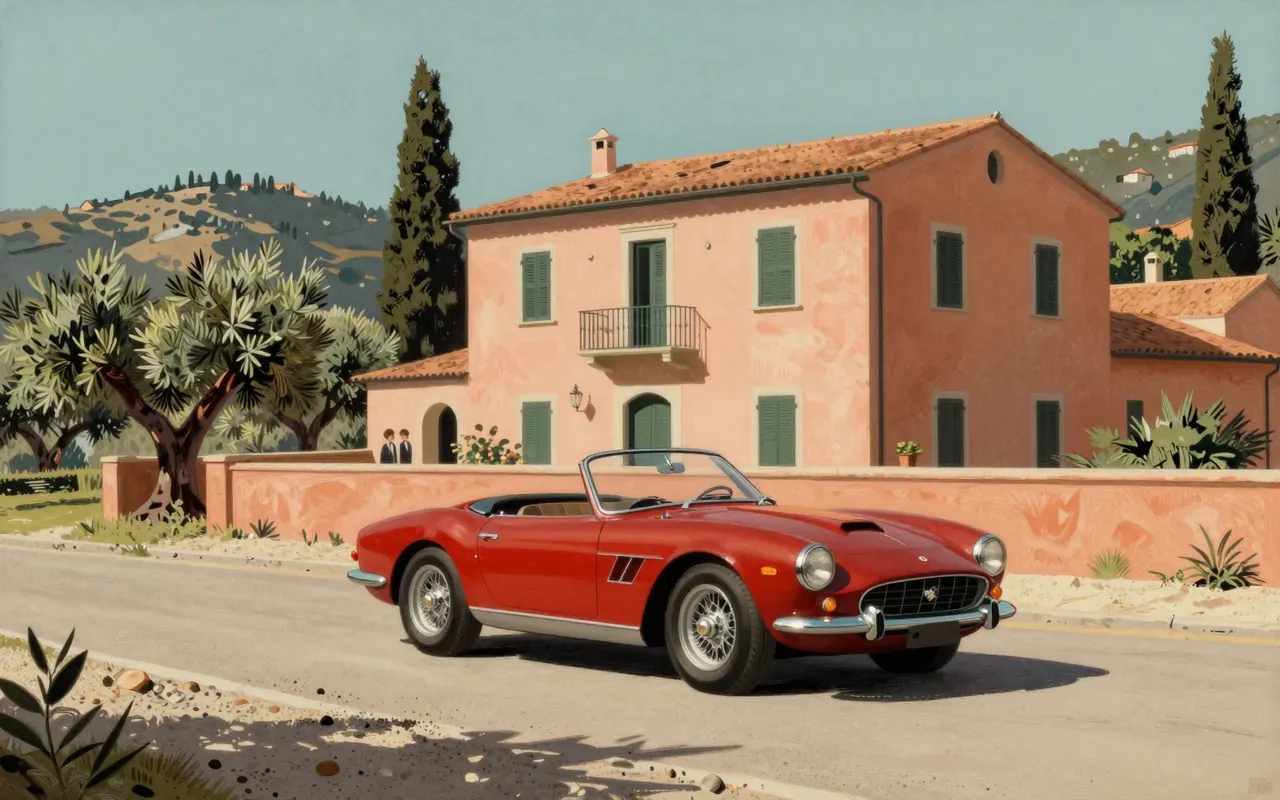
The Ferrari 250 GT California Spyder is a front-engine, rear-wheel-drive convertible sports car designed by Sergio Scaglietti and produced by Carrozzeria Scaglietti from 1957 to 1963 in approximately 100 units. It is a convertible version of the contemporary Berlinetta. It is powered by the traditional Ferrari V12 engine. It is presented by the brand as Ferrari 250 Gran Turismo Spyder California or simply Ferrari 250 California. It was designed by Pininfarina as part of its exclusive design partnership with Ferrari beginning in 1951. It gained considerable recognition following its appearance in the 1986 film Ferris Bueller's Day Off.

Chapters & takeaways5
  1. 1:07
    The Pininfarina Seal

    Pininfarina designed every road-going Ferrari from 1951 — except one — and the California Spyder sits at the heart of that partnership.

  2. 2:20
    LWB Then SWB

    It is a convertible version of the Berlinetta, built in two distinct wheelbase iterations across a six-year production run.

  3. 3:23
    Ferris Bueller's Boost

    Its fame outside collector circles arrived decades later — via a Hollywood comedy, not a racetrack.

  4. 4:38
    What Ferrari Called It

    It is a Ferrari sports car powered by the traditional V12, branded as the 250 Gran Turismo Spyder California.

  5. 6:16
    One Hundred Units

    Approximately 100 units were made — rare by design, not accident.

Worth your time?

Yes. Drive the whole thing.

4.5/ 5
What works
  • balance between agility and grand touring intent
  • stability at speed (LWB)
  • sharpened turn-in (SWB)
  • race-derived but road-legal execution
What does not
  • offer structural rigidity like a fixed-head coupe
  • prioritise daily comfort or weather protection
  • have modern safety systems, infotainment, or driver aids
Drive it if
  • collectors who value lineage, scarcity, and design continuity
  • those who understand Pininfarina’s role in shaping Ferrari’s road-going identity from 1951 onward
Skip it if
  • drivers seeking reliability, serviceability, or measurable performance data
The written brief2 min read

What the car is and where it came from

The Ferrari 250 GT California Spyder is a hand-built, front-engine, rear-wheel-drive convertible sports car. It was designed by Sergio Scaglietti and produced by Carrozzeria Scaglietti from 1957 to 1963. It is a convertible version of the contemporary Berlinetta. It is presented by the brand as Ferrari 250 Gran Turismo Spyder California or simply Ferrari 250 California.

How it works, in terms someone would actually use

It is a front-engine, rear-wheel-drive convertible. It opens to the sky. Its V12 engine sits ahead of the driver. The driver sits low, close to the axle line. The wheel connects directly — no power assistance, no digital layer.

What it gets right

It gets right the balance between agility and grand touring intent. Its long-wheelbase (1957–1960) version delivers stability at speed. Its short-wheelbase (1960–1963) version sharpens turn-in. Both use the same V12, tuned for responsiveness over peak output.

What it does not

It does not offer structural rigidity like a fixed-head coupe. It does not prioritise daily comfort or weather protection. It does not have modern safety systems, infotainment, or driver aids — none existed then, and none were intended.

What it changed

It redefined what a Ferrari road car could be for export: race-derived but road-legal, lightweight but habitable, Italian-built but Californian-named. It proved that a bespoke convertible could carry Ferrari’s racing credibility without a competition pedigree built in.

Who it is for, and who it is not

It is for collectors who value lineage, scarcity, and design continuity. It is for those who understand Pininfarina’s role in shaping Ferrari’s road-going identity from 1951 onward. It is not for drivers seeking reliability, serviceability, or measurable performance data.

Is it worth your time

Yes, if you care about how a car’s purpose shapes its form. No, if you need documented performance figures or contemporary usability. It is not a tool. It is a statement made in steel, aluminium, and hand-finished coachwork.
Same garage · Sports cars4 of 140
8:12
Alpine A110 (2017)Antony Villain · 2017The Alpine A110 (2017) is a rear mid-engine, rear-wheel-drive sports car built on an all-aluminium chassis and powered by a Nissan-derived 1.8-litre turbocharged inline-four engine. It debuted at the 2017 Geneva Motor Show. Production ended in June 2026.
8:32
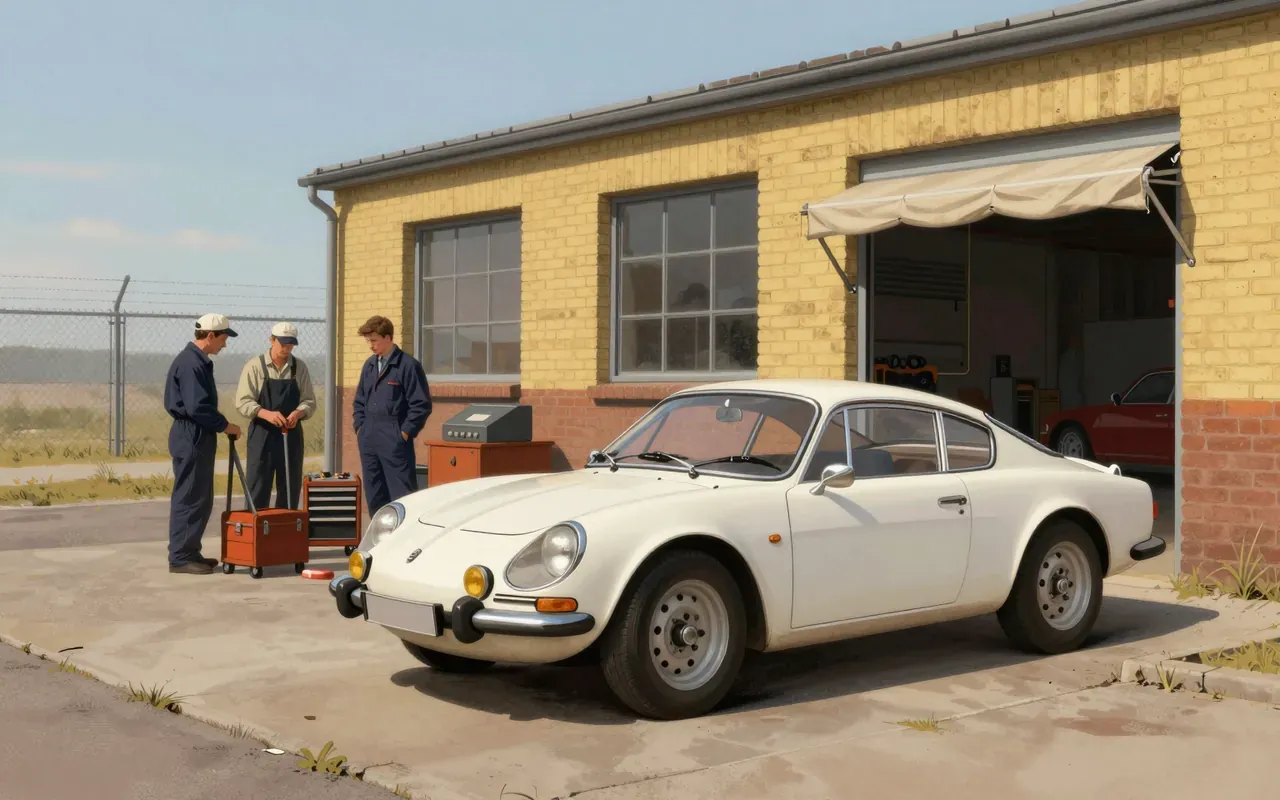
Alpine A310Michel Beligond · 1971The Alpine A310 is a French sports car, launched in 1971 as Jean Rédélé’s final Alpine model. It debuted at the 1971 Geneva Motor Show. It used a tubular steel backbone chassis and a one-piece fiberglass body. Its engine was mounted longitudinally in the rear and drove the rear wheels via a five-speed manual gearbox. The driving position was low and sporty, with footwells angled toward the car’s centre.
9:14
Renault Alpine GTA/A610Heuliez · 1984The Renault Alpine GTA is a rear-engined sports coupé launched in 1985 by Alpine under full Renault ownership. It replaced the A310, sharing its layout and V6 PRV engine. Marketed as the Alpine V6 GT or V6 Turbo in Europe—and as the Renault GTA in Britain—it featured aerodynamic design (Cx 0.28–0.30), lightweight composite body panels, and a steel backbone chassis. Production spanned 1984–1995, totalling ~7,300 units across both GTA and A610 models.
9:40
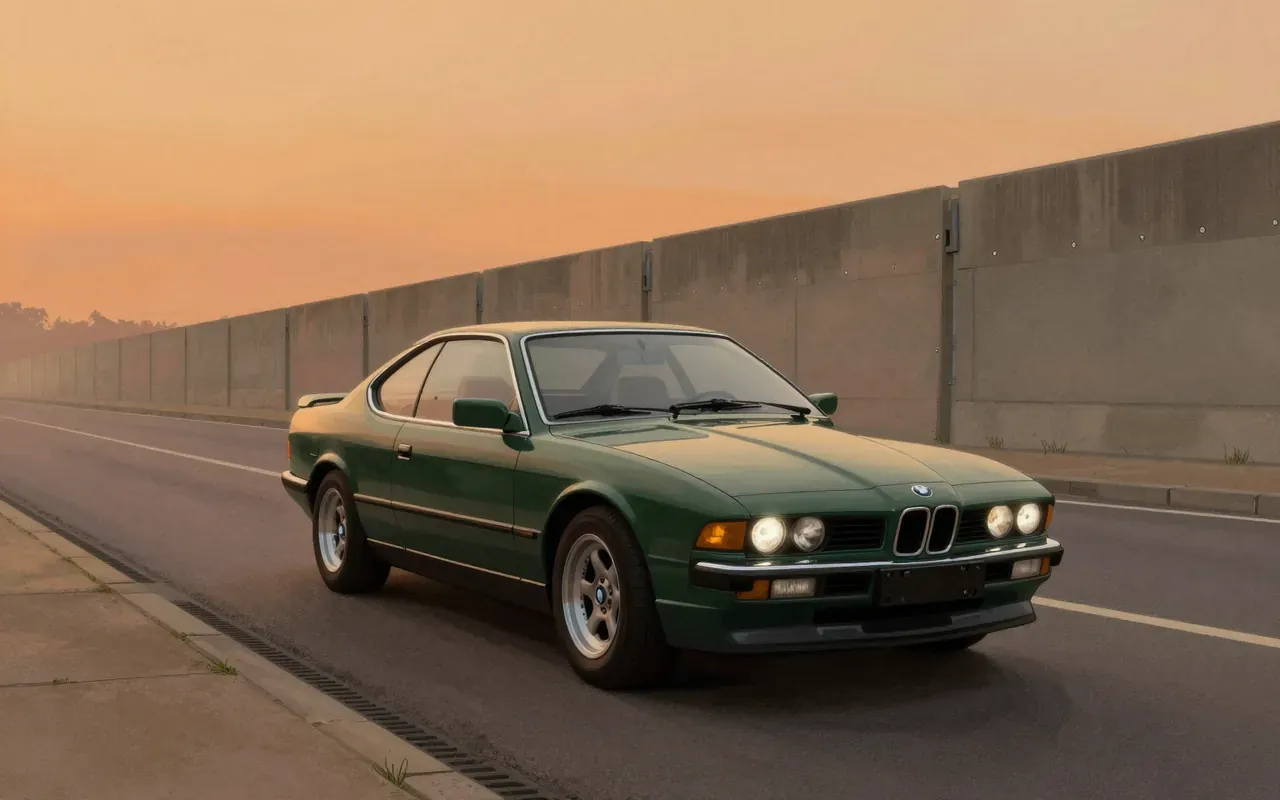
BMW 8 Series (E31)Klaus Kapitza · 1989The BMW 8 Series (E31) is a two-door grand tourer built by BMW from 1990 to 1999. It uses a front-engine, rear-wheel-drive layout. It is powered by either a V8 or V12 engine. Development began in July 1981 and concluded in 1986. It debuted at the Frankfurt Motor Show in early September 1989. BMW used CAD tools to design its all-new body. Its drag coefficient is Cd=0.29. It replaced the E24 6 Series but was not a direct successor. Total production was 30,609 units.
Up next in Automotive

Ferrari 288 GTO

Leonardo Fioravanti · 1984 · 8:38

The 288 GTO isn’t a race car — it’s the moment Ferrari stopped pretending road cars had to follow the same rules as showroom models.

8:38