automotivebriefs
10:20in productionCh. 1 · 1950: A longer 4/4/ 10:20 · ceiling 15 min
Sports cars

Morgan +4

The +4 isn’t progress — it’s persistence, dressed as a sports car.

The Morgan +4 is a sports car built across three discontinuous series (1950–1969, 1985–2000, 2005–2020), each using different 2-litre four-cylinder engines — Standard Vanguard, Triumph, Fiat Twin Cam, and Ford (Mazda) Duratec — on variations of the same ash-frame, front-engine, rear-wheel-drive layout. It is longer and more powerful than the 4/4, but shares its mechanical honesty and lack of structural modernity. It establishes Morgan’s ability to persist without standardisation. It falls short as a coherent technical proposition — no shared chassis, no unified development path, no safety or thermal upgrades across eras.

Chapters & takeaways6
  1. 0:54
    1950: A longer 4/4

    The 1950 +4 was a lengthened, more powerful 4/4 with a 2088 cc Standard Vanguard engine.

  2. 2:05
    Triumph years: More power, same frame

    From 1953 to 1969, Triumph engines replaced the Vanguard — TR2, then TR3, then TR4 — each increasing output and displacement.

  3. 3:23
    1985: Fiat power, Plus 8 hardware

    The 1985 revival used a 2-litre Fiat Twin Cam, sharing the Plus 8’s gearbox and clutch.

  4. 4:22
    2005: Duratec, no legacy chassis

    The 2005 return used a Ford (Mazda) Duratec — again two litres, again no shared platform with earlier versions.

  5. 5:43
    Three series, no through-line

    Production ran 1950–1969, 1985–2000, and 2005–2020 — three separate lifetimes, no common engineering thread.

  6. 6:49
    What never changed: It’s a sports car

    It is, and always was, a sports car — defined by layout, driver focus, and minimal bodywork, not speed or technology.

Worth your time?

Yes. Drive the whole thing.

3.5/ 5
What works
  • as a demonstration of continuity through substitution
  • as a driver’s machine with immediate feedback and minimal mediation
  • as a counterpoint to platform-led automotive development
What does not
  • modern crash safety
  • predictable service network
  • shared platform across generations
Drive it if
  • people who value mechanical legibility
  • people who accept discontinuous evolution as design philosophy
Skip it if
  • people who expect consistent engineering logic
  • people who rely on dealer support or parts availability
The written brief1 min read

What the car is and where it came from

A front-engine, rear-wheel-drive sports car launched in 1950 as a more powerful, slightly longer version of the 4/4. Produced in three discontinuous series: 1950–1969, 1985–2000, and 2005–2020.

How it works, in terms someone would actually use

Front-engine, rear-wheel-drive layout. Built on a widened and strengthened 4/4 chassis with a 4-inch longer wheelbase. Uses four-cylinder engines — first the 2088 cc Standard Vanguard, then Triumph TR2/TR3/TR4 units — all around 2 litres.

What it gets right

It delivers a clear, unbroken lineage: same ash-frame construction, same exposed mechanical honesty, same driver-focused cockpit across all three series — even as engines changed.

What it does not

It does not offer modern structural rigidity, driver aids, or consistent powertrain continuity. Each series used different donor engines without shared architecture or electronics.

What it changed

It redefined Morgan’s performance hierarchy by sitting between the 4/4 and Plus 8 — a more powerful, slightly longer alternative that sustained the brand’s sports-car identity through three distinct eras.

Who it is for, and who it is not

It is for people who value mechanical legibility and historical continuity over refinement or innovation. It is not for those who require predictability, service infrastructure, or thermal or crash safety standards beyond its era.

Is it worth your time

Yes, if you want to understand how Morgan balanced tradition and incremental evolution across seven decades of discontinuous production.

Same garage · Sports cars4 of 22
9:28
Alfa Romeo AlfettaAlfa Romeo Centro Stile · 1972The Alfetta is a front-engine saloon and fastback coupé produced from 1972 to 1987. It used a rear transaxle and De Dion tube rear suspension to improve weight distribution and handling. Coupé models featured a central tachometer. All models left the factory with Pirelli Cinturato 165HR14 tyres.
9:22
Alfa Romeo 105/115 Series CoupésGiorgetto Giugiaro · 1963The Alfa Romeo 105/115 Series Coupés are foundational Giugiaro — not as a stylistic endpoint, but as a working method: take a proven platform, impose a strong, arched silhouette, and let coachbuilders extend it. They are compact, alloy-engined, live-axle sports coupés that prioritise form coherence over mechanical innovation. Their legacy is visual, not technical.
10:50
Alfa Romeo Giulia TZZagato · 1965The Giulia TZ is a focused, lightweight racing coupé built to exploit Alfa’s existing engine and suspension in a new structural format. Its value lies in how it redefined what ‘lightweight’ meant for a front-engined RWD car in 1963—not through novelty, but through discipline.
9:02
Bizzarrini StradaGiorgetto Giugiaro · 1965The Bizzarrini Strada is a mechanically focused, front mid-engine sports car from 1964–1968. It uses a rearward-placed Chevrolet V8 to optimise weight distribution and handling. It was never designed by Giugiaro. It exists in coupé, roadster, and Corsa forms. Its performance figures are verified: sub-7-second 0–100 km/h, 280 km/h top speed.
Up next in Automotive

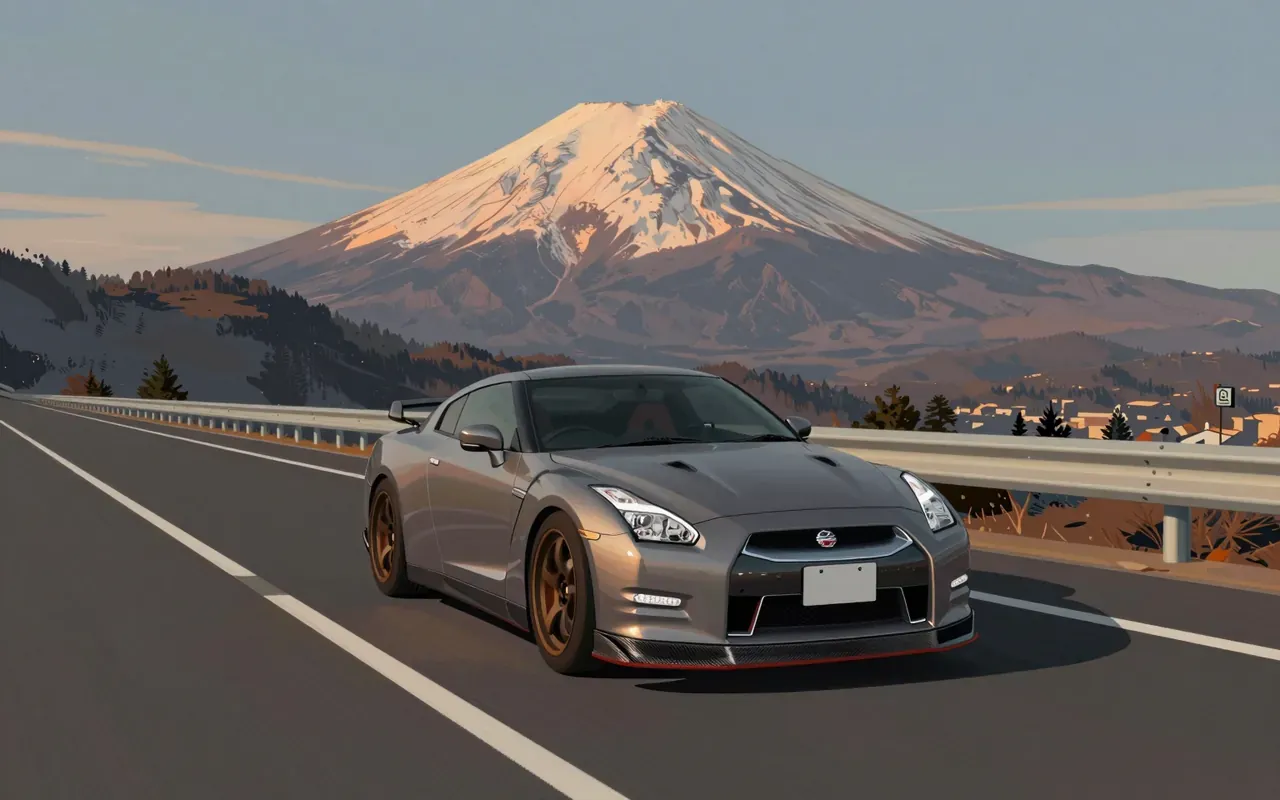
Nissan GT-R

Shiro Nakamura · 2007 · 8:35

A world-beating sports car built not to honour history — but to erase it.

8:35