automotivebriefs
11:52in productionCh. 1 · A Shorter 250 GT/ 11:52 · ceiling 15 min
Sports cars · Racing

Ferrari 250 GT SWB

Ferrari took the 250 GT Berlinetta, cut 200 mm from its wheelbase and fitted disc brakes, and made it one of the most notable GT racers of its time.

The 250 GT Berlinetta SWB is the 1959 Ferrari that shortened the 250 GT wheelbase from 2,600 mm to 2,400 mm for better handling. 176 were built, in road and racing trims, with 240 to 280 PS from the 3.0 L Colombo V12.

Chapters & takeaways4
  1. 1:14
    A Shorter 250 GT

    In 1959 Ferrari cut the 250 GT Berlinetta wheelbase from 2,600 mm to 2,400 mm, for better handling.

  2. 3:22
    The Team and the Brakes

    Giotto Bizzarrini, Carlo Chiti and Mauro Forghieri developed it, and it brought disc brakes to a Ferrari GT for the first time.

  3. 5:34
    Homologated for Le Mans

    It received FIA homologation on 17 June 1960, just in time for the 25 June Le Mans, and won Ferrari the 1961 GT class of the Constructors' Championship.

  4. 7:16
    176 Cars, Many Trims

    Steel and aluminium bodies, road and racing trims, and 240 to 280 PS mean no single SWB description fits every car.

Worth your time?

Yes. Drive the whole thing.

4.5/ 5
What works
  • the shorter 2,400 mm wheelbase, chosen for handling
  • disc brakes, a first on a Ferrari GT
  • the combination of low weight, high power and well-sorted suspension
What does not
  • keep winning the Tour de France once the GTOs arrived
  • come in one body material or one state of tune
Drive it if
  • readers who want to know how Ferrari turned a 250 GT into a competitive GT racer
Skip it if
  • anyone looking for a single fixed specification, since the 176 cars varied in body and trim
The written brief2 min read

What the car is and where it came from

The 250 GT Berlinetta SWB is a 1959 Ferrari, one variant of the wider 250 series. Pinin Farina styled its body, and it was unveiled at the Paris Motor Show in October. “SWB” stands for short wheelbase, and the Italian name is “passo corto”. It was one of the most notable GT racers of its time.

How it works, in terms someone would actually use

The change that names it is the wheelbase: 2,400 mm, down from the 2,600 mm of the long-wheelbase Berlinetta, chosen for better handling. Power came from the 3.0 L Colombo V12 that defines the 250 series, with output ranging from 240 PS to 280 PS depending on the car. Disc brakes were fitted, the first on a Ferrari GT.

What it gets right

It pairs low weight with high power and well-sorted suspension, and that combination made it competitive from the start. It was selling and racing quickly after its October unveiling. Its results show it: the Tour de France Automobile in 1960, 1961 and 1962, and the GT class of the 1961 Constructors’ Championship.

What it does not

It did not stay on top. After those three Tour de France wins it gave ground to the GTOs. It also is not one fixed thing: of the 176 examples built, some had steel bodies and some aluminium, in road (“lusso”) and racing trims, so output and character vary from car to car.

What it changed

It put disc brakes on a Ferrari GT. It was also the work of Giotto Bizzarrini, Carlo Chiti and the young Mauro Forghieri, the same team that later produced the 250 GTO. On 17 June 1960 it received FIA homologation No. 22 for Group GT, just in time for Le Mans on 25 June. Sports Car International placed it seventh on a 2004 list of the top sports cars of the 1960s, and Motor Trend Classic put it fifth among the greatest Ferraris of all time.

Who it is for, and who it is not

It is for readers who care about how a road-going Ferrari became a GT racer, and what a shorter wheelbase and disc brakes bought it. It is not for anyone who wants a single clean specification: the 176 cars were built in several states.

Is it worth your time

Yes. The SWB shows what a shorter wheelbase and disc brakes did for a 250 GT, and it carries its engineering team forward to the GTO.

Same garage · Sports cars4 of 157
9:13
Ferrari 250 GT California SpyderPininfarina · 1957The Ferrari 250 GT California Spyder is a front-engine, rear-wheel-drive convertible sports car designed by Sergio Scaglietti and produced by Carrozzeria Scaglietti from 1957 to 1963 in approximately 100 units. It is a convertible version of the contemporary Berlinetta. It is powered by the traditional Ferrari V12 engine. It is presented by the brand as Ferrari 250 Gran Turismo Spyder California or simply Ferrari 250 California. It was designed by Pininfarina as part of its exclusive design partnership with Ferrari beginning in 1951. It gained considerable recognition following its appearance in the 1986 film Ferris Bueller's Day Off.
9:56
Maserati GhibliGiorgetto Giugiaro · 1967The 1967 Maserati Ghibli AM115 is Giugiaro’s final full expression of arched, flowing form — a front-engine, RWD, 2+2 fastback coupé defined by its shark nose, steel body, and 4.7 L V8. It launched as a 2-seater concept at Turin in 1966. Production ran 1967–1973. Variants followed in 1969: Spyder and SS. Total output: 1,295 units. It predates Giugiaro’s angular shift — the Bora arrived in 1971.
10:25
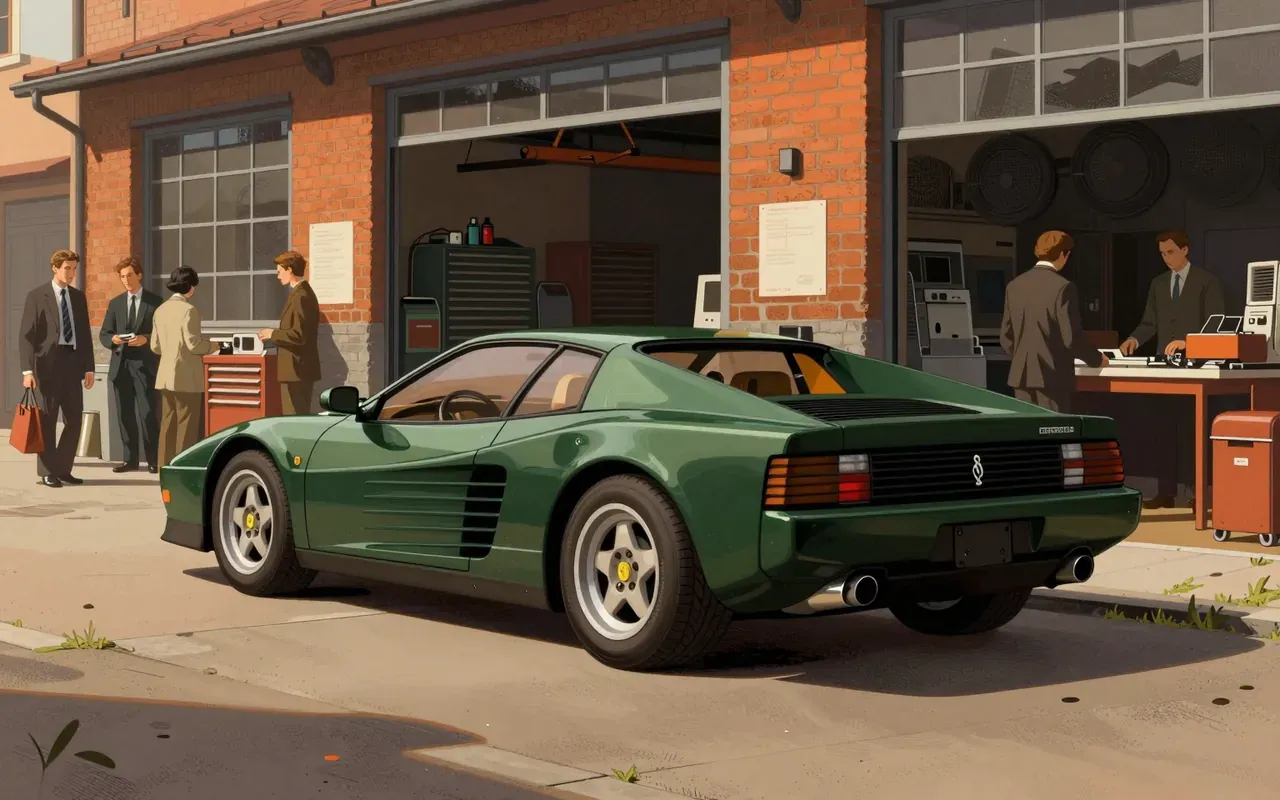
Ferrari TestarossaPininfarina · 1984The Testarossa is a Pininfarina-designed, two-door coupé introduced in 1984 as the successor to the Berlinetta Boxer. It features a 4.9 L flat-12 engine and rear mid-engine/RWD layout. Production ran from 1984 to 1991, followed by the 512 TR and F512 M until 1996. Nearly 10,000 Testarossa-series cars were produced. It was developed to resolve thermal and packaging issues of the 512 BBi and is distinguished by its side strakes, twin rear radiators, and aerodynamic efficiency. Designers included Diego Ottina, Guido Campoli, Ian Cameron, and Emanuele Nicosia. It is a cultural icon of the 1980s, popularised by Miami Vice and Out Run.
9:44
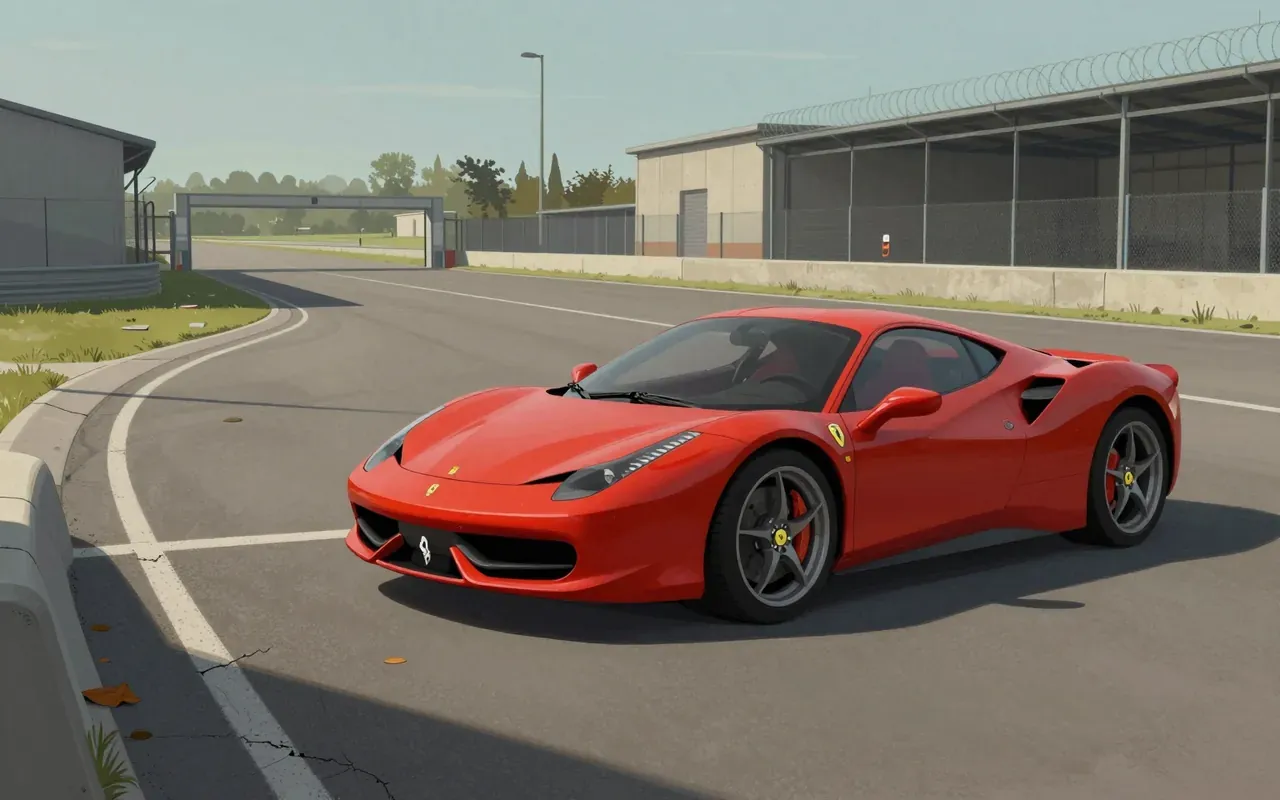
Ferrari 458Pininfarina · 2009The Ferrari 458 Italia is a mid-engine sports car. It launched in 2009 as a clean-sheet replacement for the F430. It uses a 4.5 L V8 with direct fuel injection — the first such setup in a Ferrari mid-engine road car — and a 7-speed dual-clutch automatic transmission. No manual option exists. Magneti Marelli developed its body computer system. Pininfarina designed it under Donato Coco, with Carlo Palazzani as lead designer.
Up next in Automotive

Ferrari 330 P4

Ferrari · 1967 · 10:08

Ferrari's 1967 mid-engined V12 endurance car, built to replace the 330 P3; only four P4-engined cars were ever made.

10:08