automotivebriefs
10:51in productionCh. 1 · Homologation First/ 10:51 · ceiling 15 min
Endurance · Racing

Nissan R390 GT1

One road car. Eight racers. A homologation fiction made real.

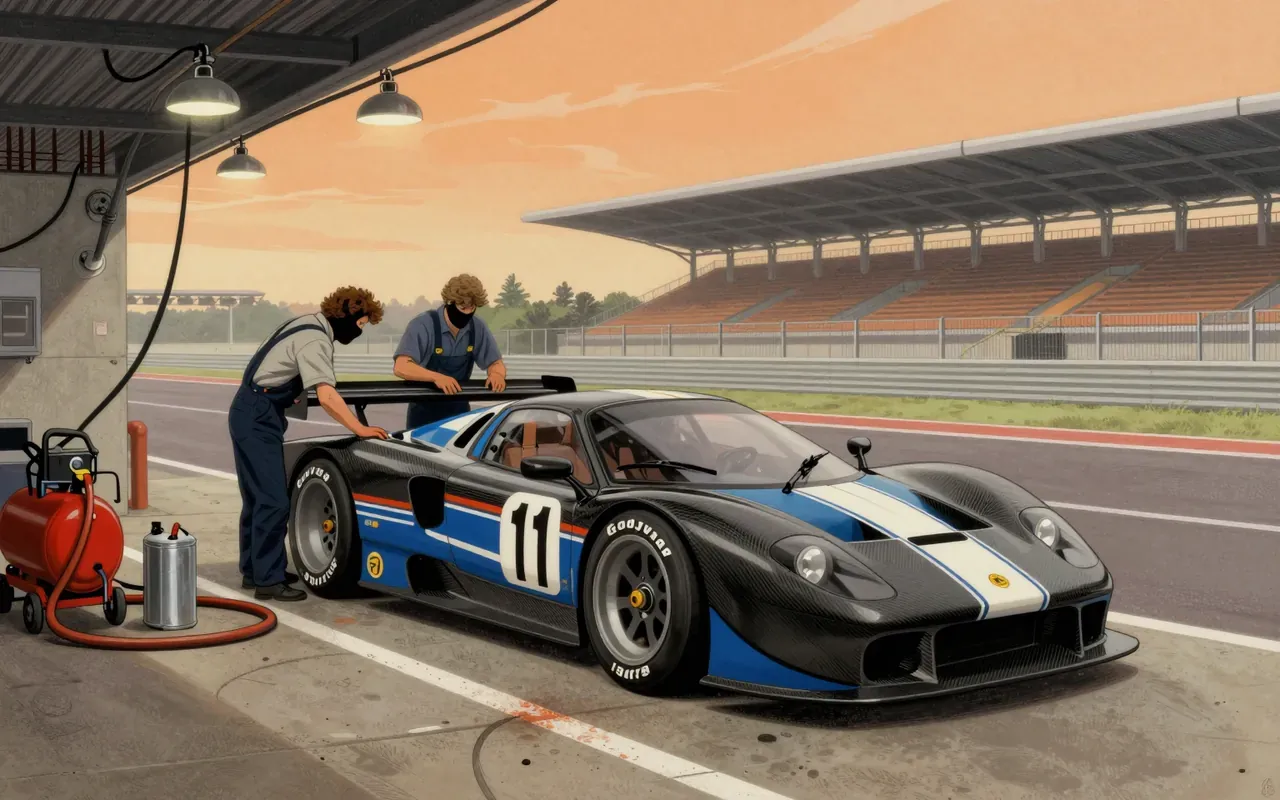
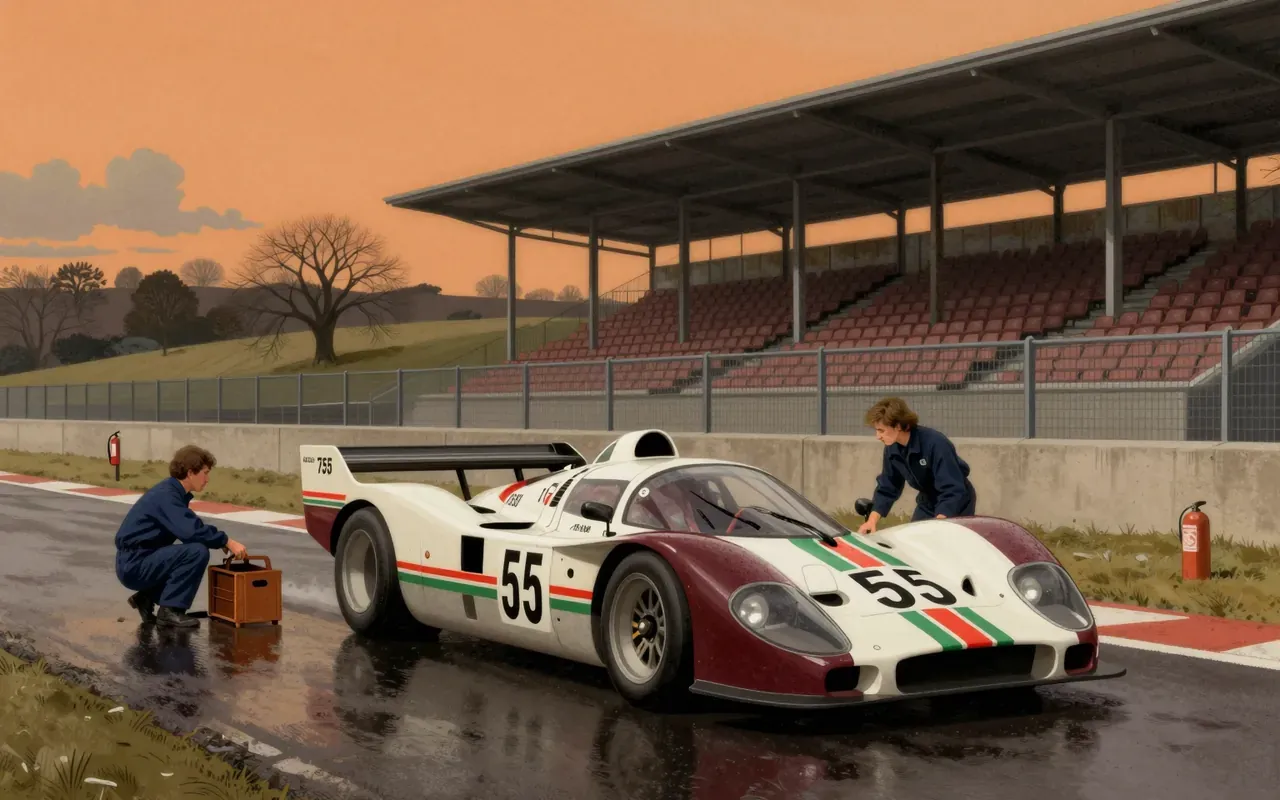
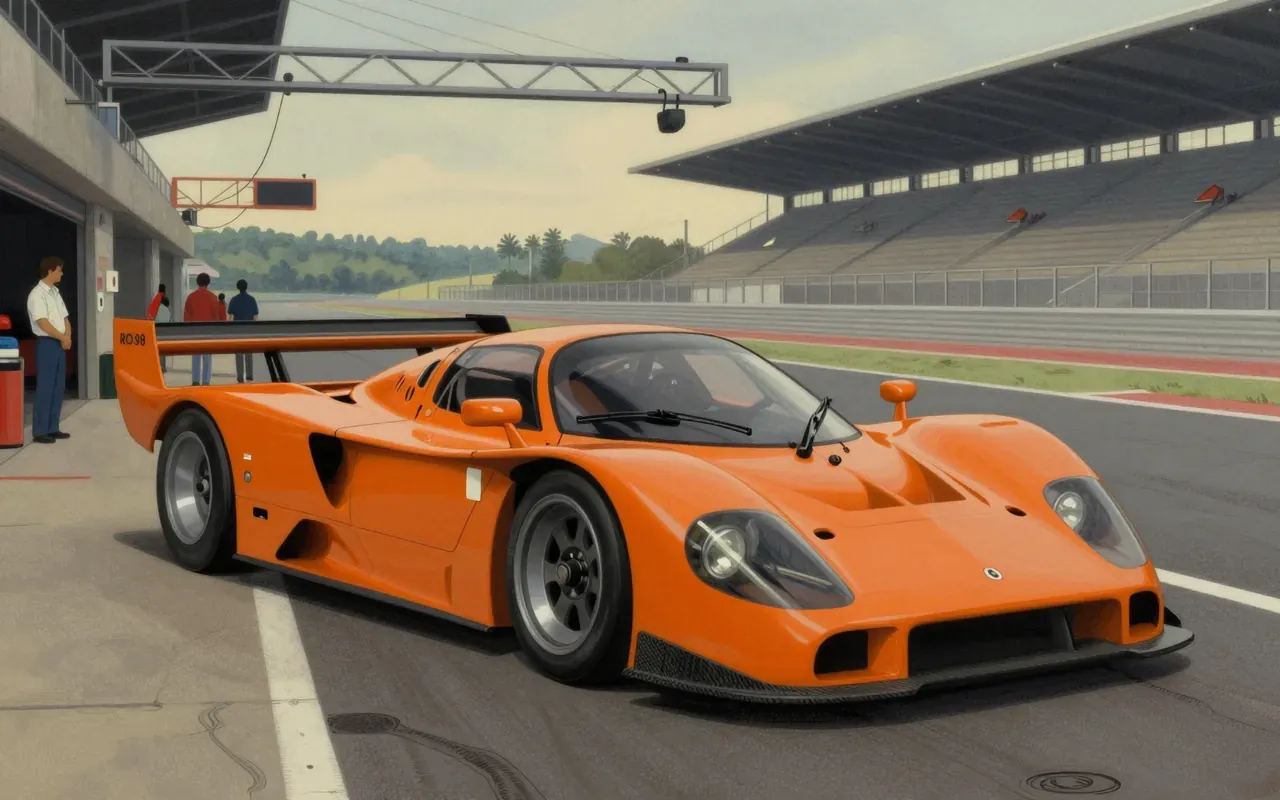
The Nissan R390 GT1 is a Le Mans GT1 race car designed in 1998 by Ian Callum at TWR Design, built jointly by Nismo and TWR in Atsugi, Japan. One road car was built for homologation; eight race cars followed.

Chapters & takeaways6
  1. 0:57
    Homologation First

    It was built as a road car first — solely to meet GT1 homologation — then turned into a racer.

  2. 2:11
    A Joint Effort

    Designed by Ian Callum at TWR in 1998, built in Atsugi, Japan by Nismo and TWR.

  3. 3:42
    The Unverified Road Car

    Only one road car exists — stored at Nissan’s Zama facility — and its 354 km/h claim remains unproven.

  4. 4:43
    The Group C Engine Reborn

    Its V8 engine came from the R89C, used an aluminium block, and produced ~650 PS in race trim.

  5. 5:50
    Rules Over Reality

    GT1 rules forced a road version, but Nissan exploited the letter — not the spirit — of the regulation.

  6. 7:16
    A Car Without a Market

    The road car was a legal necessity, not a commercial product — and never intended for sale or use.

Worth your time?

Yes. Drive the whole thing.

3.5/ 5
What works
  • It gets right the visual language of a purpose-built Le Mans challenger: low, wide, aggressive, with functional aerodynamics and a cockpit clearly shaped for endurance.
  • Its aluminium-block V8 layout lowered the centre of gravity and stiffened the chassis.
What does not
  • It does not represent a production sports car.
  • It does not offer usable road dynamics or daily usability.
  • It does not deliver on its claimed top speed — unproven and never verified.
Drive it if
  • It is for people who study how motorsport regulations drive automotive design.
  • It is not for collectors seeking drivable supercars, nor for enthusiasts who value proven performance or production relevance.
Skip it if
  • collectors seeking drivable supercars
  • enthusiasts who value proven performance or production relevance
The written brief1 min read

What the car is and where it came from

The Nissan R390 GT1 is a Le Mans GT1 race car designed in 1998 by Ian Callum at TWR Design, built jointly by Nismo and TWR in Atsugi, Japan. One road car was built for homologation; eight race cars followed.

How it works, in terms someone would actually use

It is a rear-wheel-drive racing car built to compete at Le Mans under GT1 rules. Its V8 engine was adapted from a Group C racer and used as a stressed member. The road version was built first, then the race variant developed from it.

What it gets right

It gets right the visual language of a purpose-built Le Mans challenger: low, wide, aggressive, with functional aerodynamics and a cockpit clearly shaped for endurance. Its aluminium-block V8 layout lowered the centre of gravity and stiffened the chassis.

What it does not

It does not represent a production sports car. It does not offer usable road dynamics or daily usability. It does not deliver on its claimed top speed — unproven and never verified.

What it changed

It proved that a single road car could satisfy GT1 homologation, reinforcing the rule’s fragility. It showed manufacturers could exploit the loophole without building a true production model.

Who it is for, and who it is not

It is for people who study how motorsport regulations drive automotive design. It is not for collectors seeking drivable supercars, nor for enthusiasts who value proven performance or production relevance.

Is it worth your time

Yes — but only if you care about how homologation rules shaped late-1990s endurance racing. It is not a driver’s car to experience, nor a production benchmark to admire.

Same garage · Endurance4 of 8
9:00
JeepWillys engineering · 1941The 1941 Willys MB Jeep is the origin point of the modern off-road vehicle: a purpose-built, mass-produced, mechanically simple 4×4 designed for battlefield mobility. Its influence is structural, not stylistic.
10:52
Hindustan AmbassadorMorris · 1957The Hindustan Ambassador is a saloon built in India from 1957 to 2014, based directly on the Morris Oxford Series III. It used a fully enclosed monocoque chassis and remained almost unchanged across its entire production run. It was not designed in India, nor did it evolve with changing global standards—but it endured as a functional, spatially generous, mechanically simple vehicle embedded in India’s administrative and transport systems.
10:26
Jaguar XJR-9Tony Southgate · 1988The Jaguar XJR-9 is a sports-prototype race car designed by Tony Southgate and built by Tom Walkinshaw Racing (TWR) in 1988. It features a Jaguar 7.0-litre V12 engine, carbon composite body, and mid-mounted, longitudinally oriented, rear-wheel-drive layout. A Le Mans–specific variant, the XJR-9LM, used a low-drag aerodynamic package. It won the 24 Hours of Le Mans and the 24 Hours of Daytona in 1988, and took six victories in the 1988 World Sports Prototype Championship.
11:12
Mazda 787BNigel Stroud · 1991The Mazda 787B is a Group C sports prototype that won the 1991 24 Hours of Le Mans using a Wankel rotary engine — the only non-reciprocating engine car to do so as of 2026. Built between 1990 and 1991, five units were made: two 787s and three 787Bs. It prioritised reliability and fuel efficiency over outright speed, outlasting faster rivals. It marked the end of rotary power in top-tier endurance racing. It was the first Le Mans win by a Japanese manufacturer — unmatched until Toyota in 2018.
Up next in Automotive

NSU Ro 80

Claus Luthe · 1967 · 9:35

Aerodynamic logic over engine reality — the Ro 80 sold the future while its Wankel sputtered.

9:35