automotivebriefs
10:06in productionCh. 1 · Not a Welter Racing car/ 10:06 · ceiling 15 min
Endurance · Racing

Peugeot 905

Peugeot’s 905 wasn’t Welter Racing’s car—it was Peugeot Talbot Sport’s answer to F1-style sportscar rules, and it won Le Mans twice.

The Peugeot 905 is a sports-prototype racing car built by Peugeot Talbot Sport. It was developed for the 1991 World Sportscar Championship’s F1-inspired regulations. It debuted in the final two races of the 1990 season. It won nine of 17 races, including Le Mans in 1992 and 1993 (905B), and secured both driver’s and team’s titles in the 1992 championship. It features a carbon-fibre monocoque and a 3499 cc naturally aspirated V10. It has no documented connection to Gérard Welter’s Welter Racing.

Chapters & takeaways4
  1. 1:17
    Not a Welter Racing car

    The 905 was Peugeot Talbot Sport’s deliberate pivot from rally to prototype racing under new 1991 rules.

  2. 2:50
    Built for the future, raced in the past

    It debuted in 1990 under transitional rules—neither Group C nor full 1991 spec—but was built for the latter.

  3. 4:22
    Race-winning execution

    Nine wins in 17 races—including back-to-back Le Mans victories and the 1992 World Sportscar Championship double.

  4. 6:03
    What the machine is made of

    Carbon-fibre monocoque and naturally aspirated V10 defined its response to F1-influenced regulations.

Worth your time?

Yes. Drive the whole thing.

4/ 5
What works
  • delivered wins under new rules
  • defined Peugeot’s early-90s endurance identity
  • executed carbon-fibre and NA V10 architecture at scale
What does not
  • connect to Welter Racing
  • offer road-going relevance
  • provide driver feedback detail
Drive it if
  • students of Peugeot’s post-Group B strategy
  • readers tracking F1-influenced sportscar regulation shifts
Skip it if
  • researchers of Gérard Welter’s independent designs
  • enthusiasts seeking driver-centric descriptions
The written brief1 min read

What the car is and where it came from

A sports-prototype racing car built by Peugeot Talbot Sport. Announced in November 1988. Developed for the 1991 World Sportscar Championship. Debuted in the final two races of the 1990 season.

How it works, in terms someone would actually use

Mid-engine, rear-wheel-drive layout. Carbon-fiber monocoque chassis. Naturally aspirated 3499 cc V10 engine. Built for the 1991 World Sportscar Championship’s F1-inspired regulations.

What it gets right

It delivered race wins under new regulations: nine victories across 17 races, including Le Mans in 1992 and 1993 (905B), and both driver’s and team’s titles in the 1992 World Sportscar Championship.

What it does not

It does not connect to Gérard Welter’s Welter Racing projects. The sources confirm no involvement of Welter Racing with the 905. It does not appear in any material about Welter Racing’s Le Mans cars like the WM Peugeot P88 or WR2008.

What it changed

It helped shift sports-prototype racing toward higher-revving, naturally aspirated engines and carbon-fibre construction in the early 1990s—away from turbocharged Group C norms.

Who it is for, and who it is not

It is for people studying Peugeot’s post-Group B motorsport strategy. It is not for people researching Gérard Welter’s independent designs or Welter Racing’s Le Mans entries.

Is it worth your time

Yes—if you care about how Peugeot Talbot Sport pivoted from rally dominance to endurance racing under new technical rules. No—if you expect road relevance, driver feedback detail, or design lineage from Gérard Welter.
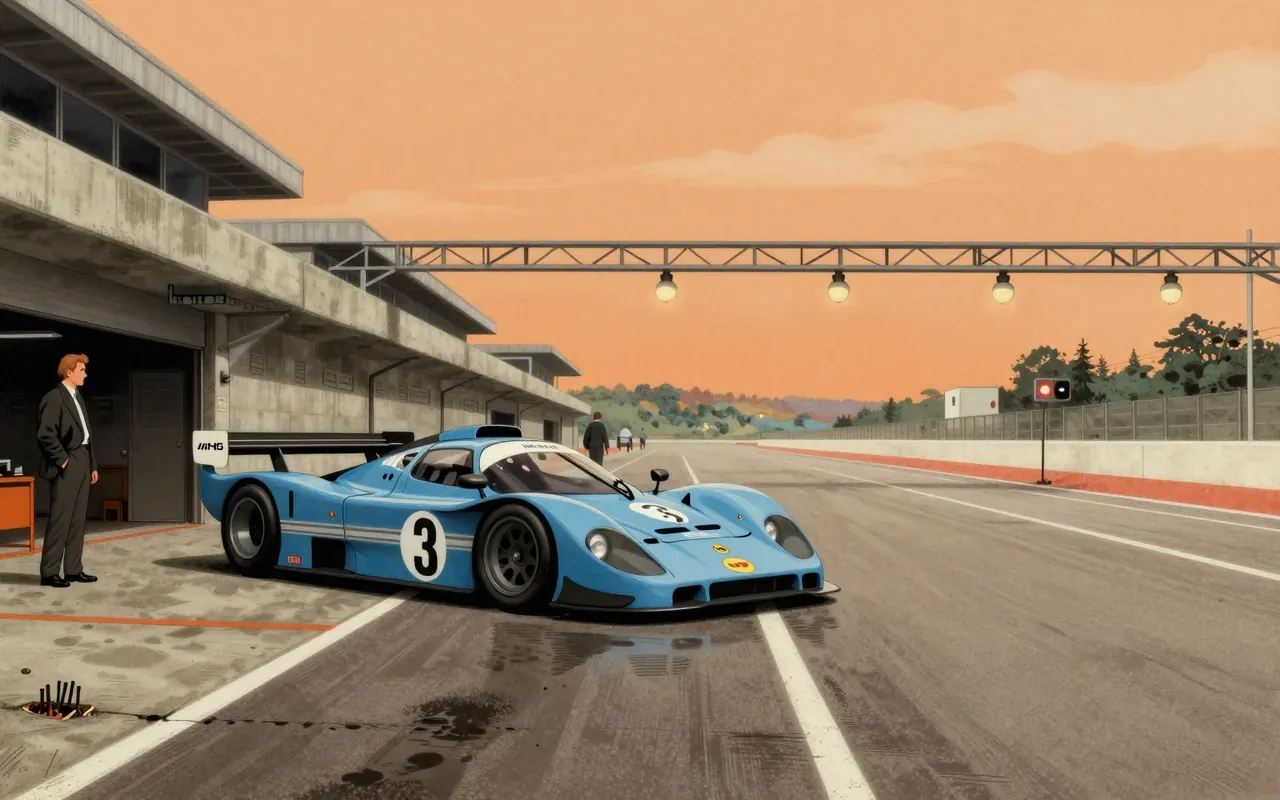
Same garage · Endurance4 of 16
9:11
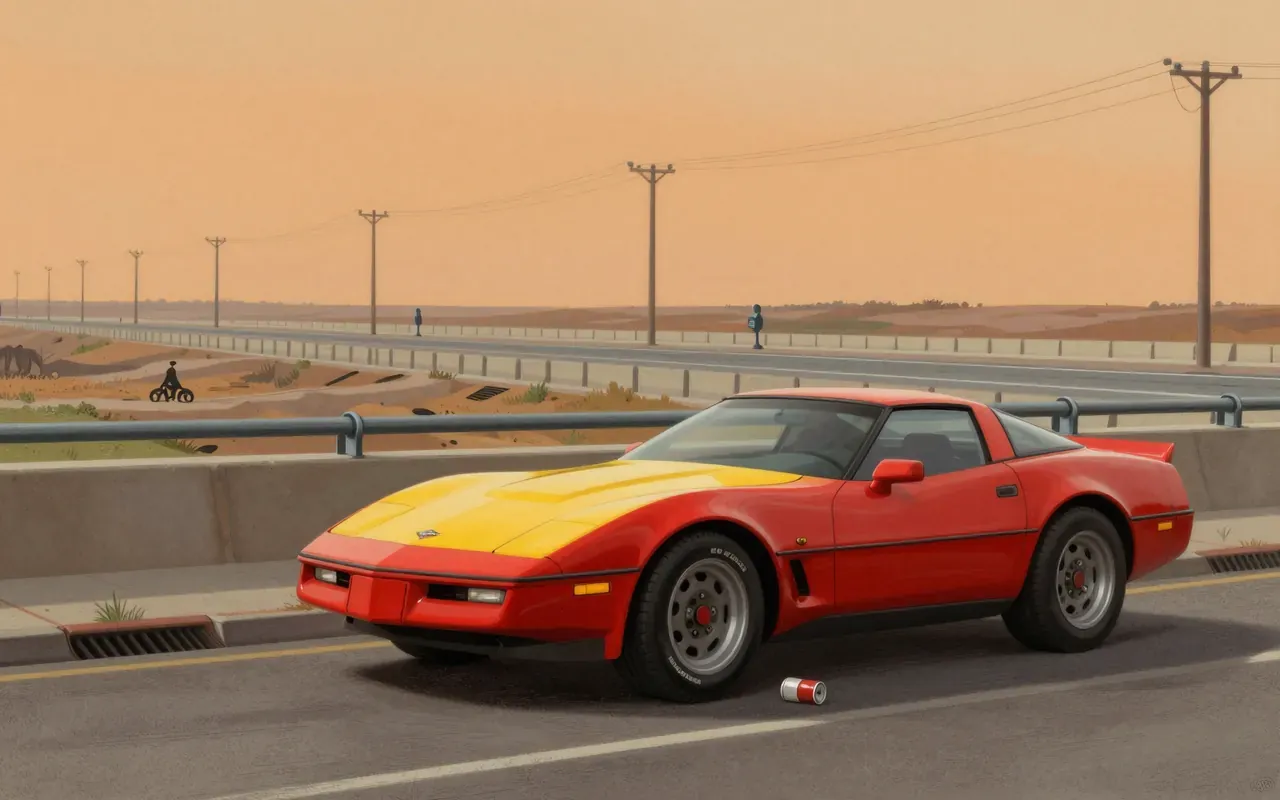
Chevrolet Corvette (C4)Jerry Palmer · 1984The C4 redefined the Corvette as a structurally coherent, driver-focused machine—not through power, but through chassis discipline. Its legacy rests on endurance records, not lap times. Its sole 1983 survivor is a museum artifact, not a driver’s car. It is the first Corvette that feels engineered, not assembled.
9:17
Mercedes-Benz CLK LMAMG · 1998The Mercedes-Benz CLK LM is a 1998 Group GT1 racing car built by Mercedes-Benz and AMG to win the FIA GT Championship. It uses a naturally aspirated M119 V8 with a flat-plane crankshaft, replacing the CLK GTR’s V12. Two road-legal CLK LM Straßenversion chassis were built for homologation — one destroyed in crash testing. It won every 1998 FIA GT race but retired from the non-championship 1998 24 Hours of Le Mans. Five chassis were built in total: three race, two road-legal. Mercedes ended its GT1 programme after 1998 when the FIA removed the GT1 class.
9:18
Peugeot 9X8Matthias Hossann · 2022The Peugeot 9X8 is a Le Mans Hypercar-class sports prototype developed by Peugeot for the FIA World Endurance Championship. It marks their return to top-tier endurance racing after 11 years. It features a hybrid powertrain combining a twin-turbo 2.6-litre V6 engine with a front-axle electric motor. It was initially notable for its wingless aerodynamic design exploiting Hypercar regulation freedoms—though this concept was later revised with a rear wing and asymmetric tyre widths to improve competitiveness. The car debuted at the 2022 6 Hours of Monza and achieved its first podium in 2023 at Monza, followed by further podiums in 2024 and 2025.
10:37
Porsche 906Ferdinand Piëch · 1966The Porsche 906 is a Group 4 Sports Car introduced in January 1966. Ferdinand Piëch headed Porsche’s development department during its creation. It weighed 580 kg. Its wind-tunnel-tested body reached 280 km/h at Le Mans. Sixty-five units were built to achieve homologation in May 1966. It used a modified 901 flat-six from the 911R. It featured gull-wing doors and a plexiglas engine cover.
Up next in Automotive

Peugeot 9X8

Matthias Hossann · 2022 · 9:18

A wingless endurance racer that had to grow a wing—and wider rear tyres—to survive the track.

9:18