automotivebriefs
9:36in productionCh. 1 · Modena: the baseline/ 9:36 · ceiling 15 min
Sports cars

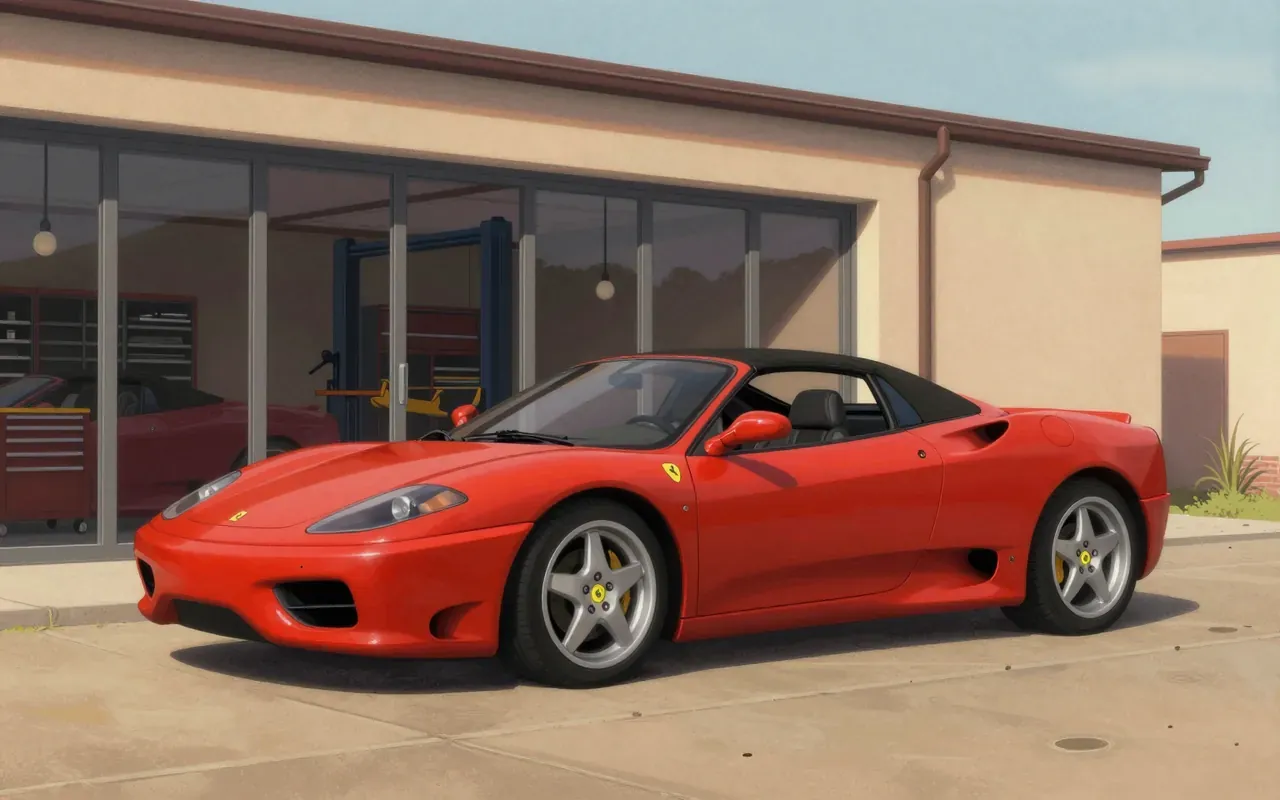
Ferrari 360

Ferrari swapped the F355’s tub for an all-aluminium space-frame — and proved mid-engined purity didn’t need drama to mean something.

The Ferrari 360 redefined Ferrari’s mid-engined formula with an all-aluminium space-frame and Pininfarina’s curvilinear language — trading the F355’s emotional sharpness for structural precision and visual calm.

Chapters & takeaways4
  1. 0:56
    Modena: the baseline

    The 360 Modena launched in 1999 and defined Ferrari’s entry-level mid-engined line until 2005.

  2. 2:47
    Spider: the line breaks

    The Spider debuted at the 2000 Geneva Motor Show and introduced a curvilinear waistline — a deliberate break from Ferrari’s angular past.

  3. 4:34
    Engine and layout

    A longitudinally mounted 3,586 cc V8 sits mid-ship, driving the rear wheels through a conventional mechanical layout.

  4. 6:32
    Challenge Stradale: the outlier

    Only 1,288 Challenge Stradales were built — fewer than one in ten of all 360s produced.

Worth your time?

Yes. Drive the whole thing.

4/ 5
What works
  • balance between accessibility and driver engagement
  • Pininfarina-designed bodywork with clean, curvilinear forms
  • space-frame chassis delivering rigidity without excess mass
What does not
  • all-wheel drive
  • turbocharged engine
  • hybrid powertrain
Drive it if
  • drivers who value tactile feedback
  • drivers who value structural honesty
  • drivers who value Italian design discipline
Skip it if
  • those seeking modern driver aids
  • those seeking turbo torque delivery
  • those seeking daily usability beyond its narrow cabin and tight visibility
The written brief1 min read

What the car is and where it came from

The Ferrari 360 is a two-seater sports car manufactured by Ferrari from 1999 to 2004. It has a rear mid-engine, rear-wheel-drive layout. It was offered as the Modena coupé, Spider roadster, and Challenge Stradale high-performance variant.

How it works, in terms someone would actually use

It places the driver behind a longitudinally mounted 3,586 cc V8, with the engine mid-mounted and driving the rear wheels. The chassis is an all-aluminum space-frame. The bodywork is by Pininfarina.

What it gets right

It gets right the balance between accessibility and driver engagement. Its Pininfarina-designed bodywork establishes clean, curvilinear forms — especially in the Spider’s waistline. The space-frame chassis delivers rigidity without excess mass.

What it does not

It does not offer all-wheel drive. It does not use a turbocharged engine. It does not have a hybrid powertrain.

What it changed

It replaced the aluminium tub of the F355 with an all-aluminum space-frame chassis. It marked a stylistic departure from prior Ferraris.

Who it is for, and who it is not

It is for drivers who value tactile feedback, structural honesty, and Italian design discipline. It is not for those seeking modern driver aids, turbo torque delivery, or daily usability beyond its narrow cabin and tight visibility.

Is it worth your time

Yes — if you want a mid-engined Ferrari that prioritises structural lightness and stylistic clarity over raw aggression or digital complexity.
Same garage · Sports cars4 of 157
9:54
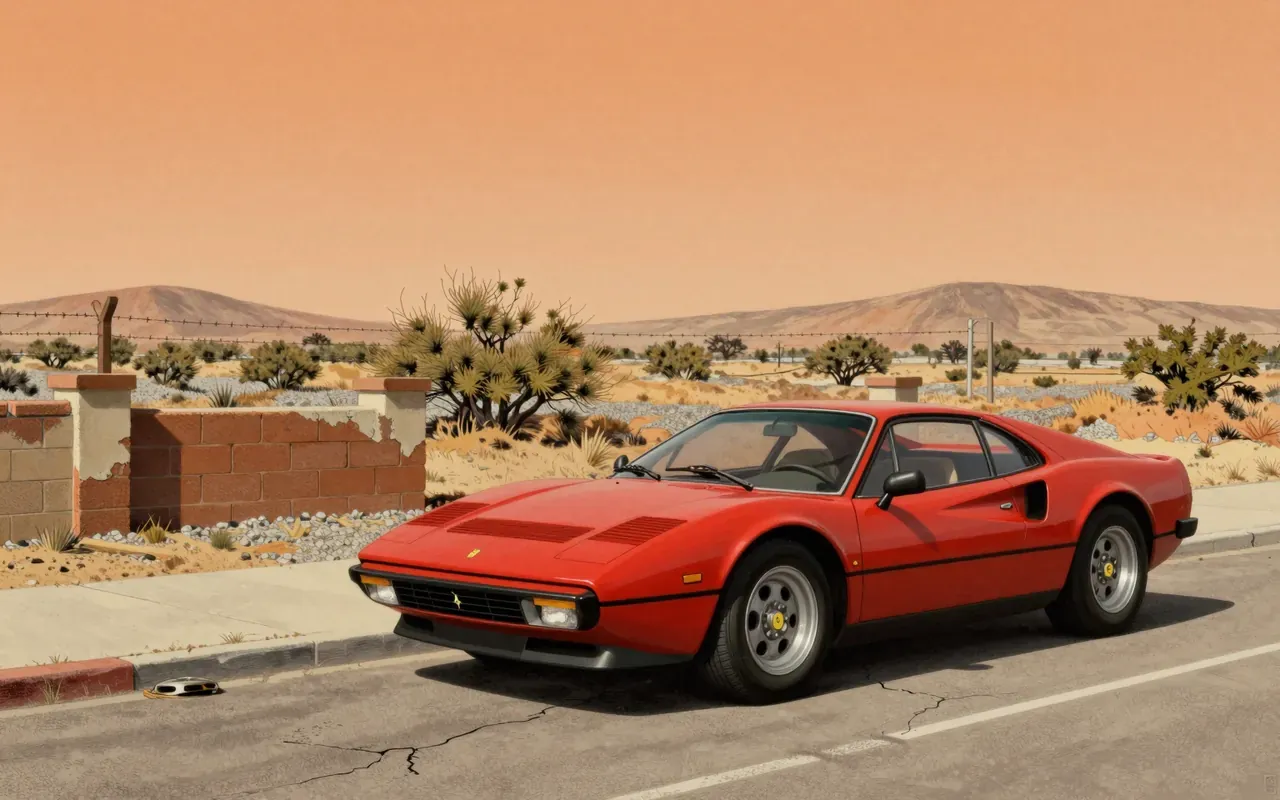
Ferrari 308 GTB/GTSLeonardo Fioravanti · 1975The Ferrari 308 GTB/GTS is a V8 mid-engined two-seater sports car designed by Leonardo Fioravanti at Pininfarina and produced by Ferrari from 1975 to 1985. It features a tube-frame chassis with a separate body, a transversely mounted flat-plane crankshaft 90-degree V8 engine with dual overhead camshafts per bank, a 5-speed dog-leg manual gearbox, limited-slip differential, all-independent double-wishbone suspension with anti-roll bars, four-wheel vented disc brakes, and unassisted rack-and-pinion steering. Early GTB models used GRP bodies (1975–1977), later switching to steel; all GTS models were steel-bodied. The model evolved through carburetted, fuel-injected (GTBi/GTSi), and quattrovalvole (four-valve) variants, with distinct power outputs and technical updates. Rally versions were developed by Michelotto for Group 4 and Group B competition, including the purpose-built GT/M. The car gained iconic status via its role in Magnum, P.I., and was named number five on Sports Car International’s Top Sports Cars of the 1970s list in 2004.
10:25
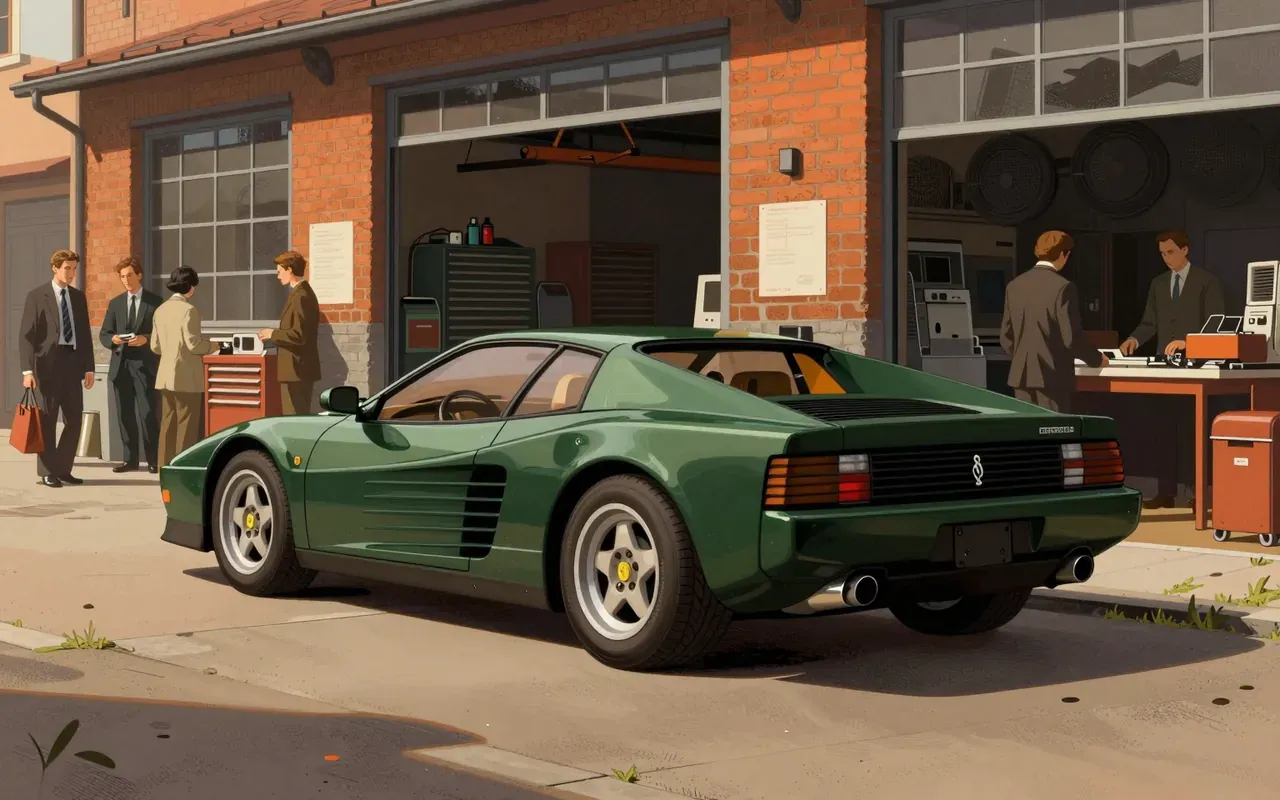
Ferrari TestarossaPininfarina · 1984The Testarossa is a Pininfarina-designed, two-door coupé introduced in 1984 as the successor to the Berlinetta Boxer. It features a 4.9 L flat-12 engine and rear mid-engine/RWD layout. Production ran from 1984 to 1991, followed by the 512 TR and F512 M until 1996. Nearly 10,000 Testarossa-series cars were produced. It was developed to resolve thermal and packaging issues of the 512 BBi and is distinguished by its side strakes, twin rear radiators, and aerodynamic efficiency. Designers included Diego Ottina, Guido Campoli, Ian Cameron, and Emanuele Nicosia. It is a cultural icon of the 1980s, popularised by Miami Vice and Out Run.
8:56
Ferrari 550Lorenzo Ramaciotti · 1996The Ferrari 550 Maranello is a front-engine, rear-wheel drive V12 grand tourer designed by Pininfarina under Lorenzo Ramaciotti’s supervision, produced from 1996 to 2001 (3,083 units), and succeeded by the 575M Maranello in 2002; it features a 5,474 cc naturally aspirated 65° V12 engine and was offered in coupé and limited-run Barchetta roadster forms.
10:24
Ferrari 275Pininfarina · 1964The Ferrari 275 is a front-engined V12 grand tourer designed by Pininfarina and produced from 1964 to 1968. It introduced the transaxle and independent rear suspension to Ferrari road cars. The GTB and GTS were two-seat coupé and spider variants. The GTB/4 and GTS/4 NART Spyder closed the series. The GTB Competizione Speciale was intended to succeed the 250 GTO in GT racing. Francesco Salomone led Pininfarina’s studio during its design.
Up next in Automotive

Ferrari 458

Pininfarina · 2009 · 9:44

Ferrari killed the manual — and made the 458 its first mid-engine road car with direct injection.

9:44