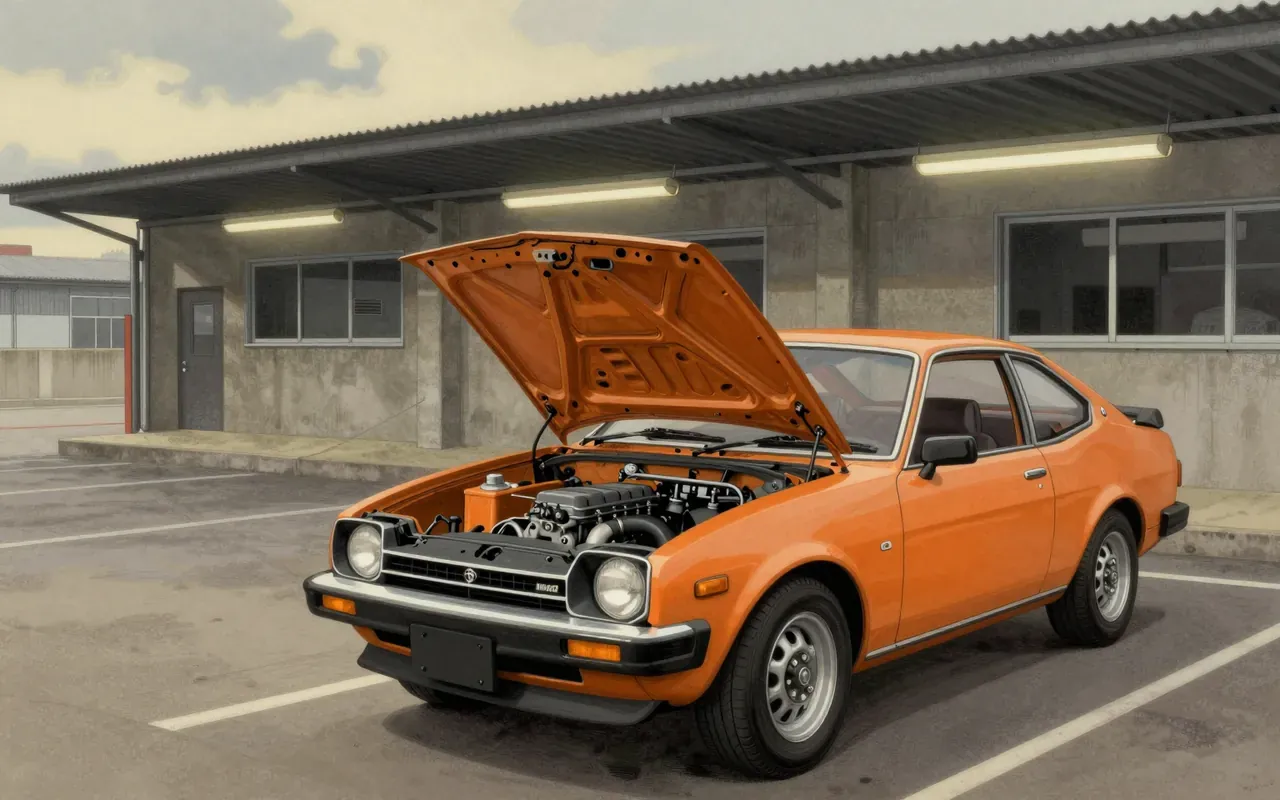
The last RWD Corolla wasn’t engineered for legend—it was just light, cheap, and balanced enough to become one.
The AE86 is a small, front-engine/rear-wheel-drive compact car derived from the fifth-generation Corolla (E80) range. It was the final Corolla model produced with rear-wheel drive. Its light weight, affordability, modifiability, and balanced front-engine/rear-drive layout made it distinctive amid an industry shift away from RWD. It featured a high-revving (7800 rpm) twin-cam engine in some markets, optionally elsewhere. It achieved early and enduring international prominence in drifting due to its inherent qualities. It was central to the manga and anime series Initial D (1995–2013) as the protagonist's drift and tofu delivery car. In 2015, Road & Track described it as 'a cult icon, inextricably interwoven with the earliest days of drifting.' It inspired the Toyota 86 (2012–present), a 2+2 sports car co-developed with Subaru.
It was the final rear-wheel-drive Corolla—and a deliberate holdout in an industry abandoning RWD.
2:44
Built for Slide, Not Spec
Lightness, balance, and a high-revving twin-cam engine made it drift-ready before drifting had rules.
4:24
Drift First, Fiction Second
Its drifting prominence came from physics—not marketing—then fused with anime to cement its myth.
5:44
Legacy Engineered Later
A cult icon in 2015. A design brief for the Toyota 86 in 2012. Its influence outlived its production run.
Worth your time?
Yes. Drive the whole thing.
4.5/ 5
What works
light weight
affordability
modifiability
balanced front-engine/rear-drive layout
What does not
front-wheel drive
turbocharging
all-wheel drive
electronic driver aids
Drive it if
drivers who value mechanical feedback
those who prioritise low inertia and modularity
Skip it if
those requiring modern crash structures
airbags
daily usability by modern standards
The written brief1 min read
What the car is and where it came from
The AE86 is a small, front-engine/rear-wheel-drive compact car. It was the final Corolla model produced with rear-wheel drive. It was sold as the Corolla Levin and Sprinter Trueno.
How it works, in terms someone would actually use
It is a small, front-engine/rear-wheel-drive compact car derived from the fifth-generation Corolla (E80) range. It uses a five-speed manual transmission. Some versions have a limited-slip differential. Front suspension is MacPherson strut. Weight distribution is near 50/50 front/rear.
What it gets right
Light weight. Affordability. Modifiability. Balanced front-engine/rear-drive layout. High-revving twin-cam engine option (7800 rpm) in some markets.
What it does not
It does not offer front-wheel drive. It does not feature turbocharging, all-wheel drive, or electronic driver aids. It does not have a production successor within the Corolla line.
What it changed
It became inextricably interwoven with the earliest days of drifting. It inspired the Toyota 86 (2012–present), a 2+2 sports car co-developed with Subaru.
Who it is for, and who it is not
It is for drivers who value mechanical feedback, low inertia, and modularity over comfort or power. It is not for those who require crash structures, airbags, or daily usability by modern standards.
Is it worth your time
Yes—if you care about how rear-wheel-drive simplicity enabled grassroots motorsport and subcultural identity. No—if you need modern safety, refinement, or performance metrics.