What the car is and where it came from
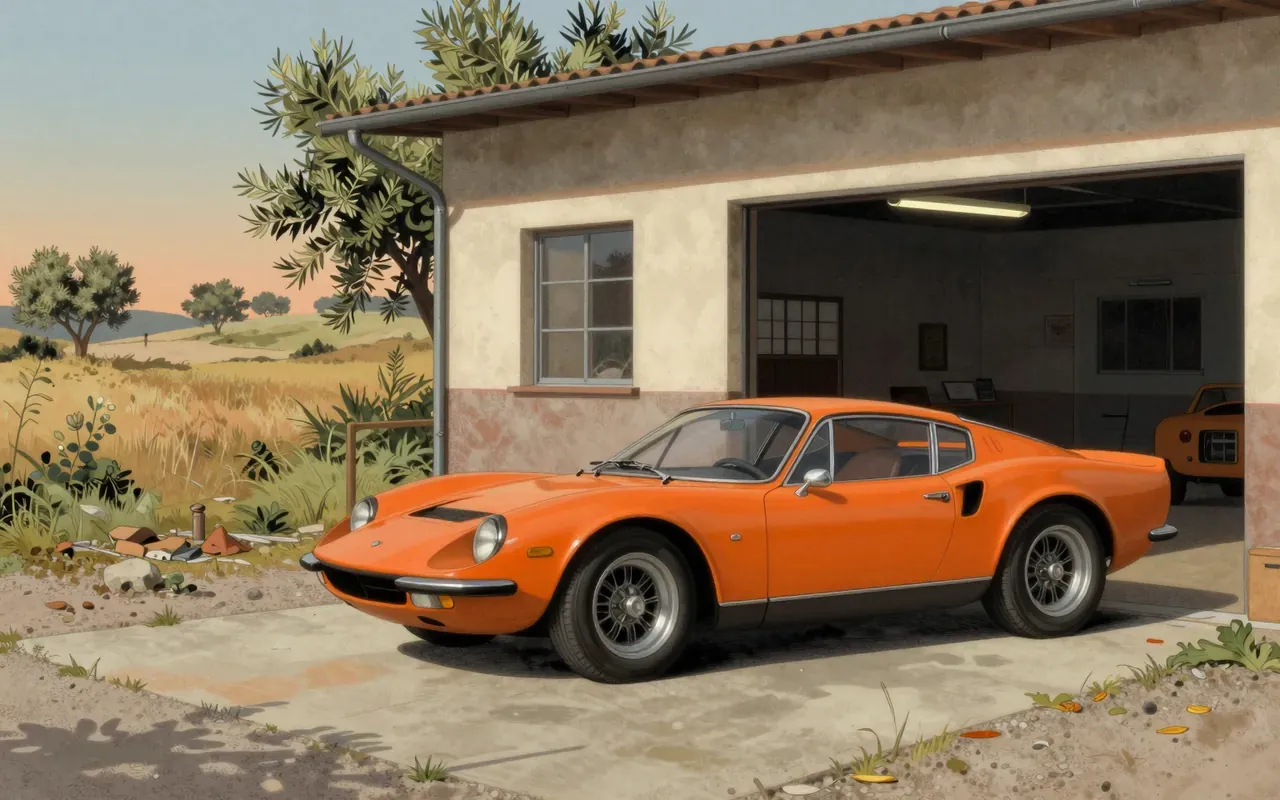
The Cizeta-Moroder V16T is the only product of the Cizeta company. Designed by Marcello Gandini, developed by Claudio Zampolli and Giorgio Moroder, and built by ex-Lamborghini engineers. First shown in Los Angeles in December 1988. Produced in Modena (1991–1995, eight units including one prototype) and later Fountain Valley, California (1999–2003, three more units, including a spyder).
How it works, in terms someone would actually use
The V16T places its bespoke 6.0 L transversely mounted V16 engine centrally rear—just forward of the rear axle and behind the passenger seats. It drives the rear wheels only. The engine is built from two Lamborghini Urraco V8 blocks, sharing cylinder heads and featuring 64 valves and eight overhead camshafts. It delivers 540 hp at 8,000 rpm and 540 N⋅m at 6,000 rpm.
What it gets right
It commits fully to its premise: a transverse mid-engine V16 as a physical and philosophical counterpoint to the V12 and V10 norms. The layout echoes Gandini’s Miura, but the engine choice answers only to Zampolli’s fascination with large, powerful automobiles—not packaging efficiency or drivetrain coherence.
What it does not
It does not offer driver engagement through chassis feedback or progressive throttle response. It does not prioritise usability, service access, weight distribution balance, or thermal management for sustained use. It does not scale: only eleven units were ever completed across two disjointed production runs.
What it changed
Nothing in production car development. It did not influence engine architecture, layout conventions or mid-engine sports car design. It remains the sole product of Cizeta, with no derivatives, successors or licensed adaptations.
Who it is for, and who it is not
It is for collectors who value provenance over performance metrics—and for students of Gandini’s late-career work, particularly his return to transverse mid-engine layouts after the Miura. It is not for drivers seeking refinement, repeatability, or mechanical transparency.
Is it worth your time
Yes—if you need proof that engineering ambition can outpace market logic. It is not a benchmark, nor a template. It is a one-off statement in metal and torque, built twice over by people who knew how to make Lamborghinis—but chose not to.