automotivebriefs
10:28in productionCh. 1 · Origin story/ 10:28 · ceiling 15 min
Electric

Fiat 500e

An electric 500 that swaps engine noise for silence—and sacrifices practicality to keep the shape.

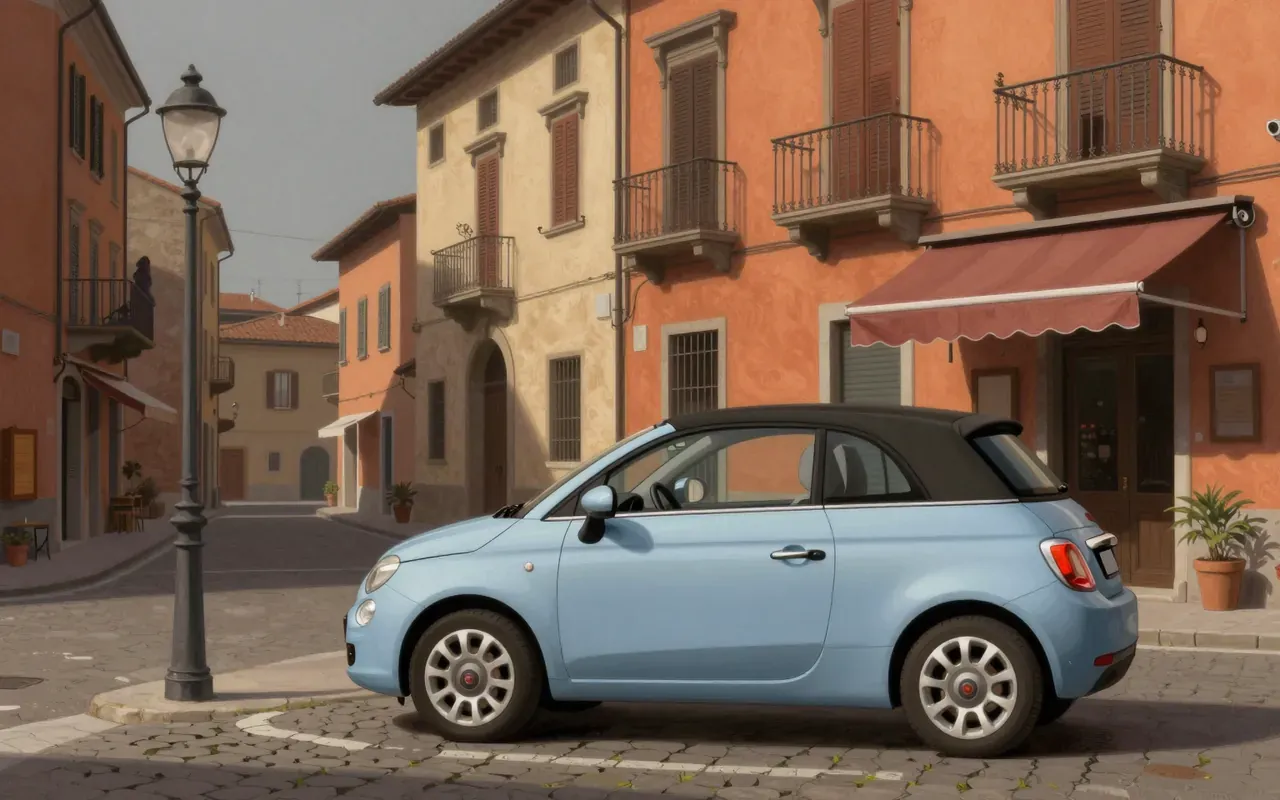
The Fiat 500e is an electric city car that redefines the 500 lineage without abandoning its visual language. It trades engine noise for immediacy, space for charm, and range for urban precision.

Chapters & takeaways4
  1. 1:01
    Origin story

    It is the third-generation 500, launched in Milan on 4 March 2020 after Geneva was cancelled.

  2. 2:32
    Body and build

    Built in Turin, it debuted as a cabriolet, then added three- and four-door hatches—with the latter limited to left-hand drive.

  3. 4:34
    Range and drive

    Its 320 km WLTP range suits cities; its 42 kWh battery and 87 kW motor deliver responsive urban acceleration.

  4. 6:29
    Two paths, one badge

    The 500 Ibrida shares the mild-hybrid system from the second-generation 500—not the full electric architecture.

Worth your time?

Yes. Drive the whole thing.

3.5/ 5
What works
  • low-centre-of-gravity battery layout
  • strong urban-cycle range
  • early adoption of level 2 autonomy in segment
What does not
  • range beyond city use
  • right-hand-drive four-door variant
  • shared platform with second-generation 500
Drive it if
  • urban left-hand-drive drivers
  • design-conscious EV adopters
Skip it if
  • long-distance commuters
  • right-hand-drive markets needing rear access
The written brief1 min read

What the car is and where it came from

The Fiat 500e is the third-generation Fiat 500 city car. It launched on 4 March 2020 in Milan after the Geneva Motor Show cancellation. It is manufactured at the Mirafiori plant in Turin, Italy.

How it works, in terms someone would actually use

It is a city car built for short urban trips. The electric motor delivers instant torque. The battery pack sits under the floor. The cabin uses UConnect 5 for infotainment. Level 2 autonomous driving assists with steering and lane-keeping in traffic.

What it gets right

It places the battery low for a stable ride. It uses the cabriolet launch to signal intent—electric, open, and playful. It integrates level 2 autonomy early in its segment. It delivers strong urban-cycle range (400 km) where it matters most.

What it does not

It does not offer a right-hand-drive version of the four-door ‘3+1’ hatchback. It does not match the range of larger EVs. It does not share mechanical components with the second-generation 500 beyond the mild-hybrid variant.

What it changed

It shifted the 500 line from internal combustion to electric power while retaining the name and silhouette. It moved production of the third-generation model exclusively to Mirafiori, ending Polish assembly for this generation.

Who it is for, and who it is not

It is for urban drivers in left-hand-drive European markets who prioritise design, compactness, and daily EV usability. It is not for families needing frequent rear-seat access in right-hand-drive countries, nor for those requiring long-distance capability.

Is it worth your time

Yes—if you need a compact, Italian-designed EV for city use and accept its limited range and niche body configurations. No—if you need practicality beyond urban centres or require rear-door access in right-hand-drive markets.
Same garage · Electric4 of 14
9:19
Lucid AirDerek Jenkins · 2021The Lucid Air is a battery electric four-door luxury sedan, Lucid Motors' first production car, announced in December 2016 and launched in 2021. It highlights its record-setting EPA range (up to 520 miles for the Dream Edition), aerodynamic efficiency (Cd=0.21 pre-production, Cd=0.20 production), performance capabilities (e.g., 0–60 mph in 2.5 seconds, 235 mph top speed), and technical features including its 924-volt architecture, bidirectional charging, and DreamDrive ADAS with 32 sensors. The Air Pure, Touring, Grand Touring, and Dream Edition trims are detailed, along with battery capacities (88–112 kWh), power outputs (430–1,111 hp), and production milestones including commencement in late 2021 and deliveries beginning October 30, 2021. Design leadership is attributed to Derek Jenkins, and the vehicle is positioned against the Tesla Model S and German luxury models.
10:11
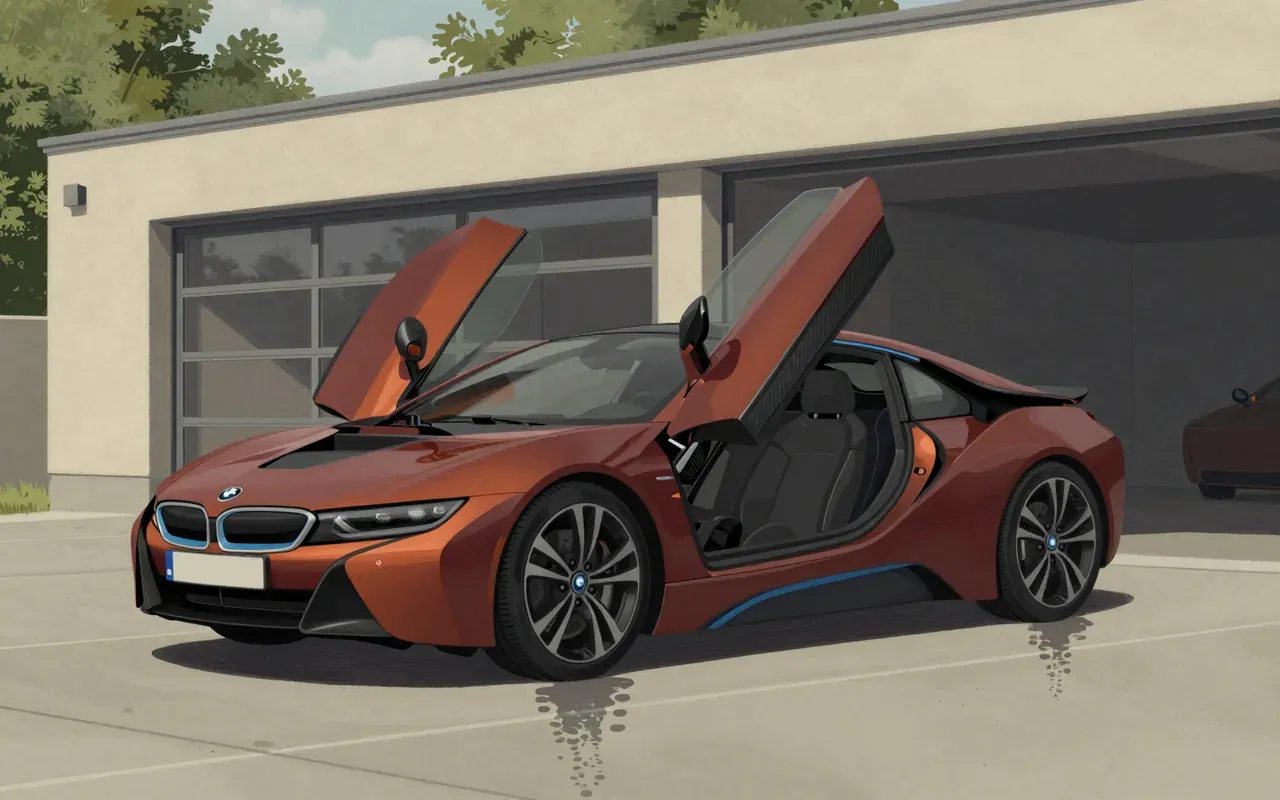
BMW i8Benoit Jacob · 2014The BMW i8 is a plug-in hybrid sports car designed by Benoit Jacob and marketed under the BMW i sub-brand. It was unveiled at the 2013 Frankfurt Motor Show and released in Germany in June 2014. U.S. deliveries began in August 2014. A roadster variant launched in May 2018. Production ended in June 2020. The 2015 i8 accelerated from 0 to 100 km/h in 4.4 seconds. It had a 7.1-kWh lithium-ion battery pack and an all-electric range of 37 km under the New European Driving Cycle. The plug-in hybrid system comprised a three-cylinder, 1.5-litre BMW TwinPower Turbo gasoline engine.
8:58
Canoo Lifestyle VehicleRichard Kim · 2019The Canoo Lifestyle Vehicle was a battery electric vehicle with multiple body styles sharing a common platform, including minivan, cargo van, and pickup truck, manufactured by Canoo.
10:43
Fisker KarmaHenrik Fisker · 2011The Fisker Karma is a luxury plug-in range-extended electric sports sedan produced by Fisker Automotive between 2011 and 2012. It was manufactured by Valmet Automotive in Finland. The EPA rated its all-electric range at 32 mi (51 km), and its fuel economy at 52 mpg‑US equivalent in all-electric mode and 20 mpg‑US in gasoline-only mode. It was priced from US$102,000 in the U.S., and around 1,800 units were delivered in North America and Europe through December 2012. Approximately 2,450 Karmas were built before production ceased in November 2012.
Up next in Automotive

Fiat 600

Dante Giacosa · 1955 · 11:14

Dante Giacosa didn’t just move the engine rearward — he re-engineered how rear weight behaves.

11:14