What the car is and where it came from
The ST185 is the second of three generations of the Celica GT-Four, the high-performance Celica liftback with a turbocharged 3S-GTE engine and full-time AWD. The GT-Four was created to compete in the World Rally Championship, whose rules require a manufacturer to build road-going versions in sufficient numbers. The “super round” ST185 was produced from September 1989 to September 1993. The first 21 units were built in December 1988 as prototypes for tests, and the production model was launched in Japan in September 1989, with deliveries starting a month later. Road cars were built at Toyota’s Tahara plant in Aichi Prefecture, and the rally cars were prepared by Toyota Team Europe in Cologne.
How it works, in terms someone would actually use
The 3S-GTE in the ST185 has an air-to-air intercooler and a CT26 twin-entry turbo, which avoids interference between exhaust pulses. The Japanese market car made 225 PS. The GT-Four drivetrain was Toyota’s first performance system to power all four wheels: hollow splined shafts feed a centre differential to give a true 50:50 split, with a viscous coupling holding it steady. All three generations used the same basic system, and some ST185s add a rear Torsen limited-slip differential.
What it gets right
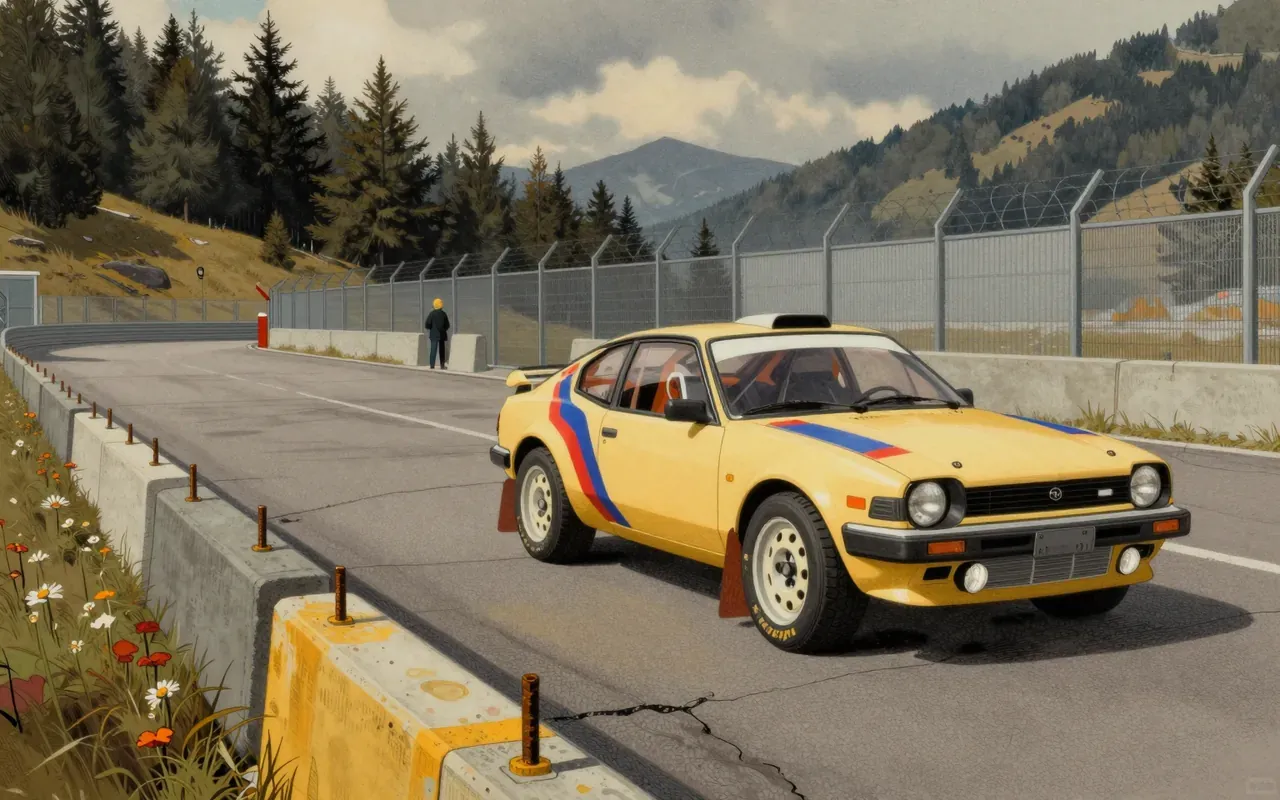
The ST185 turned the rally brief into a road car. The GT-Four RC, launched in September 1991 in Japan to meet FIA homologation for the 1992 season, used a water-to-air intercooler, a different hood and bumper, a shorter shift lever throw and clutch travel, and triple-cone synchromesh on second and third gears. Of 5,000 built, 1,800 went to Japan, 3,000 to Europe and 150 to Australia. Elsewhere it was sold as the Carlos Sainz Limited Edition or the Group A Rallye.
What it does not
It is not a single specification. Export cars were all wide-body liftbacks, while the Japanese GT-Four also came in narrow-body form before the facelift. Gearboxes, options and equipment varied by market. The Australian car was less luxurious than the others, with no cruise control, leather, sunroof or premium sound system.
What it changed
The ST185 debuted in the WRC at the 1992 Rally Monte Carlo and took its first win at the 1992 Safari Rally, one of four victories that year. Carlos Sainz won the Drivers’ Championship in 1992, Juha Kankkunen in 1993 and Didier Auriol in 1994, and Toyota took the Manufacturers’ title in 1993 and 1994. It was Toyota’s most successful rally car for more than two decades. Across its three generations the Celica GT-Four was the first time a Japanese manufacturer entered the WRC with a turbocharged AWD car, took trophies and won the titles.
Who it is for, and who it is not
It is for people who want to see how a rule requiring road cars shaped a rally weapon. In the United States it was sold as the All-Trac Turbo, with 200 hp, the most powerful Celica ever sold there and the most expensive Celica yet. It is not for those who want a single definitive specification to point at.
Is it worth your time
Yes. The ST185 is the generation that took the GT-Four to both WRC titles in 1993 and 1994, and the RC shows plainly what a homologation rule asks of a road car.