automotivebriefs
11:10in productionCh. 1 · Not Commissioned, Then Adopted/ 11:10 · ceiling 15 min
Saloons & estates · Road

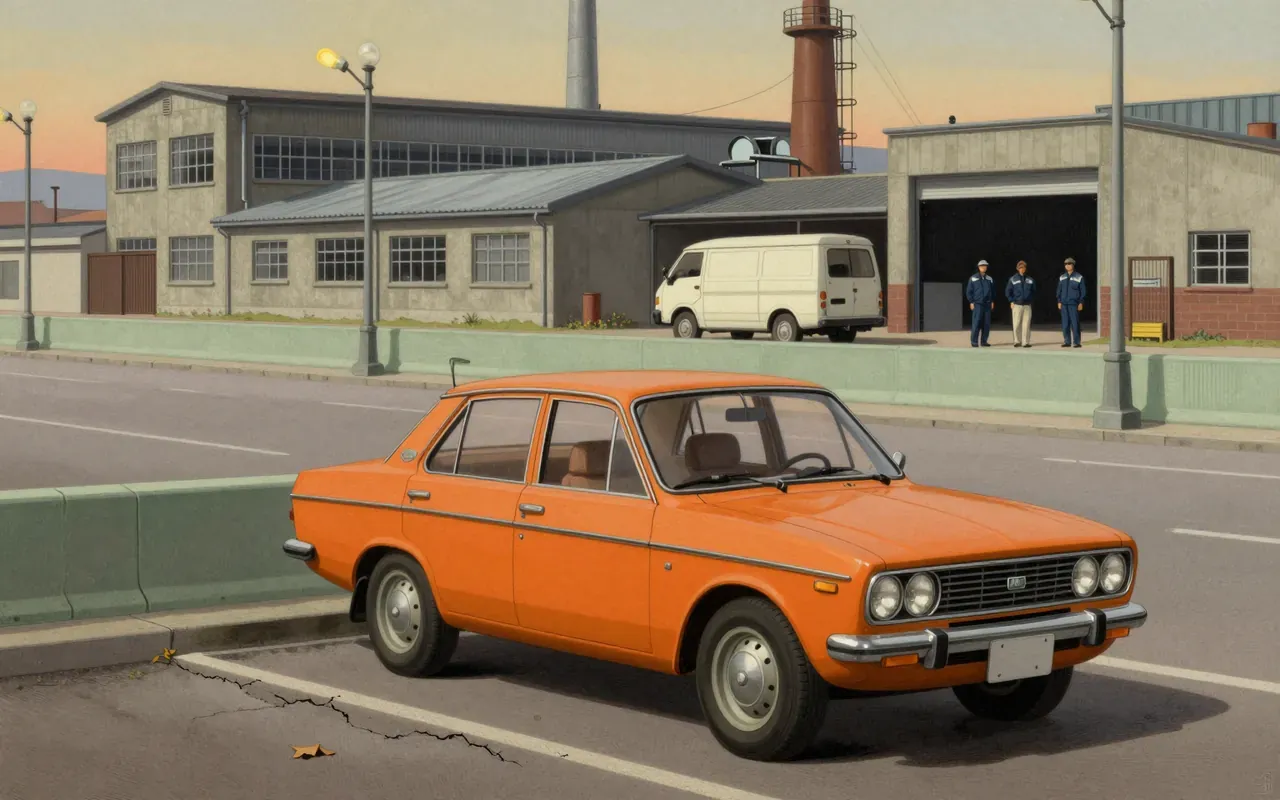
Hyundai Pony

South Korea’s first mass-produced car wasn’t born in a factory — it was sketched in Turin and reverse-engineered in Ulsan.

The Hyundai Pony is South Korea’s first mass-produced and exported car. It is a small rear-wheel-drive automobile produced from 1975 to 1990 in saloon, liftback, coupé utility, and estate body styles. Giorgetto Giugiaro designed both the 1974 Pony Coupé Concept — shown at Turin, uncommissioned by Hyundai — and the 1975 production Pony. The concept influenced domestic advertising and reverse engineering at Ulsan, but never entered mass production.

Chapters & takeaways6
  1. 1:12
    Not Commissioned, Then Adopted

    The production Pony followed a concept that Hyundai did not commission.

  2. 2:21
    Four Bodies, One Layout

    It was a small rear-wheel-drive car offered in saloon, liftback, coupé utility, and estate forms.

  3. 3:27
    First Export, Not First Concept

    It was South Korea’s first mass-produced and exported car — but the show-stopping coupé never entered production.

  4. 4:39
    One Designer, Two Ponys

    Giugiaro designed both the 1974 concept and the 1975 production car — two distinct vehicles, one hand.

  5. 6:03
    Branded at the Door

    Hyundai branded the concept just before Turin — a marketing move, not a design brief.

  6. 7:17
    From Showroom to Assembly Line

    The 1975 Pony was not a reinterpretation — it was the first realisation of Giugiaro’s 1974 idea in steel and scale.

Worth your time?

Yes. Drive the whole thing.

4/ 5
What works
  • national industrial emergence
  • platform versatility
  • concept-to-production translation
What does not
  • performance
  • rarity
  • concept fidelity
Drive it if
  • industrial historians
  • design students
  • policy researchers
Skip it if
  • collectors
  • enthusiasts seeking driving dynamics
The written brief1 min read

What the car is and where it came from

The Hyundai Pony is a small rear-wheel-drive automobile produced by Hyundai from 1975 to 1990. Giorgetto Giugiaro designed both the 1974 Pony Coupé Concept and the 1975 production Pony.

How it works, in terms someone would actually use

It is a small rear-wheel-drive automobile. It was made in saloon, liftback, coupé utility, and estate body styles. It was launched as a four-door saloon in December 1975.

What it gets right

It gets right the translation of a bold concept into a functional, export-ready production car. It delivers multiple body styles from one platform, all rear-wheel drive.

What it does not

It does not include the 1974 Coupé Concept in its production run. That car was designed by Giugiaro without Hyundai’s commission. It never reached mass production.

What it changed

It changed South Korea’s industrial trajectory. It established Hyundai as an automaker capable of domestic production and global export.

Who it is for, and who it is not

It is for anyone studying how industrial capability emerges — engineers, historians, policy makers, designers. It is not for collectors seeking rare variants or performance benchmarks.

Is it worth your time

Yes. It is South Korea’s first mass-produced and exported car. Its existence marks the start of a national automotive industry.
Same garage · Saloons & estates4 of 60
9:19
Lucid AirDerek Jenkins · 2021The Lucid Air is a battery electric four-door luxury sedan, Lucid Motors' first production car, announced in December 2016 and launched in 2021. It highlights its record-setting EPA range (up to 520 miles for the Dream Edition), aerodynamic efficiency (Cd=0.21 pre-production, Cd=0.20 production), performance capabilities (e.g., 0–60 mph in 2.5 seconds, 235 mph top speed), and technical features including its 924-volt architecture, bidirectional charging, and DreamDrive ADAS with 32 sensors. The Air Pure, Touring, Grand Touring, and Dream Edition trims are detailed, along with battery capacities (88–112 kWh), power outputs (430–1,111 hp), and production milestones including commencement in late 2021 and deliveries beginning October 30, 2021. Design leadership is attributed to Derek Jenkins, and the vehicle is positioned against the Tesla Model S and German luxury models.
9:14
Mitsubishi Galant VR-4Mitsubishi · 1987The Galant VR-4 is Mitsubishi’s first high-performance all-wheel-drive sedan, developed for Group A rallying and launched in 1987. It introduced the Dynamic Four AWC system — a full-time four-wheel drive setup with viscous coupling, plus four-wheel steering and four-wheel ABS. It was sold globally to meet homologation requirements, including 2,000 units in the US in 1991 and 1,000 in 1992. Later generations added liftback (Eterna ZR-4) and station wagon (Legnum) variants. The eighth generation was initially JDM-only but gained overseas cult status via grey imports. In 2000, Ralliart officially imported 200 units to the UK. Production ended in 2002 due to revised Japanese emissions standards.
7:56
Mitsubishi Lancer EvolutionMitsubishi · 1999The Mitsubishi Lancer Evolution is a rally-bred sports sedan built on the Lancer platform. Ten generations were produced from 1992 to 2016. All used a two-litre intercooled turbo inline-four engine and all-wheel drive. It launched in Japan only, then reached the UK and Europe around 1997 via Ralliart dealers—starting with the Evolution IV.
10:45
Proton SagaMitsubishi · 1985The Proton Saga is a foundational Malaysian car—not a technical benchmark, but a political and industrial one.
Up next in Automotive

Iso Grifo

Giorgetto Giugiaro · 1965 · 11:06

A front-engined Italian GT built to beat Ferrari—with a Chevy V8 and no apologies.

11:06