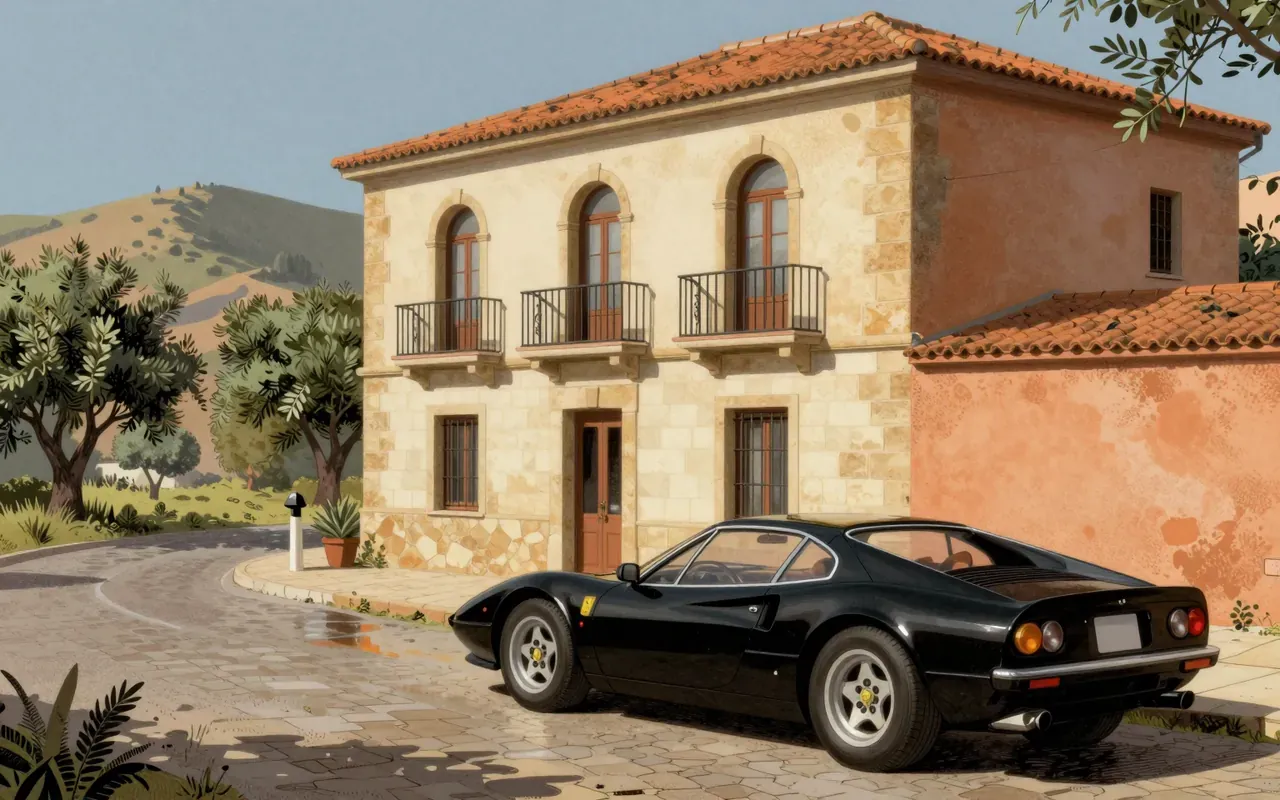
What the car is and where it came from
The Ferrari 250 GTO is a Gran Turismo Omologato — a front-engine, RWD grand tourer built by Ferrari between 1962 and 1964. Giotto Bizzarrini led its development from 1960 as a response to the 250 GT SWB’s aerodynamic shortcomings and competitive pressure from cars like the Jaguar E-Type.
How it works, in terms someone would actually use
It is a front-engine, rear-wheel-drive grand tourer built around a hand-welded oval tube frame. Its all-aluminium body was shaped by wind tunnel testing at Pisa University. The engine is a Tipo 168/62 Comp. 3.0 L V12, dry-sumped to lower and reposition it for better weight distribution. It uses A-arm front suspension, a live rear axle with Watt’s linkage, disc brakes, and Borrani wire wheels.
What it gets right
It gets aerodynamics right for its purpose: reduced frontal area, extended bonnet, belly pan, and underbody spoiler formed by the fuel tank cover all directly address drag and front lift. It gets homologation right: 36 units met the FIA’s adjusted threshold. It gets material execution right: all-aluminium bodywork, hand-welded oval tube frame, and Scaglietti construction reflect focused craftsmanship.
What it does not
It does not deliver new chassis architecture. It retains the 250 GT SWB’s basic layout, stiffened and lightened but not reinvented. It does not use independent rear suspension. It does not feature a monocoque. It does not cite power output, torque curves, or lap times — those are absent from the sources.
What it changed
It redefined FIA Group 3 homologation strategy: Ferrari counted earlier 250 GT SWB units toward the 100-car requirement, reducing production to 36 GTOs. It proved that wind tunnel testing, belly pans, and underbody spoilers could be applied to a front-engined GT racer without abandoning proven mechanical architecture.
Who it is for, and who it is not
It is for engineers, historians, and collectors who treat homologation rules, chassis geometry, and wind tunnel data as primary texts. It is not for enthusiasts seeking subjective driving narratives, performance benchmarks, or cultural mythology.
Is it worth your time
Yes — if you need to understand how aerodynamic intent, chassis geometry, and homologation constraints converged in one machine. No — if you expect performance figures, driving impressions, or context beyond what the sources confirm.