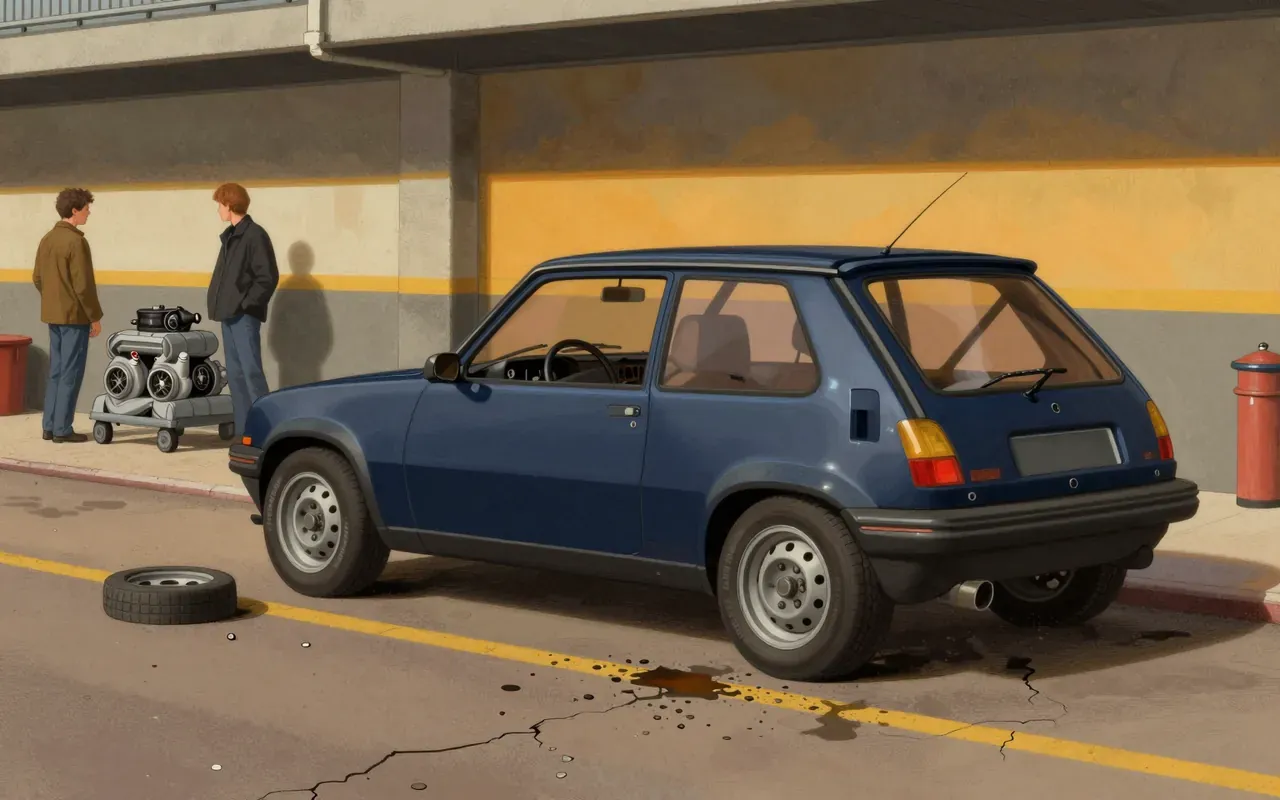
What the car is and where it came from
A rear mid-engine, rear-wheel-drive homologation special built by Renault from 1980 to 1984. It is based on the front-wheel-drive Renault 5 supermini but shares almost no mechanicals with it.
How it works, in terms someone would actually use
The driver sits ahead of a mid-mounted turbocharged four-cylinder engine. Power goes to the rear wheels. The chassis is a modified Renault 5 shell, but the layout, drivetrain and weight distribution are entirely new.
What it gets right
It places the engine behind the driver for balance and responsiveness. It uses the Renault 5’s compact dimensions to create a narrow, agile machine. It meets homologation rules while remaining street-legal.
What it does not
It does not offer front-wheel-drive predictability. It does not share suspension, brakes or steering with the standard Renault 5. It does not prioritise comfort, visibility or cargo space.
What it changed
It proved a mass-market hatchback could be re-engineered into a mid-engined rally weapon without abandoning road legality.
Who it is for, and who it is not
It is for rally historians, packaging obsessives and drivers who value mechanical honesty over convenience. It is not for daily commuters, families or anyone needing rear seat access or boot space.
Is it worth your time
Yes—if you want to understand how rally homologation forced radical packaging into a supermini body. No—if you expect usable space, refinement or modern safety.