What the car is and where it came from
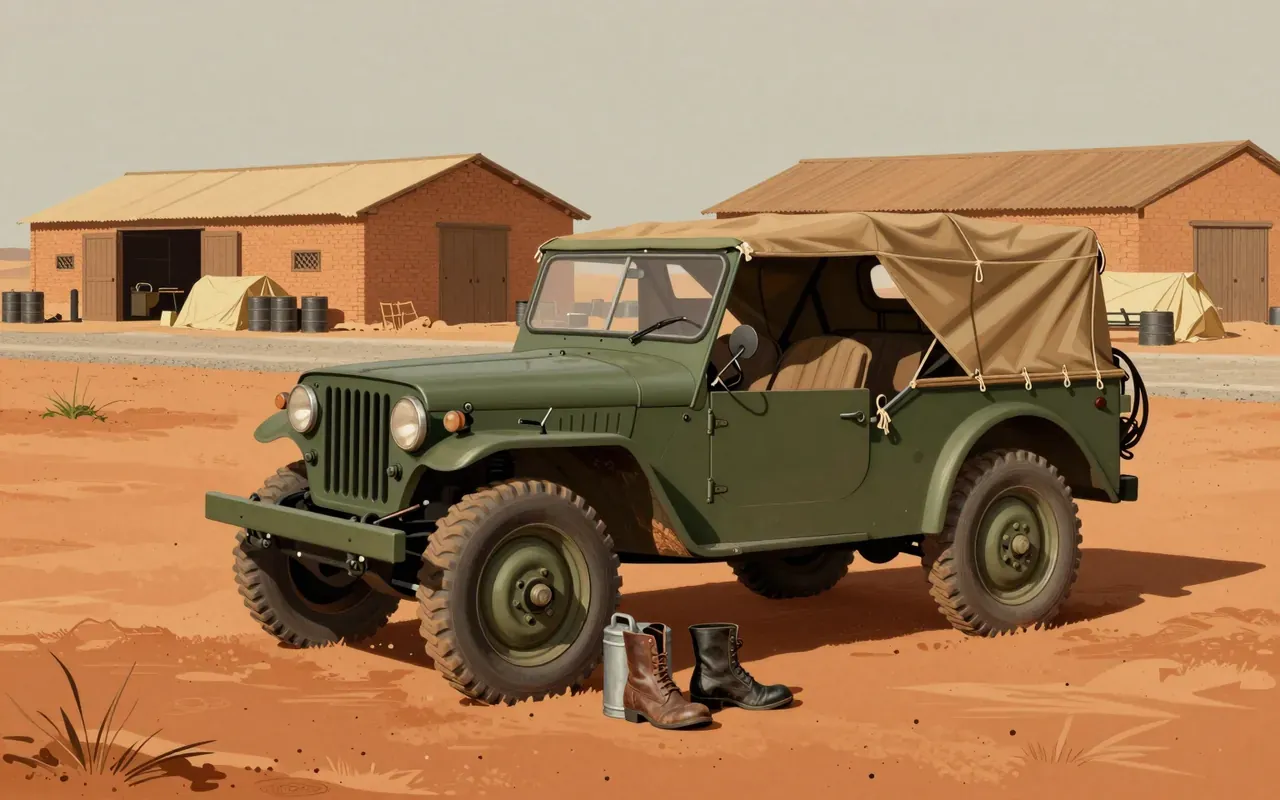
A light military 4×4 vehicle produced in 1941. Willys-Overland’s MB model became the standard design. Built in Toledo, Ohio. Ford built a near-identical version, the GPW. Together they produced about 640,000 units during WWII.
How it works, in terms someone would actually use
It is a light, open-body, four-wheel-drive vehicle with a rigid axle front and rear, a transfer case for low-range gearing, and a simple ladder-frame chassis. It drives with direct mechanical feedback through a tiller-like steering column and a floor-mounted gear lever. The driver feels every bump, every shift in traction, every tug of the driveline.
What it gets right
It delivers unbroken mechanical simplicity. It puts power to all four wheels without complexity. It fits inside transport aircraft and can be air-dropped. It is repairable with basic tools in field conditions.
What it does not
It does not isolate the driver from the road. It does not offer comfort, weather protection, or refinement. It does not prioritise on-road stability or high-speed control.
What it changed
It redefined military mobility. It made four-wheel drive a standard requirement for light tactical vehicles. It seeded the civilian SUV category before the term existed.
Who it is for, and who it is not
It is for soldiers, engineers, and field medics who need to move across unmade ground under load. It is not for commuters, families, or anyone expecting enclosed space, quiet, or predictable handling.
Is it worth your time
Yes. It is the foundational machine for all modern off-road vehicles. Its design logic — minimalism, serviceability, terrain-agnostic mobility — remains legible today.