automotivebriefs
11:53in productionCh. 1 · Why the doors open upward/ 11:53 · ceiling 15 min
Sports cars · Racing

Mercedes-Benz 300 SL

The 300 SL isn’t a legend because it was fast — it’s a legend because it forced every other manufacturer to rethink how a production sports car should be built.

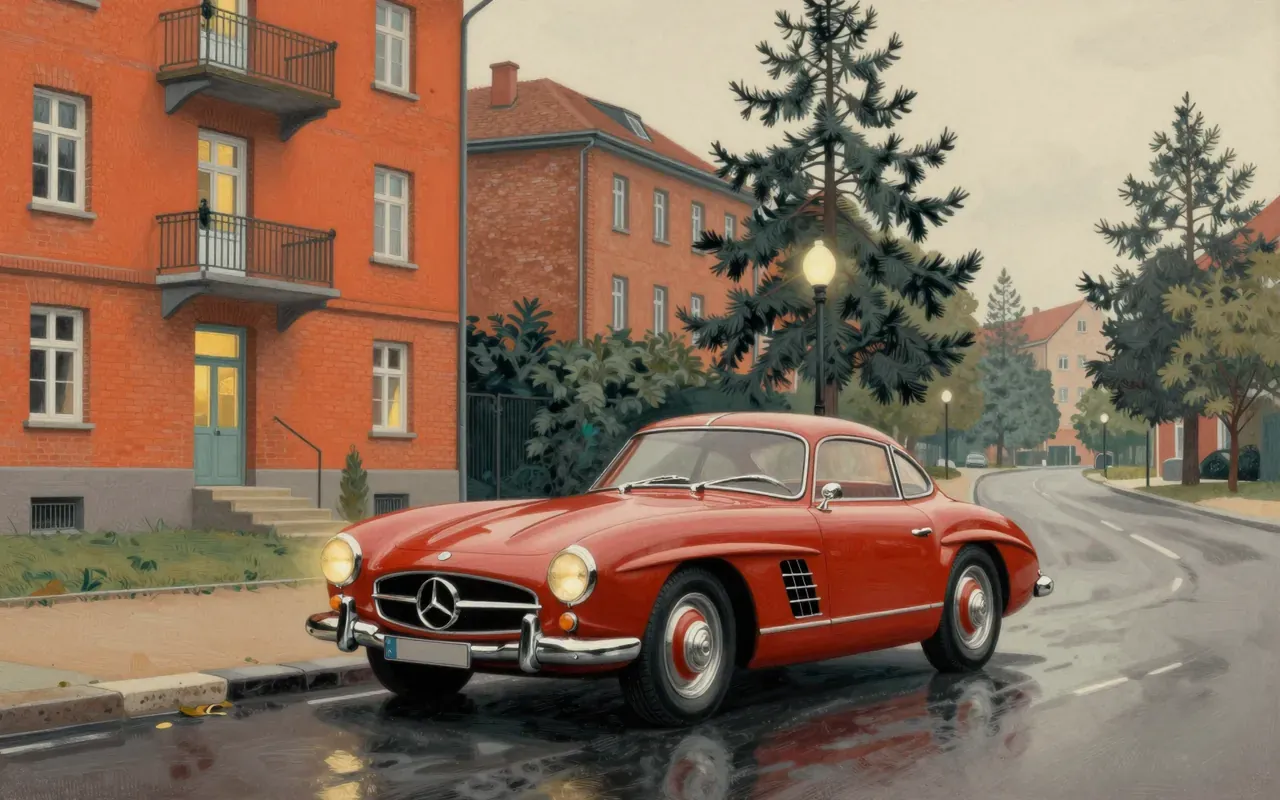
The Mercedes-Benz 300 SL (W198) is a two-seat sports car produced from 1954 to 1957 as a gullwing coupé and from 1957 to 1963 as a roadster. Developed from the 1952 W194 racing car, it introduced mechanical direct gasoline fuel injection to production vehicles, achieved 260 km/h — the highest speed of any production car at the time — and featured groundbreaking gullwing doors and a lightweight tubular-frame construction. Its ‘L’ stands for ‘leicht’, meaning light, reflecting its racing-bred minimalism. Max Hoffman proposed the car to Mercedes-Benz after the 1952 racing successes, and Fritz Konecke approved an order for 1,000 units ahead of its February 1954 debut at the New York Auto Show.

Chapters & takeaways4
  1. 1:24
    Why the doors open upward

    Its gullwing doors weren’t theatre — they were the only way to fit a driver into a tubular frame built for Le Mans.

  2. 3:15
    Fuel injection before it was standard

    Mechanical direct fuel injection wasn’t a luxury — it was the only way to extract more power from a racing-derived six-cylinder without carburettor lag or inconsistency.

  3. 5:38
    The fastest car of its time — by engineering, not luck

    At 260 km/h, it wasn’t just fast — it was the fastest production car on earth, held up by a frame that weighed less than many saloon car bodies.

  4. 7:33
    An American idea, built in Stuttgart

    Max Hoffman didn’t ask for a sports car — he asked Mercedes to build a toned-down Grand Prix car for American buyers, and they did.

Worth your time?

Yes. Drive the whole thing.

4.5/ 5
What works
  • structural logic
  • historical inflection
  • power delivery precision
What does not
  • practicality
  • accessibility
  • daily usability
Drive it if
  • collectors
  • engineers
  • historians
Skip it if
  • commuters
  • families
  • drivers seeking comfort
The written brief1 min read

What the car is and where it came from

A two-seat sports car developed from the 1952 W194 racing car. Designed by Friedrich Geiger. Produced as a gullwing coupé from 1954 to 1957 and as a roadster from 1957 to 1963.

How it works, in terms someone would actually use

Front-engine, rear-wheel-drive layout with a tubular steel spaceframe. The gullwing doors hinge from the roof because the frame’s high sills support the chassis and leave no room for conventional door openings. Mechanical direct fuel injection delivers precise fuel metering to the 3.0 L overhead camshaft slanted straight-six engine.

What it gets right

It gets right the translation of race-bred rigidity and power delivery into a road-legal form. Its tubular frame delivers torsional stiffness without excess mass. The ‘L’ in SL — for ‘leicht’ — is earned through structure, not marketing.

What it does not

It does not offer practical access or daily usability. The gullwing doors require level ground and overhead clearance. The fixed roof limits visibility and ingress/egress. No convertible variant existed until the 1957 roadster, which abandoned the gullwings.

What it changed

It proved that racing-derived lightweight construction and advanced fuel delivery could be packaged for affluent buyers — not just racers — and launched Mercedes-Benz’s modern sports car lineage.

Who it is for, and who it is not

It is for collectors, engineers, and historians who value structural logic and historical inflection points. It is not for drivers seeking comfort, versatility, or ease of use.

Is it worth your time

Yes. It is the first production car to use mechanical direct fuel injection, the fastest production car of its time, and a structural pivot point for post-war sports car design.
Same garage · Sports cars4 of 140
8:12
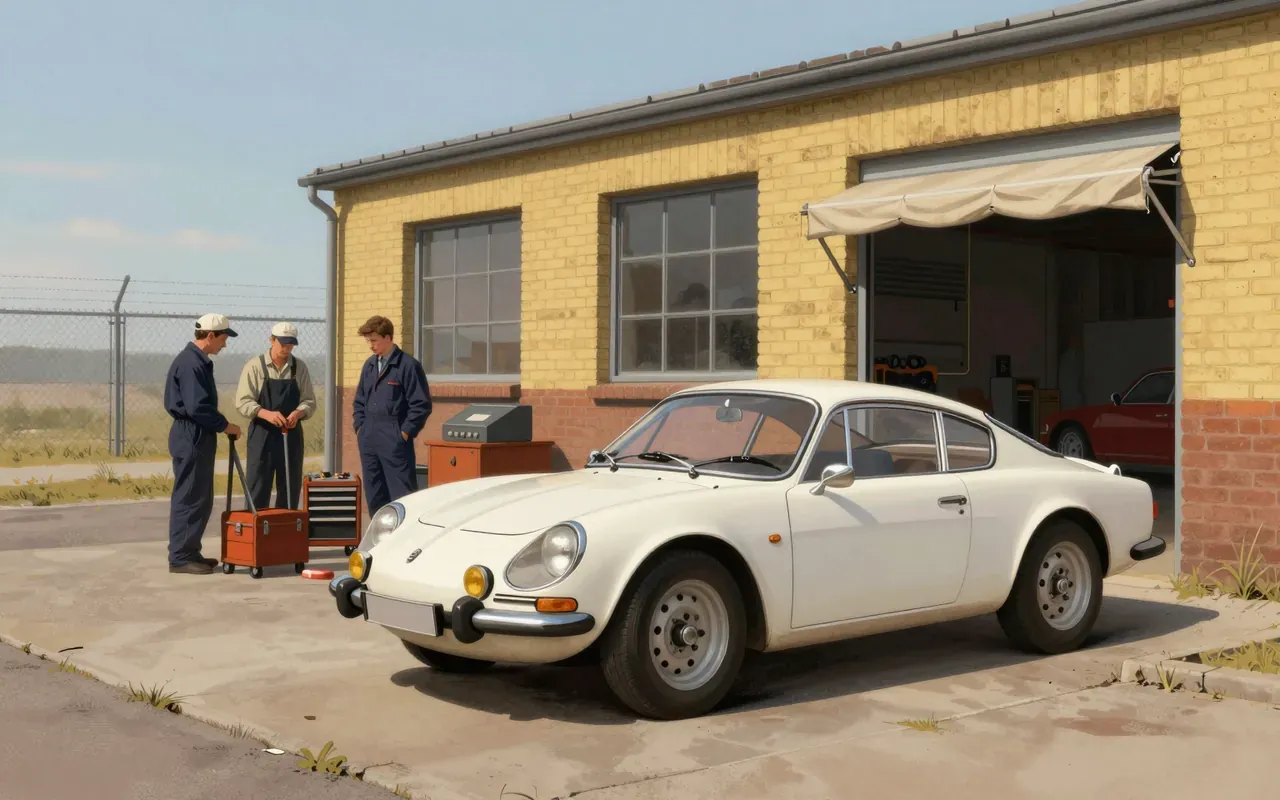
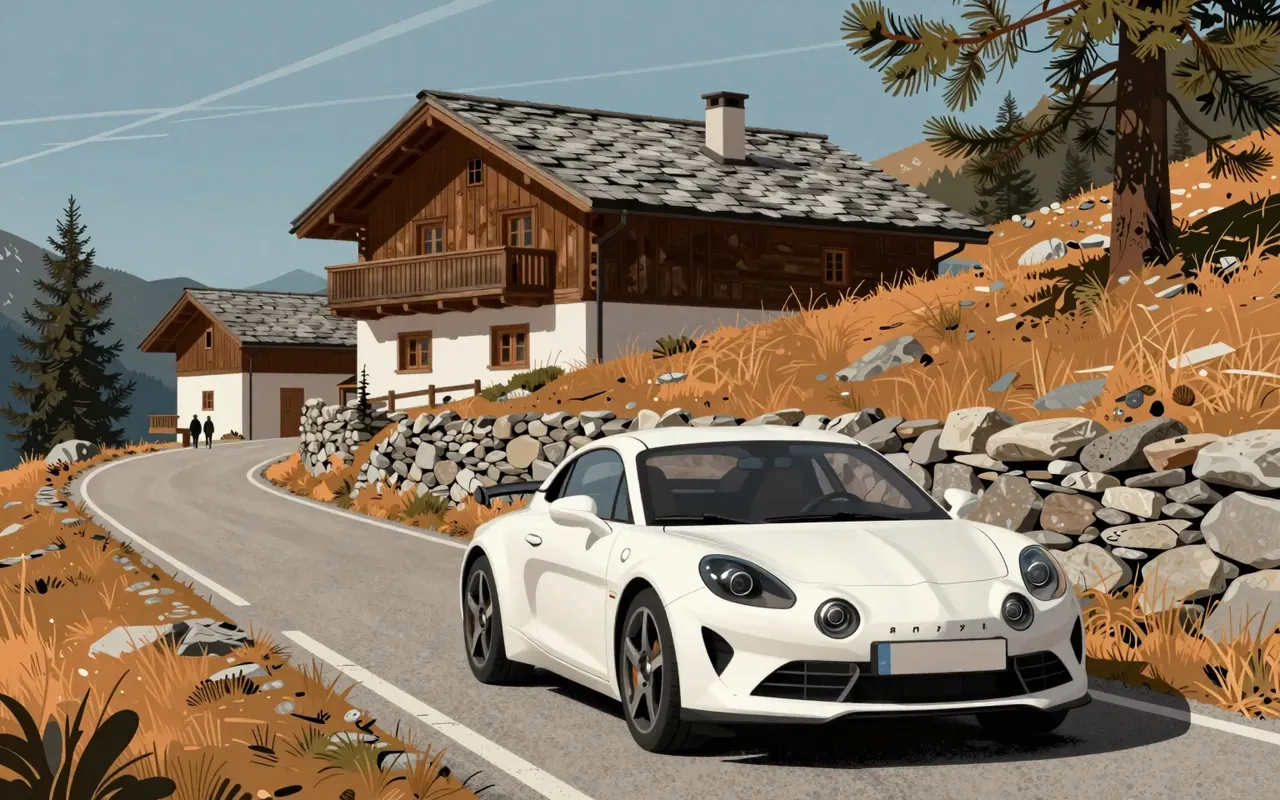
Alpine A110 (2017)Antony Villain · 2017The Alpine A110 (2017) is a rear mid-engine, rear-wheel-drive sports car built on an all-aluminium chassis and powered by a Nissan-derived 1.8-litre turbocharged inline-four engine. It debuted at the 2017 Geneva Motor Show. Production ended in June 2026.
8:32
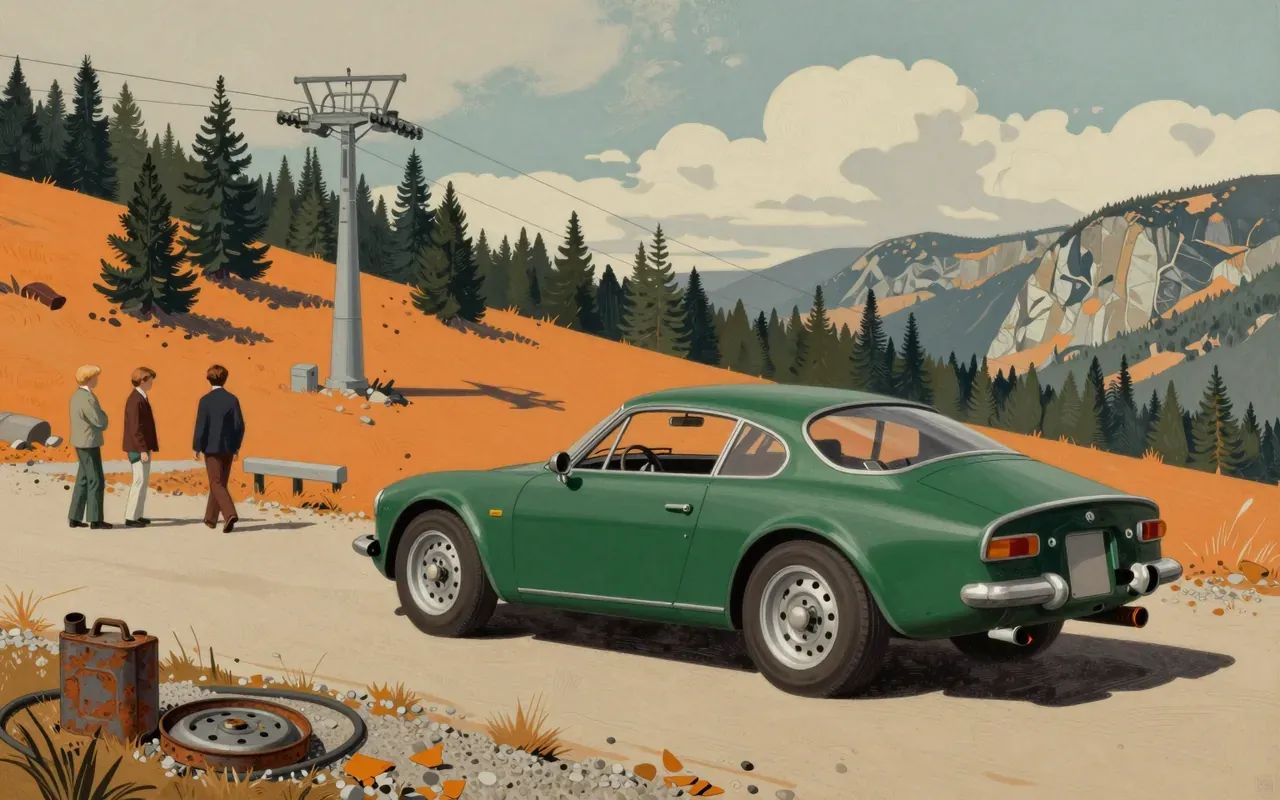
Alpine A310Michel Beligond · 1971The Alpine A310 is a French sports car, launched in 1971 as Jean Rédélé’s final Alpine model. It debuted at the 1971 Geneva Motor Show. It used a tubular steel backbone chassis and a one-piece fiberglass body. Its engine was mounted longitudinally in the rear and drove the rear wheels via a five-speed manual gearbox. The driving position was low and sporty, with footwells angled toward the car’s centre.
9:14
Renault Alpine GTA/A610Heuliez · 1984The Renault Alpine GTA is a rear-engined sports coupé launched in 1985 by Alpine under full Renault ownership. It replaced the A310, sharing its layout and V6 PRV engine. Marketed as the Alpine V6 GT or V6 Turbo in Europe—and as the Renault GTA in Britain—it featured aerodynamic design (Cx 0.28–0.30), lightweight composite body panels, and a steel backbone chassis. Production spanned 1984–1995, totalling ~7,300 units across both GTA and A610 models.
9:40
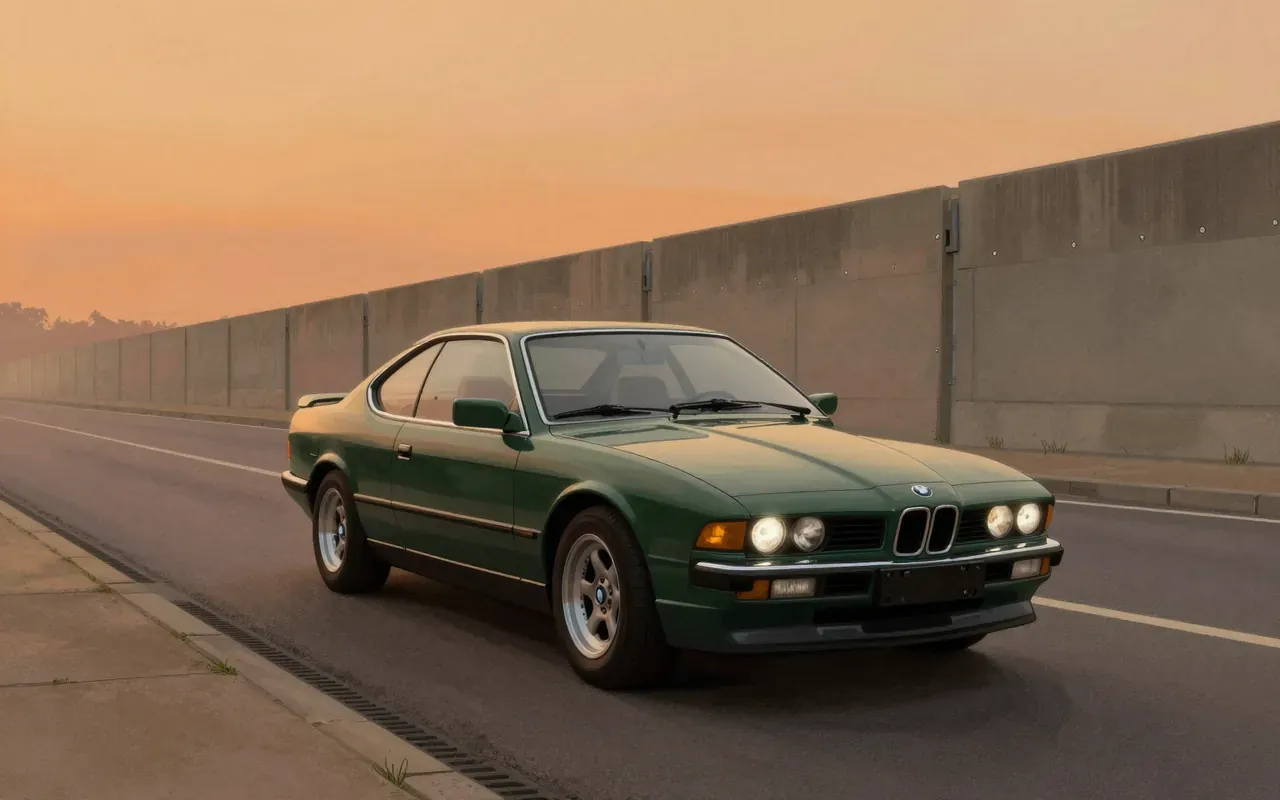
BMW 8 Series (E31)Klaus Kapitza · 1989The BMW 8 Series (E31) is a two-door grand tourer built by BMW from 1990 to 1999. It uses a front-engine, rear-wheel-drive layout. It is powered by either a V8 or V12 engine. Development began in July 1981 and concluded in 1986. It debuted at the Frankfurt Motor Show in early September 1989. BMW used CAD tools to design its all-new body. Its drag coefficient is Cd=0.29. It replaced the E24 6 Series but was not a direct successor. Total production was 30,609 units.
Up next in Automotive

Mercedes-Benz 600

Paul Bracq · 1963 · 10:45

A hydraulic fortress on wheels — built to erase the driver, not empower them.

10:45